Medical device import procedures are a major concern for many businesses as the demand for medical equipment, supplies, and healthcare technologies in Vietnam continues to grow. However, medical devices are a highly regulated category subject to numerous legal requirements regarding product quality, safety, and classification.
Therefore, businesses must fully understand medical device import procedures to minimize risks during customs clearance and subsequent product distribution in the market.
What Products Are Considered Medical Devices?
Medical devices include machinery, instruments, supplies, or software used for the following purposes:
- Disease diagnosis
- Health monitoring
- Medical treatment
- Surgical support
- Rehabilitation
- Medical testing
Some common medical devices currently imported into Vietnam include:
- Ultrasound machines
- Laboratory analyzers
- X-ray machines
- Blood pressure monitors
- Patient monitors
- Dental equipment
- Surgical instruments
- Hospital beds
- Medical consumables
- Rehabilitation equipment
Each category of medical device is subject to different regulatory requirements and import procedures.
Nature and Government Regulations on Medical Devices
Correctly identifying the applicable regulatory framework is the first and most critical step in any import project. Businesses should thoroughly understand the current legal regulations issued by the Ministry of Health.
Classification of Medical Devices by Risk Level
Before customs clearance, all medical devices must be classified according to their risk level. Under Vietnamese regulations, medical devices are categorized into four groups based on potential risks.
Class A Medical Devices
These products present the lowest level of risk to users. Examples include medical cotton products, examination gloves, and standard hospital beds.
Class B Medical Devices
These products present a low-to-moderate level of risk during use.
Class C Medical Devices
These products present a moderate-to-high level of risk to human health.
Class D Medical Devices
These products present the highest level of risk to patients. Examples include heart-lung machines, implantable chips, and specialized surgical equipment.
The classification result directly determines the permits and approvals required for importation.
Recognition of Foreign Classification Results
Vietnam has introduced policies aimed at simplifying administrative procedures. In certain cases, authorities may recognize classification results issued by regulatory bodies in advanced countries.
However, supporting documents proving such classifications must be properly legalized through consular legalization procedures in accordance with Vietnamese regulations.
How to Determine the Correct HS Code for Medical Devices
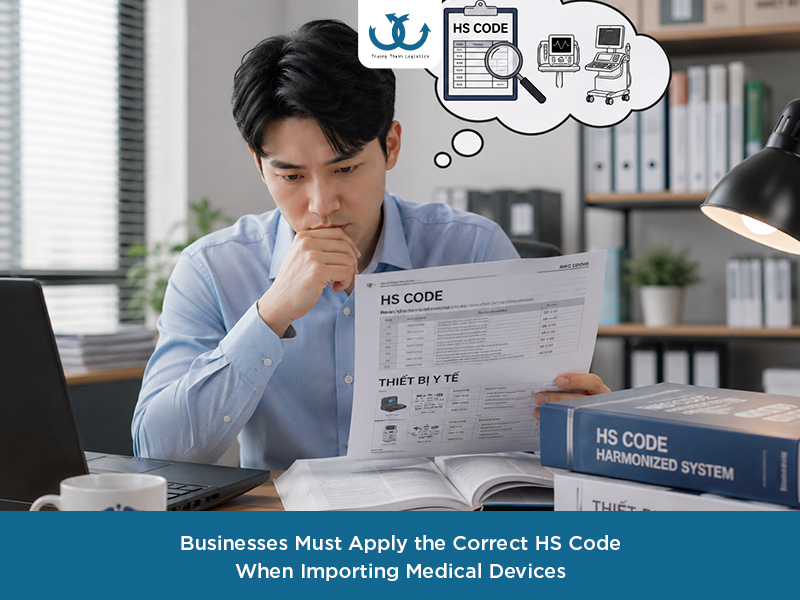
The HS Code serves as the legal basis for customs authorities to apply the appropriate import duties and taxes. Determining the correct HS Code enables businesses to accurately calculate project costs.
HS Code Categories for Medical Products
Most specialized medical devices fall under Chapter 90 of the Import and Export Tariff Schedule. This chapter covers optical, measuring, medical, and surgical instruments and apparatus.
HS Code 9018
Medical, surgical, dental, or veterinary instruments and appliances.
HS Code 9019
Mechanical therapy appliances, massage equipment, and psychological aptitude-testing apparatus.
HS Code 9022
Medical equipment utilizing X-rays or alpha, beta, or gamma radiation.
Due to the sophisticated design and specialized functions of medical equipment, businesses should rely on original technical documents and product catalogs to determine the most accurate HS Code.
Tax Policies for Imported Medical Devices
The Vietnamese government generally encourages the importation of medical equipment to support healthcare services. As a result, import duty rates for many medical devices are relatively low.
The Value Added Tax (VAT) applicable to medical devices is typically either 5% or 10%, depending on the product category. Businesses should carefully review tax incentive programs and preferential tariff schedules to optimize costs.
Required Licenses for Medical Device Importation
Depending on the risk classification, businesses may be required to obtain specific approvals and licenses. These documents are mandatory for customs clearance approval.
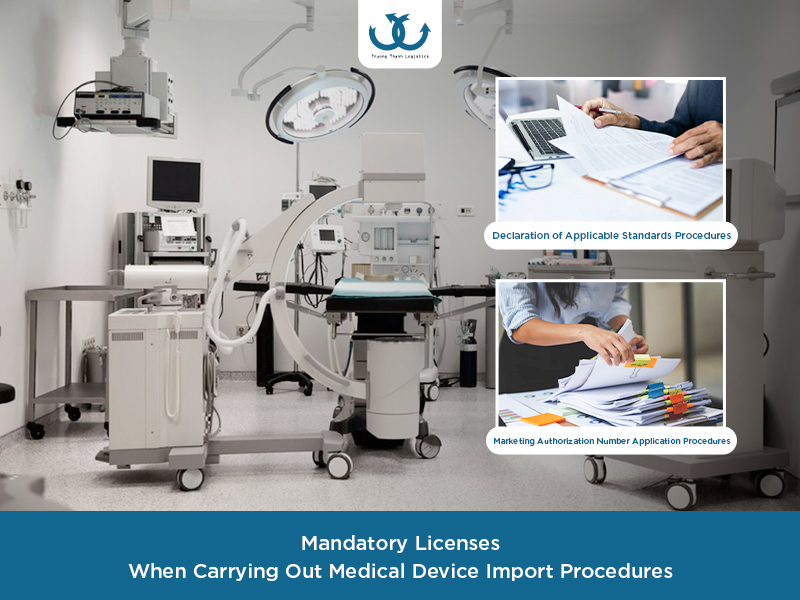
Declaration of Applicable Standards for Class A and Class B Devices
For Class A and Class B products, the process is relatively straightforward. Businesses must prepare and submit application dossiers to the Department of Health where their company is registered.
The process includes:
- Preparing technical documentation and classification results
- Submitting the application through the Ministry of Health’s online public service portal
- Receiving a Confirmation of Declaration of Applicable Standards upon approval
Marketing Authorization Number for Class C and Class D Devices
For higher-risk products, regulatory requirements are significantly more stringent. Businesses must obtain a Marketing Authorization Certificate directly issued by the Ministry of Health.
The application dossier requires extensive documentation demonstrating product safety and compliance. Due to the complexity of the review process, approval timelines are often lengthy.
Step-by-Step Customs Clearance Procedures for Medical Device Imports
The customs clearance process generally follows the standardized steps below. Thorough preparation helps ensure smooth cargo movement throughout the supply chain.
Step 1: Prepare a Complete Customs Documentation Package
Businesses should gather all required commercial documents and regulatory permits, including:
- Commercial Invoice
- Detailed Packing List
- Sales Contract
- Bill of Lading (B/L) or Air Waybill (AWB)
- Valid Medical Device Classification Certificate
- Declaration of Applicable Standards (Class A/B) or Marketing Authorization Number (Class C/D)
- Certificate of Origin (C/O), if applicable, for preferential tariff treatment
Step 2: Submit the Customs Declaration Through the Electronic System
The declarant enters all shipment information into the VNACCS/VCIS electronic customs system. All declared information must accurately match the supporting documents.
The system automatically processes and assigns a customs inspection channel:
Green Channel
The shipment is immediately cleared without document inspection.
Yellow Channel
Customs officers review the submitted documentation in detail.
Red Channel
The shipment is subject to physical inspection at the customs checkpoint.
Step 3: Customs Clearance and Cargo Delivery
After customs approval is granted, businesses pay all applicable duties and fees. The cargo is then released and transported to the company warehouse, hospital, or designated storage facility.
Important Considerations for Medical Device Labeling and Storage
Medical devices are sensitive and often high-value products. Therefore, packaging, labeling, and storage must comply with strict technical standards.
Compliance with Vietnamese Supplementary Labeling Requirements
Imported medical devices must have supplementary Vietnamese labels before being distributed in the market. Labels must clearly indicate:
- Marketing authorization number
- Importer’s information
- Safe usage instructions
Strict Temperature Control
Many diagnostic devices and laboratory reagents require temperature-controlled storage conditions. Businesses should utilize cold storage facilities or refrigerated containers throughout the transportation and storage process.
Careful Handling and Shock Protection
Electronic components and optical lenses used in medical equipment are highly sensitive to impact. Loading and unloading operations should be performed by experienced personnel using appropriate handling procedures.
Medical devices can be transported through various logistics modes, including sea freight, road transportation, and air freight services.
Truong Thanh Logistics – Your Comprehensive Partner for Medical Device Import Procedures
If your business is facing challenges with medical device import procedures, Truong Thanh Logistics is here to help. We are proud to be a trusted provider of specialized logistics solutions for the healthcare industry.
Our Expertise
Truong Thanh Logistics possesses a team of specialists with extensive knowledge of healthcare regulations and customs procedures. We have years of practical experience handling complex medical equipment shipments.
With offices located at major trade gateways across Vietnam, we are always ready to assist businesses in resolving challenging compliance and customs issues safely and legally.
Our Service Portfolio
Classification & Licensing Services
Accurate medical device classification and expedited support for obtaining Ministry of Health marketing authorization numbers.
Customs Declaration Services
Professional customs declaration processing to minimize storage costs and clearance delays.
International Freight Solutions
Comprehensive sea freight and air freight services with a strong focus on cargo safety and compliance.
24/7 Regulatory Consulting
Continuous updates on the latest healthcare regulations and legal requirements affecting your business.
Core Value We Bring to Your Supply Chain
Truong Thanh Logistics offers much more than routine administrative and documentation services. We provide comprehensive solutions designed to optimize your entire supply chain.
Our specialists directly assist clients in preparing technical dossiers that meet Ministry of Health requirements. Through our professional workflows, businesses can significantly reduce both operational costs and processing time.
We consistently prioritize cargo safety and customer reputation in every project we undertake.
>>>View More: Entrusted Import-Export
Conclusion
Successfully completing medical device import procedures requires meticulous preparation, patience, and extensive regulatory expertise. Businesses should carefully manage every stage of the process to ensure project timelines remain on track.
Let Truong Thanh Logistics become your trusted partner in business growth and international trade. Contact Truong Thanh Logistics today to receive professional consultation and dedicated support from our industry experts.
Fanpage: TRƯỜNG THÀNH LOGISTICS