Export procedures to the USA in 2026 require businesses to pay close attention to documentation, customs declarations, AMS/ISF filing, and new tax policies. Relying on outdated information may result in incorrect cost calculations or difficulties when goods arrive in the United States.
So, what documents are required when exporting goods from Vietnam to the USA? What is the export process, and what tax changes should businesses be aware of in 2026? Below are the key points businesses should understand before shipping goods to the US.
What Documents Are Required for Export Procedures to the USA?
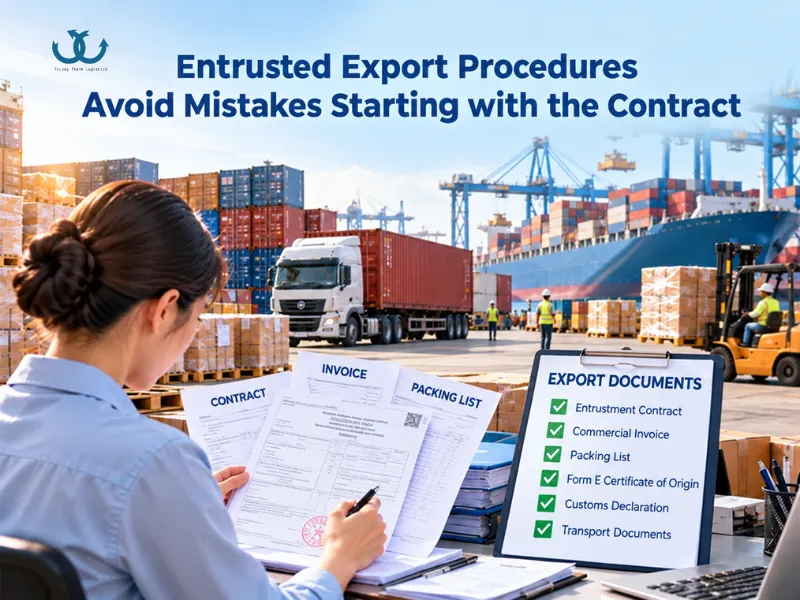
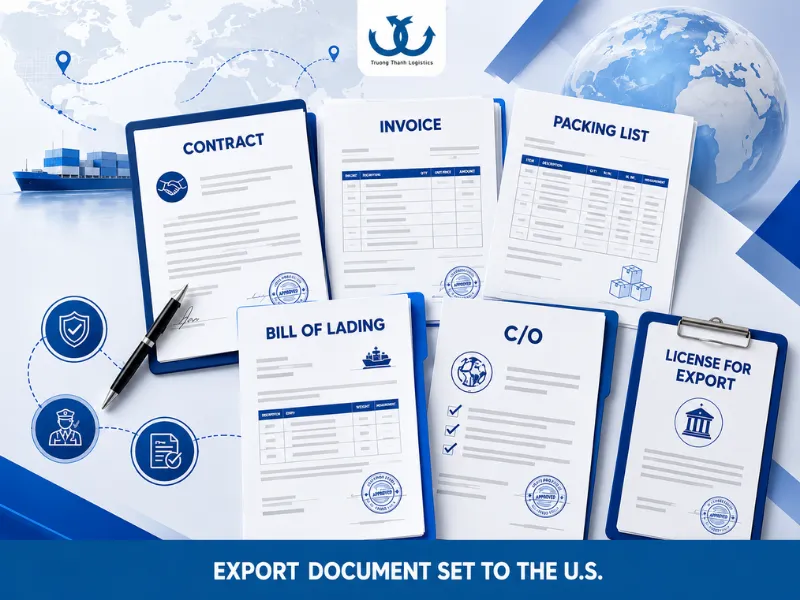
The required export documents may vary depending on the type of goods, transportation method, and buyer’s requirements. However, a standard export documentation set generally includes:
- Sales Contract: Specifies the agreements between the seller and buyer, including the goods, quantity, value, and delivery terms.
- Commercial Invoice: Provides details such as product description, quantity, unit price, total value, and other transaction information.
- Packing List: Specifies the number of packages, weight, dimensions, and packing specifications.
- Bill of Lading/Air Waybill: A transportation document issued by the shipping line, airline, or carrier.
- Export Customs Declaration: The exporter submits the customs declaration electronically in accordance with applicable regulations.
- Certificate of Origin and Origin Documents: Depending on the shipment, a C/O or other documents may be required to prove the origin of the goods.
- Licenses and Specialized Documents: Certain products may require quarantine certificates, food safety documents, CITES documents, or relevant import/export permits.
Not every shipment requires all of the documents listed above. Businesses should check the requirements based on the product, HS code, and applicable US regulations before starting the export procedures to the USA.
Export Procedures to the USA from Vietnam: 6 Basic Steps
In general, businesses can follow six basic steps when carrying out export procedures to the USA. However, US market requirements should be checked from the beginning rather than waiting until the goods are ready for shipment.
Step 1: Check the Goods and HS Code
Businesses need to accurately determine the product name, composition, intended use, specifications, and HS code in Vietnam. The corresponding classification in the US under the Harmonized Tariff Schedule of the United States (HTSUS) should also be checked to determine:
- Potential import duties.
- Product-specific management policies.
- Whether additional tariffs may apply.
- Whether the goods may be subject to trade remedies such as anti-dumping (AD) or countervailing duties (CVD).
- Whether any special import requirements or restrictions apply.
This step is particularly important when preparing quotations for US customers. An incorrect product classification can result in inaccurate duty calculations and directly affect the selling price.
Step 2: Verify the Origin and Prepare the Documentation
Once the goods have been properly identified, businesses should prepare the Sales Contract, Commercial Invoice, Packing List, and other relevant documents.
For goods made using imported materials or involving multiple stages of production, businesses should retain supporting records related to:
- The origin of raw materials.
- Invoices and purchase documents for materials.
- The manufacturing process.
- Production norms or other relevant manufacturing documents.
- Export documents.
Maintaining complete origin records can help businesses demonstrate the origin of goods when required during the export and import process.
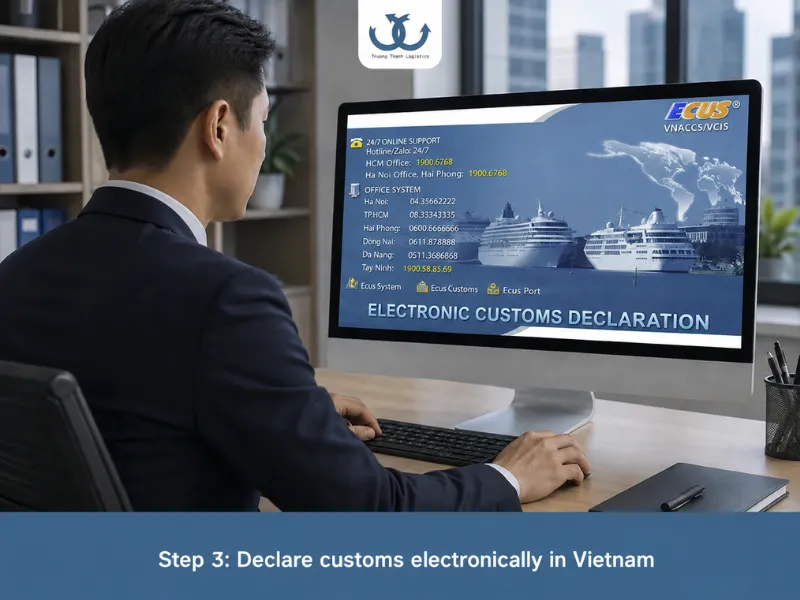
Step 3: Submit the Export Customs Declaration in Vietnam
Businesses submit the export customs declaration through Vietnam’s electronic customs system, VNACCS/VCIS, in accordance with current regulations.
The declared information must be consistent with the supporting documents and the actual goods. Product description, HS code, quantity, weight, customs value, and origin should be carefully reviewed before submitting the declaration.
Vietnamese customs procedures are currently governed by Decree No. 08/2015/ND-CP, as amended and supplemented by Decree No. 167/2025/ND-CP and other relevant regulations.
Step 4: Customs Inspection and Clearance
After the customs declaration is submitted, it is assigned a customs inspection channel. Depending on the result and the requirements of the customs authority, the business may:
- Receive customs clearance in accordance with regulations.
- Provide or supplement supporting documents.
- Undergo a physical inspection of the goods if required.
Preparing the documentation in advance can therefore help reduce the risk of last-minute issues during the export process.
Step 5: Hand Over the Goods to the Carrier, Airline, or Freight Forwarder
Once the goods are eligible for export, the business hands over the cargo and relevant documents to the transportation provider.
For ocean freight shipments, businesses should proactively coordinate with the freight forwarder or shipping line regarding the cut-off time and the deadline for providing information required for customs and security filings.
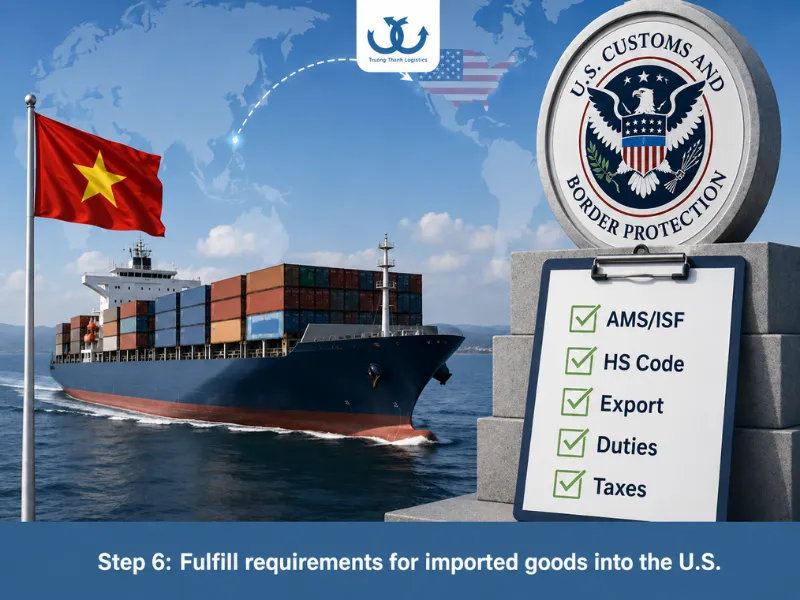
Step 6: Complete Requirements for Goods Imported into the USA
In addition to completing export procedures in Vietnam, goods entering the United States must comply with US import requirements.
For ocean freight shipments, exporters should coordinate with the US buyer and transportation provider to provide the information required for AMS/ISF filing and review the product classification, country of origin, and applicable tariff policies before the goods are imported into the US.
US Customs and Border Protection (CBP) Filing Requirements
In addition to customs procedures in Vietnam, businesses exporting goods to the USA should pay attention to specific filing requirements imposed by US Customs and Border Protection (CBP).
Among these requirements, AMS and ISF are particularly important because of their filing deadlines and the responsibilities of the parties involved.
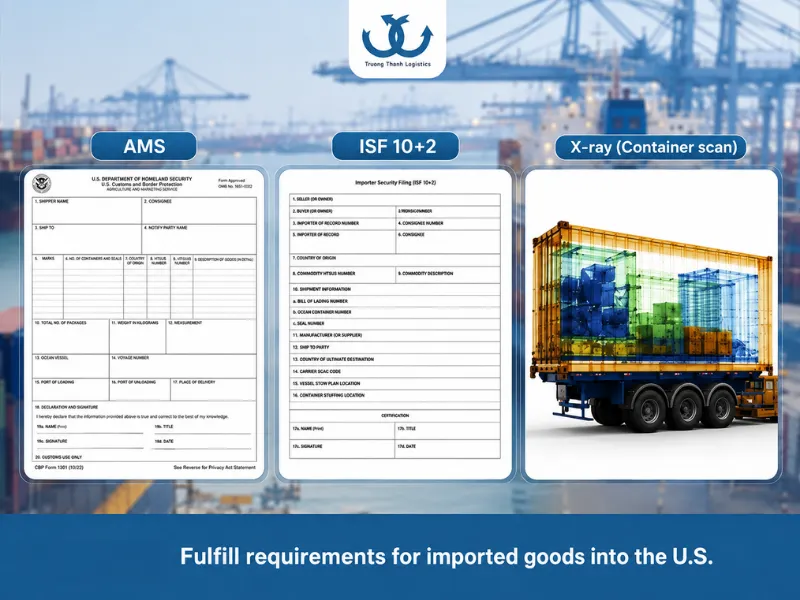
AMS (Automatic Manifest System) Filing
AMS refers to the electronic manifest filing submitted to US Customs and Border Protection (CBP).
Under the current requirements under 19 CFR 4.7 (the “24-Hour Rule”), information for ocean cargo shipments must be submitted to CBP no later than 24 hours before the container is loaded onto the vessel at the foreign port of departure—not 48 hours as stated in many older materials.
AMS filing is generally handled by the shipping line or freight forwarder on behalf of the shipper.
ISF 10+2 (Importer Security Filing)
Alongside AMS, the US importer—or its authorized agent must submit the ISF 10+2 filing within the required 24-hour timeframe before the cargo is loaded onto the vessel.
The ISF requires 10 data elements from the importer and other supply-chain parties, together with 2 data elements provided by the carrier.
Late or incomplete ISF filings may result in CBP penalties of up to USD 5,000 per violation and may also lead to cargo being held for inspection.
>>> See Also: Import Security Filing (ISF) for shipment to the USA: Requirements and Fines
Container X-Ray Inspection and Random Examination
CBP may select containers for inspection at a transshipment port or a US destination port, particularly when there are concerns regarding the declared information or origin of the goods.
X-ray inspection and container storage costs incurred during an examination are generally allocated according to the responsibilities and Incoterms agreed upon by the parties.
US Import Duties on Vietnamese Goods in 2026
On July 23, 2026, the USTR announced tariff measures under Section 301 of the Trade Act of 1974 concerning 60 economies in relation to the failure to prohibit and effectively enforce a ban on imports of goods produced using forced labor. Vietnam is included in this list.
According to the USTR decision, economies outside the group subject to the 10% rate will be subject to a 12.5% Section 301 tariff, and Vietnam falls within this group. Certain product exemptions may also apply.
However, businesses should not interpret the 12.5% rate as the total amount of import duties payable.
When goods are imported into the United States, businesses should also check:
- Standard import duties under the applicable HTSUS classification.
- Section 301 tariffs, if applicable to the product.
- Anti-dumping duties (AD), where applicable.
- Countervailing duties (CVD), where applicable.
- Applicable exemptions or exclusions.
Therefore, before quoting a price to a US buyer, businesses should check the specific product classification and total potential tariff liability instead of using 12.5% as a general import tax rate.
5 Key Things to Check Before Starting Export Procedures to the USA
Before shipping goods to the US, businesses should carefully review everything from product classification and origin to documentation and costs. Even a minor error can delay customs clearance or result in additional expenses.
- Check the HS code and HTSUS classification: Compare the product classification in Vietnam and the US to determine the applicable duty rate, regulatory policies, and import requirements.
- Prepare origin documentation: Keep complete records of raw materials, manufacturing processes, and export activities, especially for products made using imported materials.
- Submit AMS/ISF information early: Proactively provide the required information to the freight forwarder and buyer rather than waiting until the 24-hour deadline.
- Check specialized import requirements: Determine in advance whether additional requirements apply to food, agricultural products, cosmetics, pharmaceuticals, wooden products, and other regulated goods.
- Calculate all costs before quoting: Consider import duties, additional tariffs, customs clearance charges, and other potential costs in the US to avoid underquoting.
Truong Thanh Logistics Supports Complete Export Procedures to the USA
With more than 15 years of experience in import and export services, Truong Thanh Logistics supports businesses with export procedures for Goods based on the specific product and shipment requirements.
Instead of having to research each regulation and handle every step independently, businesses can receive support with:
- Reviewing export documentation before customs declaration.
- Checking and advising on HS codes based on product information.
- Guiding businesses in preparing export documents and related supporting documents.
- Advising on customs declaration procedures and customs clearance services in Vietnam.
- Coordinating with freight forwarders and shipping lines throughout the transportation process.
- Advising on the information required for AMS/ISF for ocean freight shipments.
- Reviewing key factors that should be checked before shipment, helping businesses better control documentation, schedules, and costs.
In particular, if a business does not have a dedicated import-export department or is preparing its first shipment to the United States, reviewing the documentation and relevant requirements before the goods leave Vietnam can help minimize errors that may be difficult and costly to resolve after shipment.
Frequently Asked Questions About Export Procedures to the USA
What is AMS and how far in advance must it be filed?
AMS is an electronic manifest filing system used by US Customs and Border Protection. For ocean freight shipments, AMS must be filed no later than 24 hours before the container is loaded onto the vessel at the port of departure.
What is the difference between ISF 10+2 and AMS?
ISF is filed by the US importer and provides supply-chain security information, including 10 data elements from the importer and related parties and 2 data elements from the carrier.
AMS, on the other hand, is an electronic cargo manifest filing generally handled by the shipping line or freight forwarder.
Both are subject to the required 24-hour filing timeframe before the cargo is loaded onto the vessel.
What is the current export tax rate for Vietnamese goods shipped to the USA?
As of August 2026, Vietnamese goods are subject to an additional 12.5% Section 301 tariff, in addition to MFN duties and other product-specific duties where applicable.
The applicable tariff treatment may change depending on the progress of negotiations and policy developments. Businesses should therefore check the specific HS/HTSUS classification of their goods before determining the total tax liability.
Is a Certificate of Origin (C/O) mandatory when exporting goods to the USA?
A C/O is not mandatory for preferential tariff treatment because Vietnam does not currently have an FTA with the United States.
However, businesses may consider obtaining C/O Form B to demonstrate the origin of the goods and reduce the risk of questions regarding transshipment or origin.
In summary, export procedures to the USA require businesses to prepare carefully for every stage, from export documentation and HS classification to customs declaration in Vietnam, AMS/ISF requirements, origin documentation, and US import duties.
Because requirements and tariff rates can vary depending on the specific product, businesses should verify the applicable requirements before shipping.
If your business is planning to export goods to the United States but is still unsure about the required documents, procedures, or costs, contact Trường Thành Logistics for specific support.
Trường Thành Logistics – Professional & Dedicated
Hotline: +84 915 36 38 39
Head Office: 5th Floor, Tower A, Song Da Building, Pham Hung Street, Tu Liem Ward, Hanoi, Vietnam.
Email: sale@truongthanhjsc.com
info@truongthanhlogistics.com
Website: https://truongthanhlogistics.com
HAI PHONG BRANCH
Address: Room C103, TTC Building, 630 Le Thanh Tong Street, Hai An Ward, Hai Phong City, Vietnam.
DA NANG BRANCH
Address: 126 Chau Thi Vinh Te Street, Ngu Hanh Son Ward, Da Nang City, Vietnam.
HO CHI MINH CITY BRANCH
Address: Room 41, 4th Floor, Casanova Building, 85 Nguyen Son Street, Phu Thanh Ward, Ho Chi Minh City, Vietnam
Fanpage: TRƯỜNG THÀNH LOGISTICS