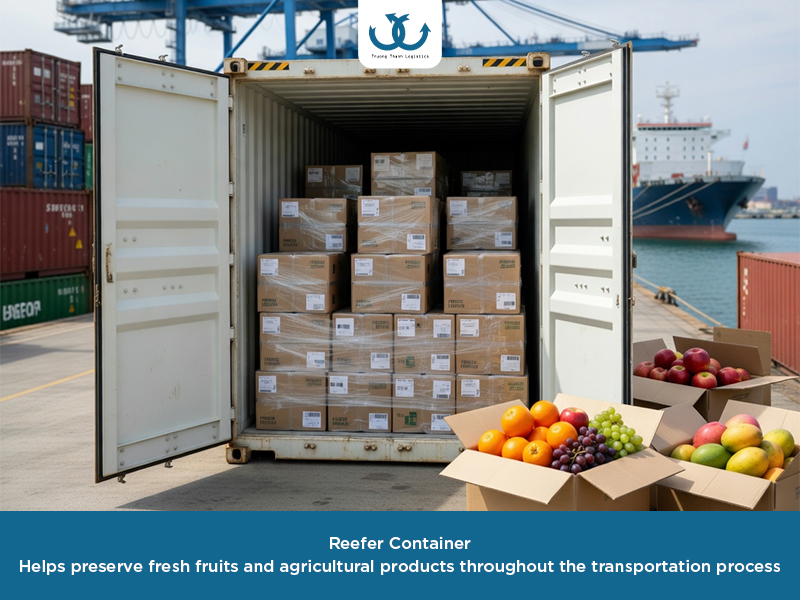
Reefer containers (refrigerated containers) are essential equipment in fresh fruit export. Due to the perishable nature of the products and their sensitivity to temperature, the use of reefer containers helps maintain quality, extend shelf life, and ensure that goods reach customers in optimal condition.
This article provides a comprehensive overview of the role, structure, operating principles, and effective use of reefer containers in fresh fruit export.
1. What is a Reefer Container?
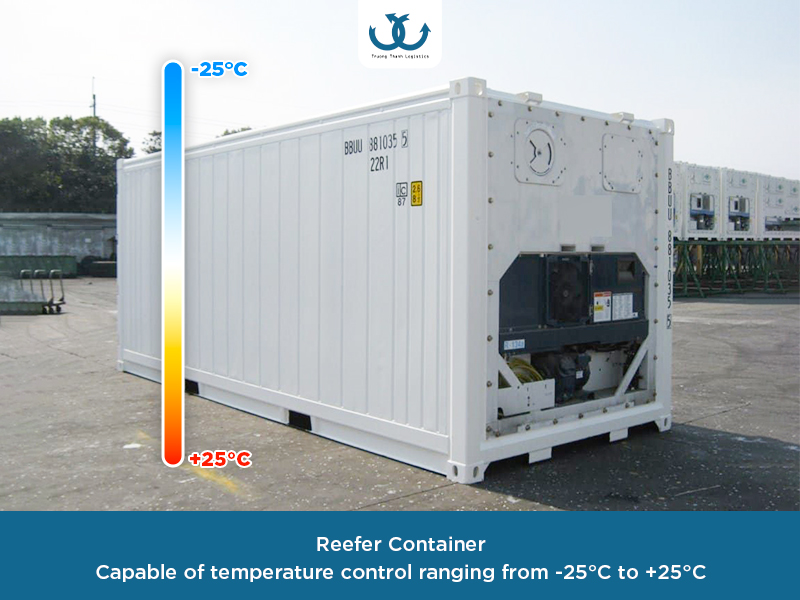
A reefer container is a specialized container equipped with an integrated refrigeration system, allowing precise control of temperature, humidity, and airflow throughout the transportation and storage process.
Unlike dry containers, which are used for general cargo, reefer containers are specifically designed to transport temperature-sensitive goods such as fresh fruits, vegetables, seafood, and pharmaceuticals. Among these, fresh fruit export is one of the most common applications.
Key Features of Reefer Containers
Reefer containers are not simply “cooling units” but closed environmental control systems with the following characteristics:
- Wide temperature range: adjustable from approximately -25°C to +25°C, suitable for various types of cargo
- Precise temperature control: maintains stable conditions throughout transit, minimizing fluctuations
- Continuous airflow circulation: ensures even temperature distribution inside the container
- High insulation performance: multi-layer walls reduce heat exchange with the external environment
These features make reefer containers critical for maintaining product quality over extended periods.
2. The Role of Reefer Containers in Fresh Fruit Export
In the fresh fruit export supply chain, reefer containers function not only as transport equipment but also as mobile storage units, directly impacting product quality upon arrival. Given the highly perishable and temperature-sensitive nature of fresh fruits, using reefer containers is essential for stable and sustainable export operations.
2.1. Maintaining Freshness and Product Quality
After harvest, fruits continue to respire and ripen naturally. Without proper control, this process accelerates, leading to softening, moisture loss, and reduced commercial value.
Reefer containers help to:
- Maintain optimal temperature for each type of fruit
- Slow down ripening and aging processes
- Preserve freshness, color, and texture
- Reduce post-harvest losses
This ensures that fruits meet quality standards upon arrival in the importing market.
2.2. Extending Storage and Transit Time
One of the major challenges in fresh fruit export is transit time, especially for long-haul routes such as Europe, the United States, or the Middle East.
Reefer containers enable:
- Extending storage time from a few days to several weeks
- Facilitating sea transport, which is more cost-effective
- Reducing pressure on delivery timelines
This allows businesses to expand into distant markets without being limited by geographic distance.
2.3. Ensuring Compliance with Import Standards
Major markets such as the US, EU, Japan, and South Korea impose strict regulations on storage conditions and product quality.
Reefer containers help businesses:
- Meet specific temperature requirements for each type of fruit
- Control transport conditions in line with international standards
- Ensure consistent quality across the entire shipment
Failure to meet these requirements may result in shipment rejection, return, or destruction.
2.4. Maintaining an Unbroken Cold Chain
The cold chain is a critical factor in fresh fruit export. Reefer containers play a central role in connecting all stages:
- Post-harvest cooling
- Cold storage
- International transportation
- Distribution in the destination market
They maintain stable temperatures throughout transit, preventing cold chain disruptions—one of the main causes of product spoilage.
2.5. Minimizing Risks and Losses
In practice, many shipments are damaged due to:
- Incorrect temperature settings
- Uneven temperature distribution
- Lack of control over humidity and ethylene gas
Proper use of reefer containers helps to:
- Reduce spoilage rates
- Minimize customer complaints
- Avoid additional costs from returns or compensation
This is a key factor in effective risk management in export operations.
2.6. Optimizing Logistics Costs
Although reefer containers are more expensive than dry containers, they provide long-term cost efficiency:
- Reduced product loss
- Lower financial risk from damaged goods
- Ability to transport large volumes via sea freight
- Optimized cost per unit of product
Investing in proper reefer container usage enhances operational efficiency and competitiveness.
2.7. Enhancing Reputation and Export Capability
Consistent product quality is essential for building trust with international partners.
Reefer containers help businesses:
- Maintain uniform quality across shipments
- Deliver products in compliance with agreed standards
- Increase customer reliability and satisfaction
This enables long-term partnerships and market expansion.
3. Basic Structure of a Reefer Container
A standard reefer container consists of the following main components:
- Refrigeration unit: regulates and maintains temperature
- Insulated walls: minimize heat exchange with the external environment
- T-bar floor: allows uniform airflow beneath the cargo
- Ventilation system: controls ethylene gas and humidity
- Temperature control panel: sets and monitors operating parameters
This design ensures even temperature distribution throughout the container.
4. Operating Principle
Reefer containers operate based on cold air circulation:
- Air is cooled by the refrigeration unit
- Cold air is blown downward and circulated throughout the container
- Warm air is drawn back to be re-cooled
This continuous cycle maintains a stable temperature during the entire journey.
5. Recommended Storage Temperatures for Common Fruits
Setting the correct temperature is critical:
- Dragon fruit: approximately 5°C
- Mango: approximately 10–13°C
- Banana: approximately 13–14°C
- Durian: approximately 12–15°C
Note: Temperature requirements may vary depending on importing market standards.
6. Effective Use of Reefer Containers
To ensure optimal performance, businesses should follow these steps:
Before Loading
- Conduct Pre-Trip Inspection (PTI)
- Pre-cool the container
- Ensure products are pre-cooled before loading
During Loading
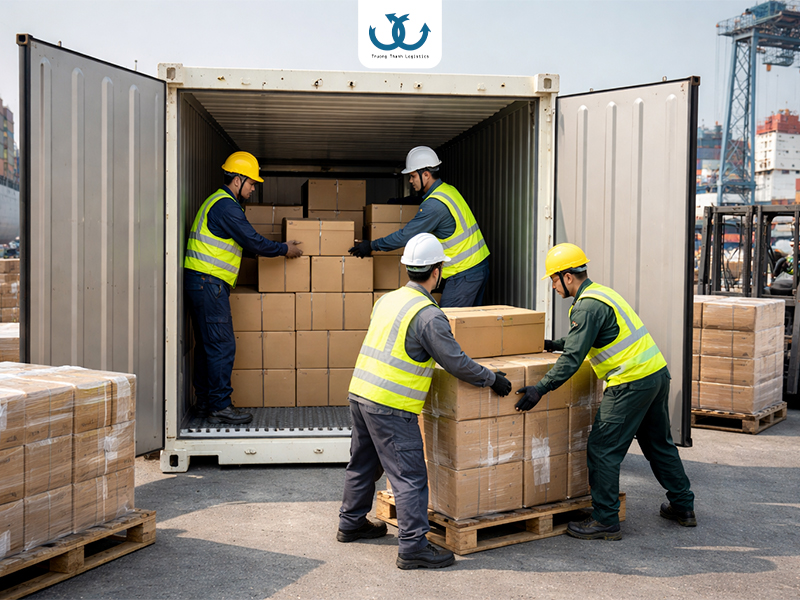
- Arrange cargo properly to avoid blocking airflow
- Avoid stacking too close to the container ceiling
- Use appropriate packaging for cold transport
During Transportation
- Monitor temperature continuously
- Ensure constant power supply to the container
- Control humidity and ventilation if required
7. Common Risks
Improper use of reefer containers may lead to:
- Incorrect temperature causing product damage
- Cold chain disruption during transit
- Improper loading leading to uneven temperature distribution
- Poor ethylene control accelerating ripening
8. Optimizing Reefer Container Usage in Export
To maximize efficiency, businesses should:
- Work with experienced cold-chain logistics providers
- Set temperature according to each fruit type and market requirements
- Combine post-harvest handling with cold transportation
- Monitor temperature data throughout the journey
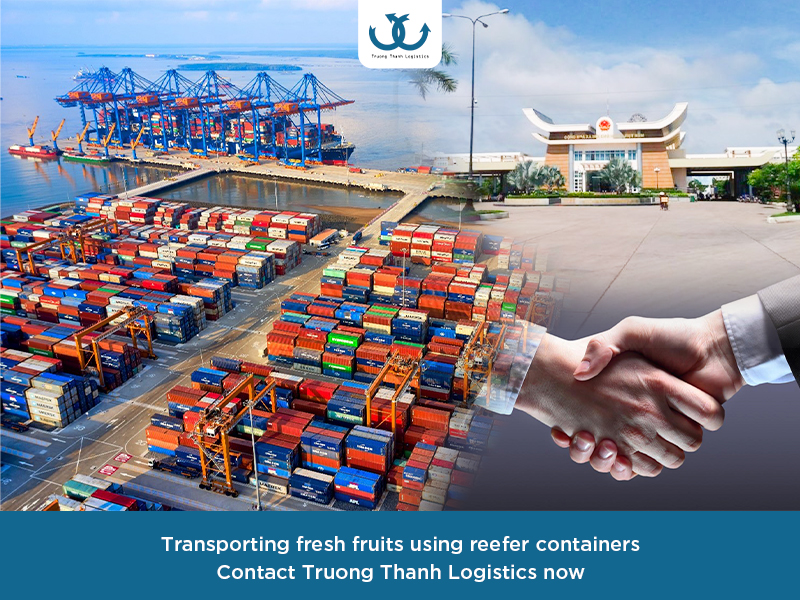
With extensive experience in agricultural exports and cold-chain logistics, Truong Thanh Logistics provides integrated and practical reefer container solutions.
Key Services Include:
Technical consulting: Advising optimal temperature, humidity, and transport conditions for each fruit and market.
High-quality reefer container supply: Ensuring containers meet technical standards, are inspected before use, and operate reliably.
Loading support: Providing guidance on cargo arrangement to optimize space and airflow.
Real-time monitoring: Tracking container conditions, temperature, and shipment schedules.
Fast issue resolution: Timely support to minimize risks and potential losses.
Conclusion
Optimizing reefer container usage not only protects fruit quality but also reduces costs, minimizes risks, and improves export efficiency. Businesses should combine proper technical processes with reliable logistics partners to ensure successful and sustainable export operations.