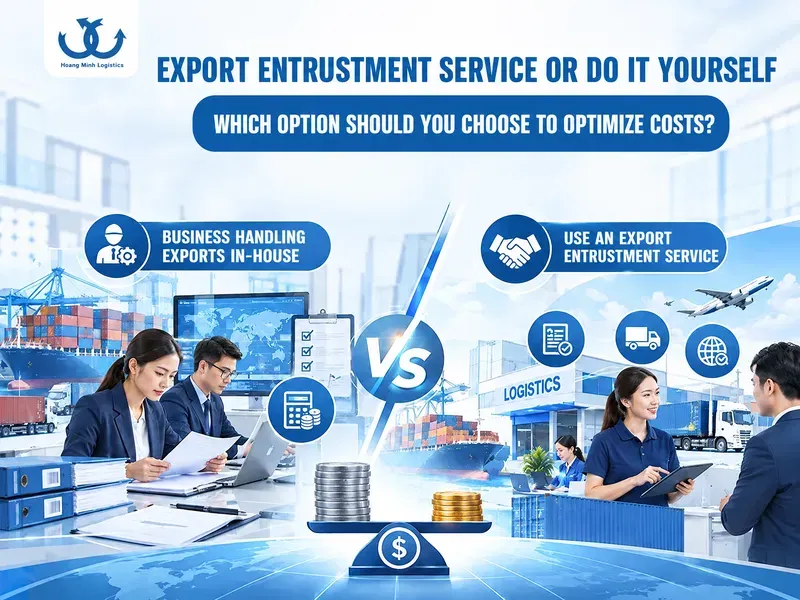
Import – export entrustment service: how it differs from handling everything in-house or hiring a customs brokerage. Compare the scope of authorization, legal liability, and cost across all three options.
When a business is new to import – export or expanding into a new product line or market, it usually faces three options: handle everything in-house, hire a customs brokerage for each shipment, or entrust the entire process to a specialized company that acts as the named party on all trade documents.
These three options differ in scope of authorization, legal liability and cost. Confusing them can lead a business to choose the wrong solution for its situation. This article from Truong Thanh Logistics compares all three clearly, based on the legal concepts currently applied in Vietnam.
1. Three options for handling import – export
Handling everything in-house: the business invests in its own infrastructure (digital signature, customs declaration software), trains or hires qualified staff, and is named on every trade document and customs declaration itself.
Hiring a customs brokerage: the business remains the named party on the contract, commercial invoice and customs declaration – it only authorizes a service provider to handle the customs filing itself, under a letter of introduction/authorization. The goods owner remains the primary legally responsible party for the declared content. (See a more detailed breakdown of this arrangement in Comprehensive Customs Service, already on the site.)
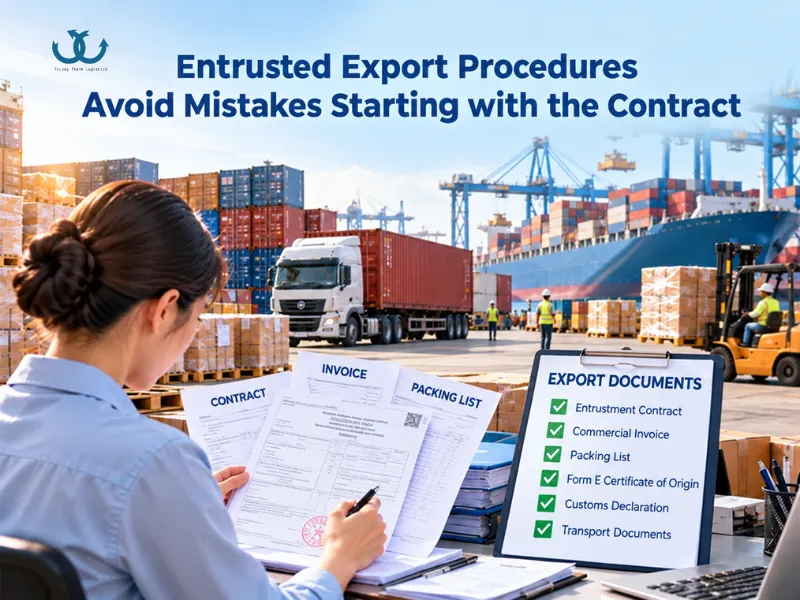
Import-export entrustment: this is the broadest arrangement – the entrusted party is named on the entire set of trade documents (the foreign trade contract, commercial invoice, packing list, customs declaration), not just the customs filing. This suits businesses that don’t hold a business registration matching the goods they need to import/export, or individuals who lack the legal standing to be named on an international transaction themselves.
2. Quick comparison of the three options: Self – handling, customs brokerage services and import – export entrustment service
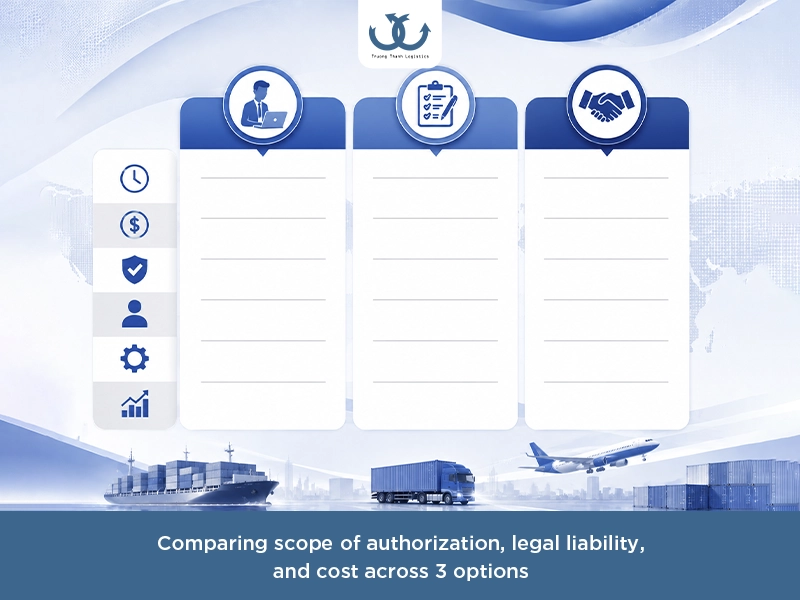
| Criteria | in-house | Customs brokerage | Entrustment |
| Named party on contract/invoice | The business | The business | The entrusted company |
| Named party on customs declaration | The business | The business (the service provider only handles the filing) | The entrusted company |
| Primary legal liability | The business | The business | The entrusted company (within the scope of entrustment) |
| Needs a matching business license/registration | Yes | Yes | Not required (uses the entrusted company’s registration) |
| Infrastructure investment (digital signature, software) | Required | Not required | Not required |
| Best suited for | Businesses with large, steady volume and existing experience | Businesses with proper legal standing that just need help with customs filing | New businesses, those lacking the right business registration, or individuals who can’t be named on transactions themselves |
| Cost | High upfront investment, ongoing operating cost | Per shipment or long-term contract | Usually a percentage of shipment value or as agreed |
(The table above is for general reference. The actual cost depends on the specific service provider and shipment.)
3. When should you choose each option?
Choose in-house handling when: the business already has the right business registration, a large and steady enough import-export volume to justify infrastructure investment, and an experienced team able to handle situations like yellow/red-channel inspection or specialized checks.
Choose a customs brokerage when: the business already has full legal standing and the right registration for its goods, but doesn’t want to invest in declaration infrastructure or lacks experience working directly with customs for just a few shipments.
Choose import – export entrustment service when:
- The business doesn’t have a business registration matching the goods it needs to import/export.
- An individual or household business lacks the legal standing to be named on an international transaction.
- The business is exporting/importing a special product for the first time and wants an experienced partner to be named on and share responsibility for the first shipment.
4. Frequently asked questions about import – export entrustment service
Is entrustment always more expensive than handling everything in-house?
Not necessarily. Handling things in-house requires upfront investment (infrastructure, staffing) that only makes sense once volume is large enough to spread that cost. For new businesses or those with unstable volume, entrustment is often more cost-effective than building an entire in-house operation for just a few shipments.
If a business already has the right business registration, does it still need entrustment?
Not necessarily. In that case, the business can choose between handling things in-house or hiring a customs brokerage, depending on whether it has enough experience and infrastructure. Entrustment makes more sense when the business genuinely lacks the legal standing to be named on the transaction itself.
What legal risks should I watch for with import – export entrustment if a dispute arises?
Since the entrusted company is named on the entire set of trade documents, the business should have a clear entrustment contract specifying the rights, obligations, and liability of each party, to avoid unnecessary disputes later.
Can a business switch from entrustment to handling things in-house once it’s familiar with the market?
Yes. Many businesses start with entrustment for their first few shipments to get familiar with the process, then switch to handling things in-house or hiring a customs brokerage once they have enough experience and the appropriate business registration in place.
5. Truong Thanh Logistics provides reliable import – export entrustment service
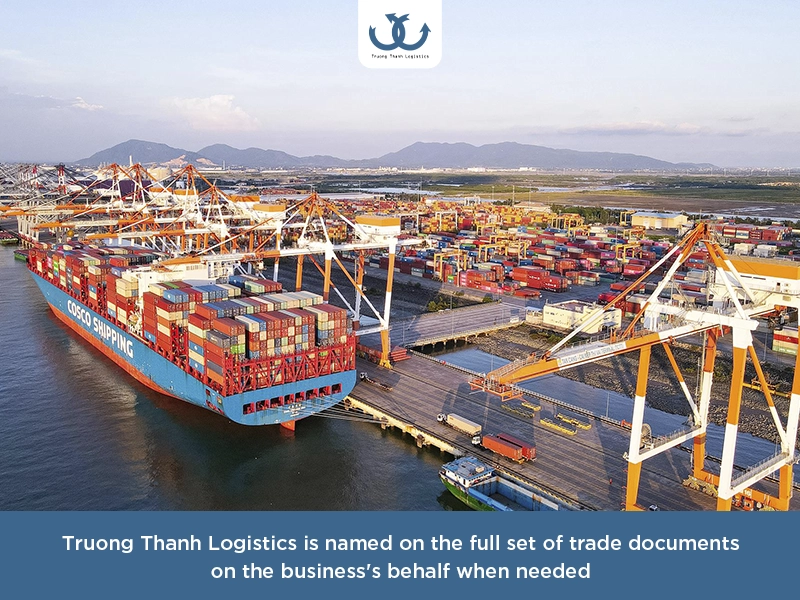
Truong Thanh Logistics provides import – export entrustment service, acting as the named party on the entire set of trade documents on the business’s behalf when needed, including:
- Advice on which arrangement fits your situation (in-house, brokerage or entrustment)
- Being named on the contract, invoice and customs declaration within the scope of entrustment
- Handling the full customs procedure, applying for C/Os, and international transport
If your business is weighing whether to handle things in-house, hire a customs brokerage, or use entrustment, contact Truong Thanh Logistics directly for advice tailored to your situation:
Trường Thành Logistics – Professional & Dedicated
Hotline: +84 915 36 38 39
Head Office: 5th Floor, Tower A, Song Da Building, Pham Hung Street, Tu Liem Ward, Hanoi, Vietnam.
Email: sale@truongthanhjsc.com
info@truongthanhlogistics.com
Website: https://truongthanhlogistics.com
HAI PHONG BRANCH
Address: Room C103, TTC Building, 630 Le Thanh Tong Street, Hai An Ward, Hai Phong City, Vietnam.
DA NANG BRANCH
Address: 126 Chau Thi Vinh Te Street, Ngu Hanh Son Ward, Da Nang City, Vietnam.
HO CHI MINH CITY BRANCH
Address: Room 41, 4th Floor, Casanova Building, 85 Nguyen Son Street, Phu Thanh Ward, Ho Chi Minh City, Vietnam
Fanpage: TRƯỜNG THÀNH LOGISTICS
You may also find it useful to read the service page Import – Export Entrustment for more detail on the service or Comprehensive Customs Declaration Service if you only need support with the customs filing itself.
Note: This article is for general reference, compiled based on legal regulations in force at the time of publication. Rules on import – export entrustment and each party’s liability may change over time; businesses should contact Trường Thành Logistics directly for advice tailored to their situation.