Entrusted export procedures may seem straightforward, as businesses only need to appoint a service provider to handle the export process on their behalf. However, once a shipment is being processed, each stage involves specific documentation, responsibilities, and coordination between the two parties. Understanding the process from the outset helps businesses avoid unnecessary complications later.
Requirements to Check Before Proceeding with Entrusted Export Procedures
Before signing an entrusted export agreement, businesses should review the following five key areas:
- Check product-specific export regulations: Determine whether the goods are prohibited or temporarily suspended from export, require an export license, or are subject to specialized inspections. If the goods are subject to specific conditions, all applicable legal requirements must be met before proceeding with the entrusted export arrangement.
- Verify the status and capabilities of the entrusted export service provider: Check the provider’s legal status as a trader, registered business activities, and experience in customs clearance and import-export procedures. For specialized goods, businesses should prioritize providers with relevant experience handling the same product category.
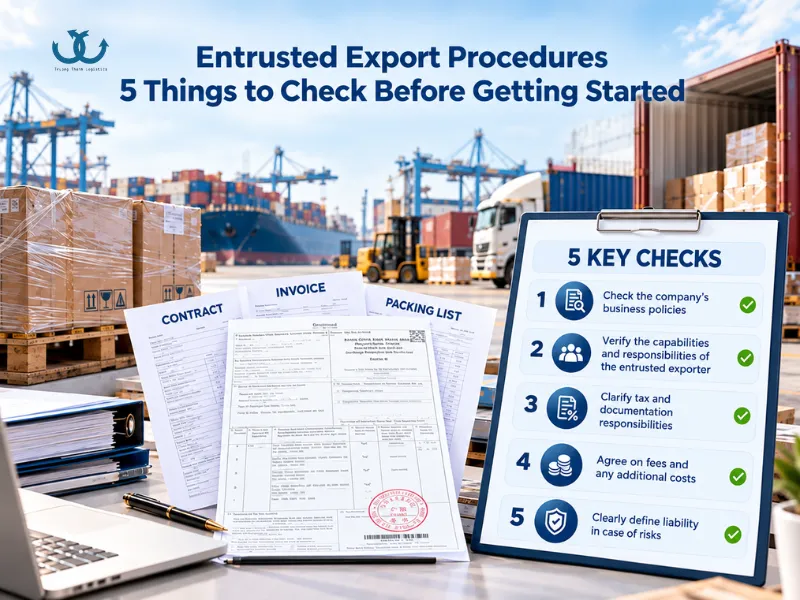
- Clarify tax and documentation responsibilities: Agree in advance on which party is responsible for taxes, invoices, supporting documents, and related financial obligations. This helps prevent missing documentation during tax declarations or post-export reconciliation.
- Agree on service fees and additional costs: The contract should clearly specify the entrusted export service fee, freight charges, port fees, insurance, specialized inspection fees, and how additional expenses will be handled. Businesses should not agree to a single lump-sum fee without defining the scope of services.
- Clearly define responsibilities in the event of risks: Determine which party is responsible if goods are held, documents contain errors, customs clearance is delayed, goods are damaged, or unexpected costs arise. These provisions provide a basis for cooperation when problems occur during shipment processing.
Reviewing these areas in advance helps businesses determine whether the goods are eligible for export, whether the service provider is suitable, and how to minimize potential issues involving documentation, taxes, and customs clearance.
>>> Read more: Entrusted export: Procedures, Required Documents and Invoicing in 2026.
Updated Entrusted Export Procedures for 2026
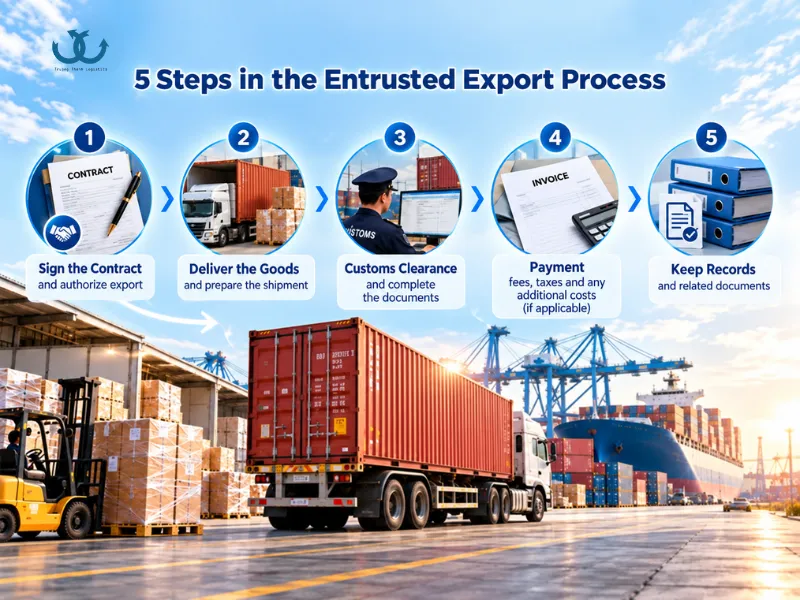
According to Official Letter No. 15467/CHQ-GSQL dated April 20, 2026, issued by the Customs Department, entrusted export procedures are carried out in accordance with the applicable regulations on entrusted exports, customs procedures, and documentation requirements. The process can be summarized in the following steps:
Step 1: Prepare and Sign the Entrusted Export Agreement
Both parties review the product name, HS code, product-specific regulations, and export requirements before proceeding. The entrusting party and the entrusted export service provider then sign an agreement specifying the scope of work, costs, and each party’s responsibilities.
Step 2: Transfer Goods from the Entrusting Party to the Service Provider
The entrusting party hands over the goods and necessary supporting documents to the entrusted export service provider. Appropriate handover records should be prepared to support goods management and subsequent export procedures.
Step 3: Submit Customs Declarations and Complete Customs Procedures
The entrusted export service provider submits the customs declaration and prepares the required documents in accordance with current regulations. If the shipment is selected for a physical inspection, the goods must be presented to customs authorities for inspection before customs clearance can be completed.
Step 4: Issue Invoices and Complete Payment
After the goods have completed export customs for goods and received customs clearance confirmation, the entrusting party and the entrusted export service provider issue invoices and supporting documents in accordance with applicable regulations. Both parties then reconcile the value of the goods, entrusted export service fees, and related expenses before completing payment.
Step 5: Finalize and Retain Documentation
After the export is completed, both parties reconcile and retain the entrusted export agreement, customs declaration, invoices, shipping documents, payment records, and other relevant paperwork. A complete set of records helps businesses with tax declarations, transaction reconciliation, and explanations when required.
Common Mistakes in Entrusted Export Procedures
Errors in entrusted export procedures can occur at various stages, from contract signing and document preparation to customs declarations and tax reporting. Carefully checking each step from the beginning helps minimize document amendments and unexpected costs.
1. Missing Important Clauses in the Entrusted Export Agreement
If the agreement does not clearly specify service fees, additional expenses, or responsibilities in the event of customs clearance delays or other incidents, disputes may arise between the two parties.
What businesses should do: Clearly agree on service fees, related expenses, each party’s responsibilities, and risk management procedures before signing the contract.
2. Inaccurate Customs Declaration Information
Common errors include incorrect HS codes, product descriptions, quantities, or information about the parties involved. Inconsistencies may require document amendments or result in additional inspections.
What businesses should do: Cross-check the contract, commercial invoice, packing list, and actual goods before submitting the customs declaration. Carefully verify the HS code and applicable product regulations.
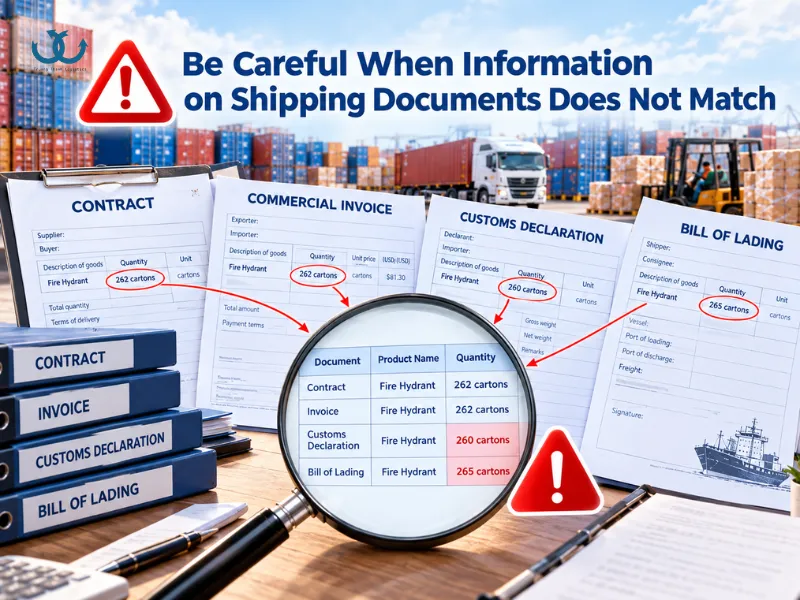
3. Inconsistent Information Across Documents
Discrepancies in product descriptions, quantities, or values between the entrusted export agreement, export contract, invoices, customs declaration, and shipping documents can complicate document reconciliation.
What businesses should do: Establish a consistent set of shipment information and cross-check all documents before starting the export procedures.
4. Confusion Regarding Invoices and Value-Added Tax (VAT)
Businesses may confuse the value of the goods with the fees for Export Entrustment Services, resulting in incorrect invoice issuance or tax declarations.
What businesses should do: Clearly distinguish each transaction, determine the appropriate invoice issuance timing and tax obligations of both the entrusting party and the service provider, and retain sufficient supporting documents evidencing the export transaction.
5. Failure to Retain Complete Post-Export Documentation
After the goods have been exported, retaining only the customs declaration while omitting the entrusted export agreement, invoices, payment records, or other supporting documents can make subsequent reconciliation and explanations more difficult.
What businesses should do: Compile a complete post-export file and retain all documents related to both the entrusted export transaction and the shipment. This facilitates inspections, tax declarations, and tax finalization when necessary.
When Should Businesses Use Entrusted Export Services?
Businesses may consider using entrusted export services when:
- They lack experience handling international trade contracts, shipping documents, customs declarations, and related procedures.
- They do not have specialized import-export personnel to oversee the entire process, from document preparation to delivery to overseas partners.
- They are unfamiliar with preparing commercial invoices, packing lists, customs declarations, Certificates of Origin (C/O), or other documents required for specific shipments.
- Their goods require export licenses, specialized inspections, or compliance with specific regulatory requirements and may need support from an experienced service provider.
- They are exporting to a new market for the first time and are unfamiliar with its documentation requirements, shipping and delivery arrangements, and relevant regulations.
- They want to outsource part or all of their export operations to a specialist under an agreed scope of work, reducing the workload associated with documentation, customs procedures, and logistics.
For manufacturing, trading, and distribution businesses, entrusted export services can reduce the operational workload. However, businesses must still carefully control product information, contracts, documentation, and related tax obligations.
Truong Thanh Logistics Provides End-to-End Entrusted Export Services for Individual Shipments
Businesses exporting for the first time often encounter difficulties checking product regulations, preparing documents, and completing customs procedures, particularly when they do not have dedicated personnel.
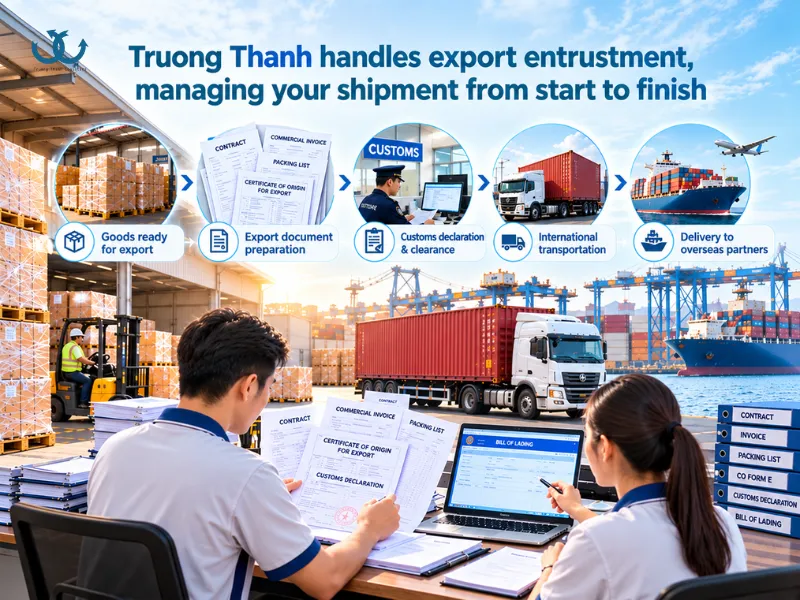
Truong Thanh Logistics supports businesses with Entrusted Import-Export, including:
- Checking product-specific regulations and requirements.
- Advising on and preparing documents and supporting paperwork.
- Submitting customs declarations and completing customs procedures.
- Coordinating international transportation and finalizing post-export documentation.
Frequently Asked Questions About Entrusted Export Procedures
Question 1: Is a Separate License Required for Entrusted Exports?
A separate “entrusted export license” is not required solely because an export is conducted through an entrusted arrangement. However, either the entrusting party or the entrusted export service provider must hold the required license if the goods fall under a category subject to export licensing or specific export conditions.
Question 2: Whose Name Appears on the Customs Declaration, and Who Pays the Taxes?
The entrusted export service provider is listed as the exporter on the customs declaration, while the goods owner is identified in the section for the entrusting party. Under Article 3 of Vietnam’s 2016 Law on Export and Import Duties, both the goods owner and the entrusted organization are considered taxpayers.
Question 3: How Long Do Entrusted Export Procedures Take?
Entrusted export procedures typically take 1–3 working days for preparation and customs clearance, provided the goods meet all applicable requirements and are not subject to specialized inspections.
Completing entrusted export procedures correctly from the outset helps businesses minimize potential issues during shipment processing while clearly defining the responsibilities of the entrusting party and the entrusted export service provider. Each product and destination market may involve specific requirements that should be reviewed before implementation.
Send your shipment details to Truong Thanh Logistics so our team can discuss and agree on a suitable solution with your business before proceeding.
Truong Thanh Logistics – Professional and Dedicated Service
Hotline: 0915 36 38 39
Head Office: 5th Floor, Tower A, Song Da Building, Pham Hung Street, Tu Liem Ward, Hanoi, Vietnam.
Email: sale@truongthanhjsc.com / info@truongthanhlogistics.com
Website: https://truongthanhlogistics.com/en/
HAI PHONG BRANCH
Address: Room C103, TTC Building, 630 Le Thanh Tong Street, Hai An District, Hai Phong, Vietnam.
DA NANG BRANCH
Address: 126 Chau Thi Vinh Te Street, Ngu Hanh Son Ward, Da Nang, Vietnam.
HO CHI MINH CITY BRANCH
Address: Room 41, 4th Floor, Casanova Building, 85 Nguyen Son Street, Phu Thanh Ward, Ho Chi Minh City, Vietnam.
Fanpage: TRUONG THANH LOGISTICS