Handicraft export procedures are becoming a major concern for many businesses as the demand for Vietnamese products in international markets continues to grow. To ensure smooth export operations, companies must prepare complete documentation and follow the correct procedures in accordance with current regulations.
What Products Are Classified as Handicrafts?
Before learning about handicraft export procedures, businesses need to accurately identify their product category. This is the basis for preparing documentation and applying the appropriate HS code.
Common handicraft products include:
- Ceramic and pottery handicrafts
- Bamboo and rattan products
- Wooden handicrafts
- Hand-embroidered paintings
- Lacquerware products
- Handmade decorative items
- Products made from sedge grass and water hyacinth
- Handmade decorative lamps
- Traditional souvenirs
Each product category may have specific regulations related to raw material origin, quarantine requirements, or certificates of origin. Therefore, businesses should carefully review the relevant policies before exporting.
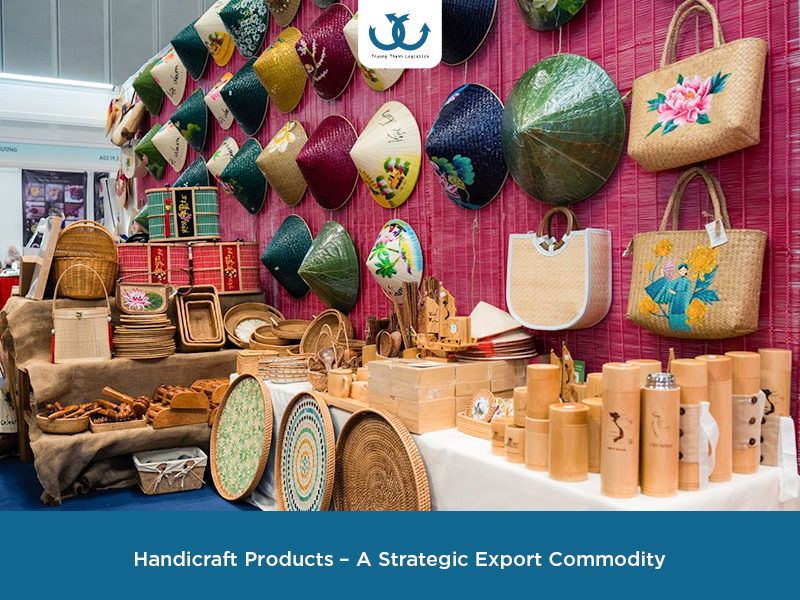
Overview of Export Potential and Policies for Handicraft Products
Identifying the correct product policy is an extremely important first step. It helps businesses understand tax obligations and specialized inspection procedures related to the goods.
Are Handicraft Products Prohibited from Export?
Under current regulations, handicraft products are not included in Vietnam’s list of prohibited export goods. Businesses can therefore conduct export activities normally.
However, the raw materials used in production must have legal and transparent origins. For wooden handicraft products, businesses are not allowed to use rare or protected timber species. Products made from wildlife materials must strictly comply with CITES regulations.
Export Tax Policies for Handicraft Products
The Vietnamese government has implemented many policies to encourage the export of traditional craft village products. Therefore, the export tax rate for most handicraft products is currently 0%.
In addition, exported goods are exempt from Value Added Tax (VAT). This provides Vietnamese businesses with a significant competitive advantage in terms of costs.
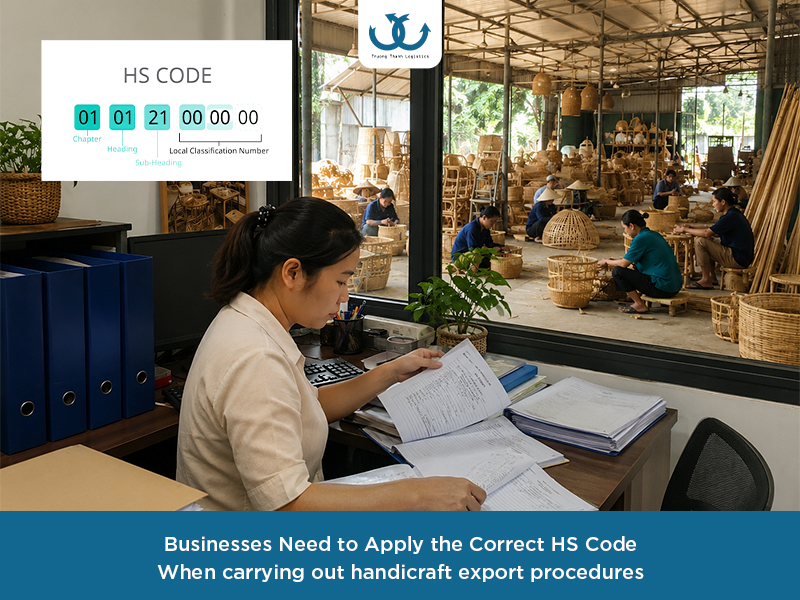
How to Determine HS Codes for Handicraft Products
HS codes serve as the basis for tariff application and global product classification. Since handicraft products are highly diverse, HS code classification depends largely on the material composition.
HS Codes for Bamboo, Rattan, and Woven Products
Products made from plant-based materials are generally classified under Chapter 46 of the tariff schedule.
- HS Code 4602: Products made directly from plaiting materials of vegetable origin
- HS Code 4602.11.00: Handmade baskets, containers, and boxes made from bamboo weaving
HS Codes for Ceramic Handicrafts
Decorative ceramic products are generally classified under Chapter 69 of the import-export tariff schedule.
- HS Code 6912: Tableware and kitchenware made of common ceramics
- HS Code 6913: Statuettes and other ornamental ceramic handicraft products
HS Codes for Wooden Handicrafts
Wooden handicraft products are usually classified under Chapter 44 of the tariff schedule.
- HS Code 4420: Wooden jewelry boxes, cases, and decorative wooden items
- HS Code 4421: Other handcrafted wooden products
Because many handicraft products combine multiple materials, HS classification requires careful analysis. Businesses should consult experienced professionals to determine the most accurate HS code for each shipment.
Specialized Certificates Required for Export
Depending on the material composition and import country requirements, businesses may need to prepare additional certificates. These documents help facilitate customs clearance at the destination port.
Phytosanitary Certificate
This certificate is mandatory for products made from plant-based materials such as bamboo, rattan, and wood. Its purpose is to ensure that goods are free from harmful insects and plant diseases.
The process generally includes:
- Submitting quarantine declarations through the National Single Window system
- Inspection officers collecting samples directly at the warehouse
- Issuance of the phytosanitary certificate once the products meet required standards
Fumigation Certificate
Raw handicraft products are highly vulnerable to termites and insects during transportation. Therefore, businesses are required to fumigate goods with chemicals before loading them into containers.
The fumigation certificate proves that the goods have undergone proper pest treatment.
Certificate of Origin (C/O)
A Certificate of Origin allows importers to benefit from tariff preferences under free trade agreements.
Vietnam has signed many major FTAs such as EVFTA and CPTPP. Obtaining the appropriate C/O form helps improve the competitiveness of Vietnamese products in international markets.
Detailed Handicraft Export Procedures
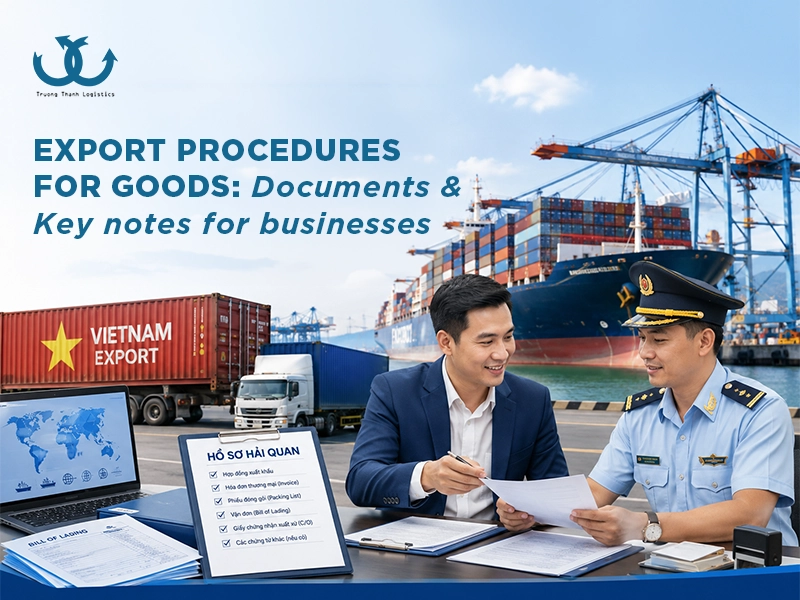
The export customs clearance process is carried out through the following standardized steps. Businesses should closely coordinate each stage to ensure timely shipment processing.
Step 1: Prepare a Complete Export Customs Dossier
Businesses need to gather essential commercial documents, including:
- Commercial Invoice
- Detailed Packing List
- International Sales Contract
- Quarantine and fumigation certificates (if required)
Step 2: Submit Customs Declaration via Electronic System
Customs declarants enter shipment information into the VNACCS/VCIS system operated by Vietnam Customs.
All declared information must fully match the prepared documentation. After submission, the system automatically classifies the shipment into customs inspection channels.
Green Channel Declaration
Goods are automatically cleared by the system.
Yellow Channel Declaration
Customs authorities conduct detailed inspection of the shipment documents.
Red Channel Declaration
Goods are subject to physical inspection at the customs branch office.
Step 3: Complete Customs Clearance and Cargo Delivery
After customs clearance is completed, businesses pay port-related charges and hand over the cargo to the shipping carrier for international transportation.
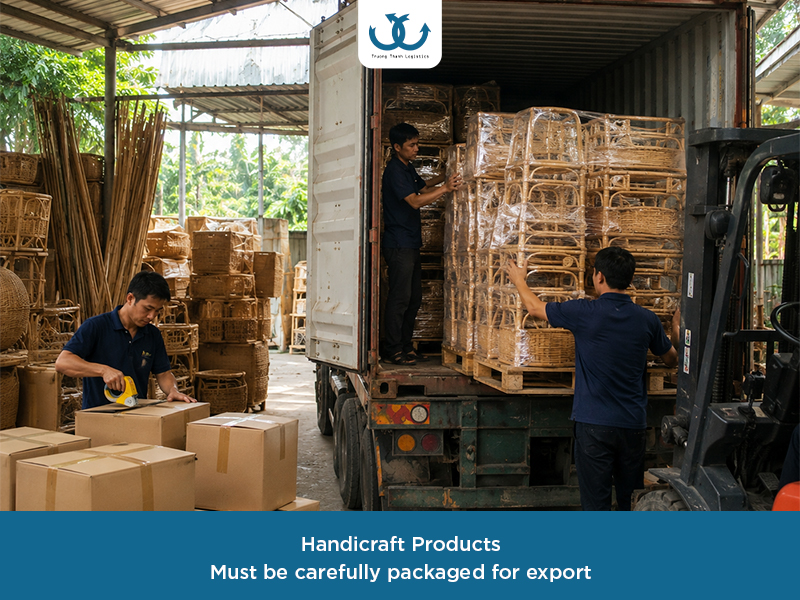
Important Notes on Packaging and Transporting Handicraft Products
Handicraft products are often fragile and vulnerable to moisture, cracking, or breakage during transportation. Therefore, businesses should pay special attention to packaging procedures.
Use Professional Shock-Absorbing Materials
For ceramic and glass products, bubble wrap should be used carefully. Goods should be packed in thick carton boxes to minimize impact during transportation.
Place Moisture Absorbers Inside Packages
Bamboo and rattan products are highly sensitive to humidity. Moisture-absorbing packets help prevent mold growth during long sea transport.
Use Treated Wooden Pallets
When stacking cartons on pallets, businesses should ensure that the pallets have been properly fumigated. This helps avoid shipment rejection by customs authorities in the importing country.
Truong Thanh Logistics – A Trusted Export Procedure Consulting Partner
If your business is facing difficulties with handicraft export procedures, Truong Thanh Logistics is ready to assist. We are proud to be a reputable provider of professional end-to-end logistics solutions.
About Truong Thanh Logistics
Truong Thanh Logistics has a team of specialists with extensive knowledge of international customs regulations. We possess years of practical experience handling shipments from traditional craft villages.
Our global agent network enables us to support businesses in delivering goods to countries worldwide. We are committed to providing professional, transparent, and dedicated services.

Service Categories at Truong Thanh Logistics
Customs Procedure Consulting
We provide free consultation on HS code classification and product policies.
Specialized Certification Services
We support quarantine procedures, fumigation services, and rapid, accurate C/O applications.
Multimodal International Transportation
We provide cost-optimized sea freight and air freight solutions.
24/7 Customer Support
Our specialists are always available to answer questions and handle unexpected issues promptly.
Comprehensive Solutions to Optimize Supply Chains
Truong Thanh Logistics does more than handling standard administrative paperwork. We provide businesses with comprehensive long-term strategic logistics solutions.
Our team guides clients in preparing documentation professionally and systematically. Customs declaration procedures are carried out efficiently to minimize storage and demurrage costs.
Our service fees remain highly competitive and completely transparent.
Completing handicraft export procedures requires careful attention to detail and extensive practical experience. Do not let documentation issues delay your business opportunities.
Let Truong Thanh Logistics become your trusted companion on the journey to global markets. Contact Truong Thanh Logistics today for in-depth consultation from our logistics experts.
Trường Thành Logistics – Professional & Dedicated
Hotline: +84 915 36 38 39
Head Office: 5th Floor, Tower A, Song Da Building, Pham Hung Street, Tu Liem Ward, Hanoi, Vietnam.
Email: sale@truongthanhjsc.com
info@truongthanhlogistics.com
Website: https://truongthanhlogistics.com
HAI PHONG BRANCH
Address: Room C103, TTC Building, 630 Le Thanh Tong Street, Hai An Ward, Hai Phong City, Vietnam.
DA NANG BRANCH
Address: 126 Chau Thi Vinh Te Street, Ngu Hanh Son Ward, Da Nang City, Vietnam.
HO CHI MINH CITY BRANCH
Address: Room 41, 4th Floor, Casanova Building, 85 Nguyen Son Street, Phu Thanh Ward, Ho Chi Minh City, Vietnam
Fanpage: TRƯỜNG THÀNH LOGISTICS