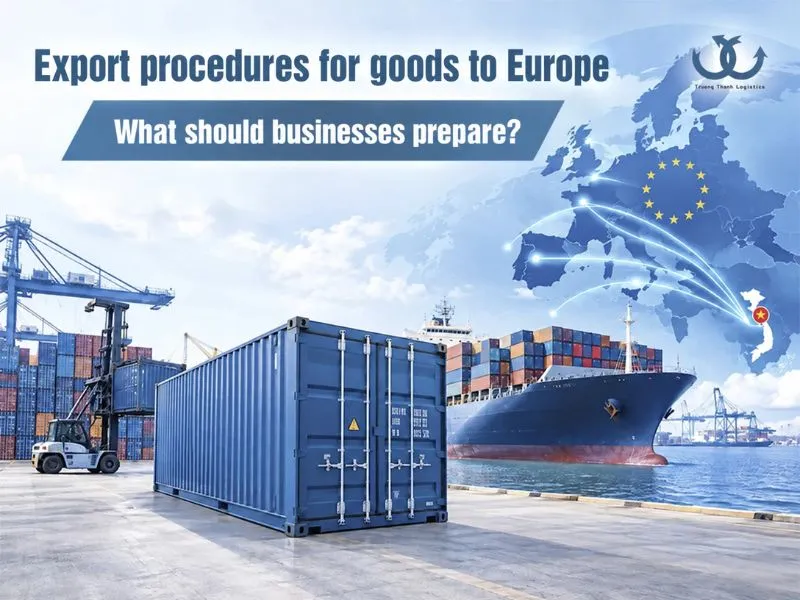
Exporting to the EU offers Vietnamese businesses an opportunity to expand into international markets, reach global customers, and increase product value. However, to ensure smooth customs clearance, businesses must prepare the correct documentation, determine the appropriate HS codes, comply with import requirements, and select suitable shipping solutions.
So, what documents are required to export goods to the EU, what are the procedures, and how can businesses benefit from EVFTA tariff preferences? Truong Thanh Logistics provides a detailed guide below.
Why Should Vietnamese Businesses Export to the EU?
The EU is a major economic market with a well-developed trading system and strong demand for various imported products. Vietnamese businesses can explore opportunities in manufacturing, processing, and consumer goods industries.
Key Advantages of Exporting to the EU
- The EU consists of 27 member states. Exporting to the EU gives businesses opportunities to develop customer networks across the region.
- The EVFTA helps many Vietnamese products benefit from reduced or eliminated import duties according to a specific tariff reduction schedule. The applicable tariff rate depends on the HS code, rules of origin, and valid supporting documents.
- Meeting quality, safety, and traceability requirements helps businesses establish long-term commercial relationships with international partners.
Common Vietnamese Products Exported to the EU
Notable export product categories include:
- Mobile phones, machinery, and electronic components.
- Textiles and garments, footwear.
- Coffee, cashew nuts, and processed agricultural products.
- Seafood.
- Wood and furniture products.
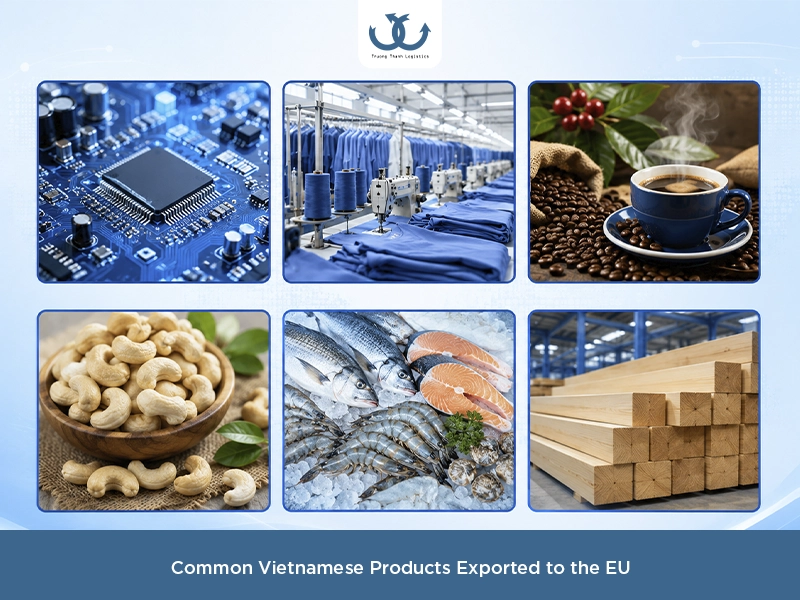
Each product category has specific requirements regarding HS codes, tariffs, origin, certifications, and specialized inspections. Businesses should identify the applicable requirements before signing export contracts.
What Are the Procedures for Exporting Goods to the EU?
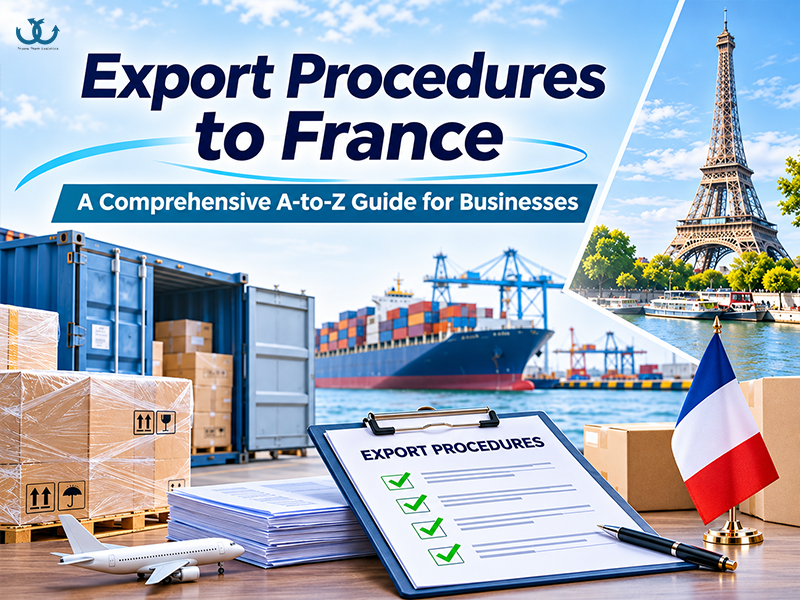
The export process generally involves market research, contract signing, document preparation, customs declaration, transportation, and coordination of customs clearance in the importing country.
Step 1: Identify the Target Market and HS Code
Businesses need to identify the importing country, HS code, applicable tariff rates, and product-specific regulatory policies. Incorrect classification may result in inaccurate declarations, requests for document amendments, or additional tax liabilities.
Step 2: Sign the Commercial Contract and Agree on Incoterms
The commercial contract should clearly specify the product name, quantity, unit price, total value, payment terms, delivery schedule, and responsibilities of each party.
Commonly used Incoterms include FOB, CIF, FCA, CPT, CIP, DAP, and DDP.
Businesses should select the appropriate delivery terms based on their ability to manage transportation and assume the corresponding responsibilities.
Step 3: Prepare the Export Documentation
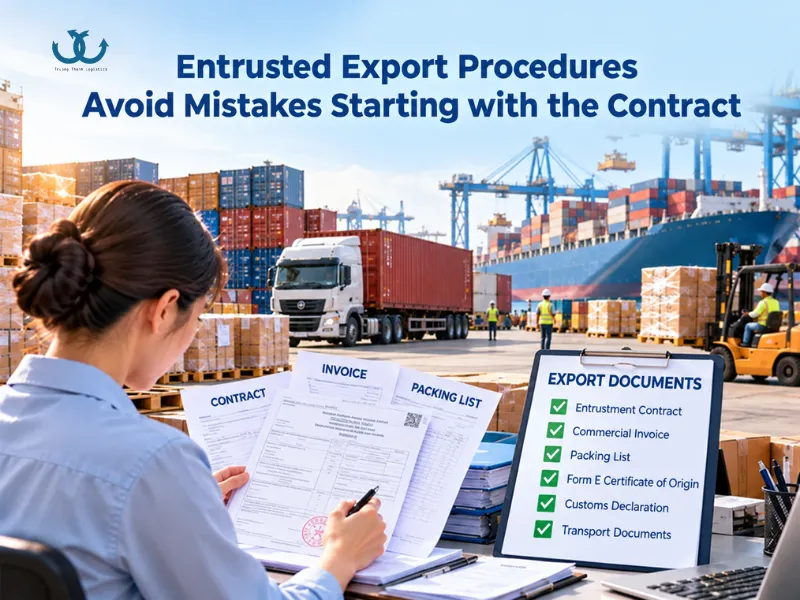
The basic export documentation may include:
- Sales Contract: Specifies the terms and conditions agreed upon by the buyer and seller.
- Commercial Invoice: Contains information about the seller, buyer, product description, quantity, value, and delivery terms.
- Packing List: Specifies the number of packages, gross and net weight, dimensions, and packaging details.
- Bill of Lading (B/L) / Air Waybill (AWB): The relevant transportation document.
- Export Customs Declaration: Required for customs procedures in Vietnam.
- Certificate of Origin (C/O): Prepared when proof of origin is required or when applying for EVFTA tariff preferences.
- Specialized Documents: May include licenses, phytosanitary or veterinary certificates, quality certificates, and other documents depending on the products.
Not every shipment requires all the documents listed above. Actual documentation requirements depend on the product type, transaction terms, and applicable regulations.
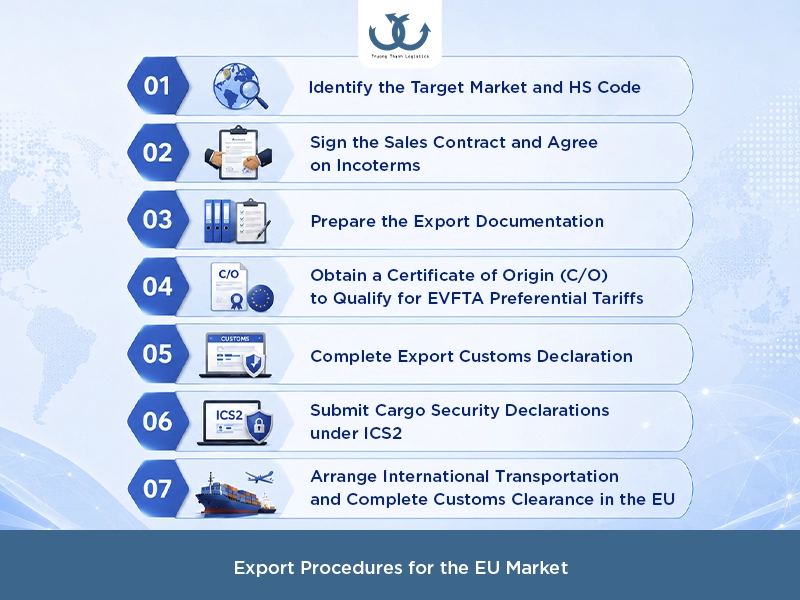
Step 4: Obtain a Certificate of Origin (C/O) to Benefit from EVFTA
The EVFTA provides opportunities for many Vietnamese-origin products to enjoy preferential import tariffs. To qualify for these preferences, goods must satisfy the relevant rules of origin and be accompanied by valid proof of origin.
Businesses should check the following:
- HS codes and origin criteria.
- Sources of raw materials.
- Manufacturing processes.
- Documents supporting the declared origin.
- Applicable origin certification methods for the relevant products.
For goods exported from Vietnam to the EU, businesses must correctly identify the EVFTA origin certification mechanism. The EU’s REX self-certification system should not automatically be treated as a substitute for Vietnam’s applicable C/O mechanism.
Step 5: Complete Export Customs Declaration
The exporter or its authorized customs agent carries out customs declarations in accordance with applicable regulations.
The basic procedure includes:
- Preparing product information and supporting documents.
- Submitting an electronic customs declaration.
- Receiving the customs channeling result.
- Supplementing documents or presenting the goods for inspection if required.
- Completing customs procedures and moving the goods into the export customs supervision area.
Businesses should ensure consistency between the customs declaration, commercial invoice, packing list, and transportation documents before submission.
Step 6: Submit Cargo Security Declarations Under ICS2
ICS2 is the EU’s Import Control System 2, which collects advance cargo security information before goods arrive in or transit through the EU. Shipments falling within its scope must have the required Entry Summary Declaration (ENS) data submitted in accordance with applicable regulations.
The responsibility for filing depends on the transportation mode, the roles of the parties involved, and the agreements within the supply chain.
Vietnamese exporters should coordinate with importers, carriers, or freight forwarders to provide accurate cargo descriptions, shipper and consignee details, and the necessary transportation information.
Incomplete or inaccurate information may result in requests for additional data, inspections, or transportation delays.
Step 7: International Transportation and Customs Clearance in the EU
After completing export procedures to the EU, goods are transported using the agreed shipping method, such as sea transport, air freight, rail freight, or multimodal transportation.
Transit times depend on the departure port, destination port, vessel or flight schedules, transshipment arrangements, and operational conditions.
Upon arrival in the EU, the importer or its authorized representative handles import customs declarations, pays import duties where applicable, processes VAT, and completes specialized inspections if required.
Businesses should agree in advance on who is responsible for customs clearance and payment of charges at the destination.
What Taxes Apply When Exporting Goods to the EU?
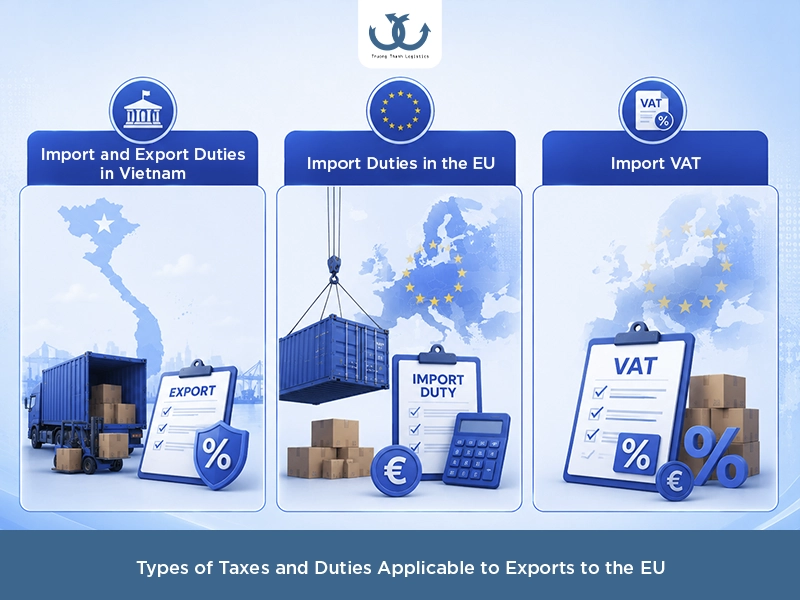
Export Duties in Vietnam
Most ordinary exported goods are not subject to export duties. However, certain products listed in the applicable taxable categories may incur export duty obligations. Businesses should check the relevant policies based on their HS codes and current regulations.
Import Duties in the EU
Import duties depend on the HS code, country of origin, applicable standard tariff rates, EVFTA preferences, and any relevant trade defense measures.
The EVFTA does not mean that all Vietnamese goods are automatically exempt from import duties upon entering the EU. Businesses should check the applicable tariff rates through Access2Markets and verify whether the preferential treatment requirements are met.
Import VAT
Import VAT is applied in accordance with the regulations of the relevant EU member state. VAT rates and tax treatment may vary between member states.
Exporters should clearly determine in the commercial contract which party is responsible for paying VAT and other import-related charges.
Trường Thành Logistics Supports Your Exports to the EU
Truong Thanh Logistics helps businesses select suitable logistics solutions based on cargo characteristics, delivery schedules, and budgets.
Our support services may include:
- Consulting on suitable sea freight and air freight solutions.
- Reviewing commercial invoices, packing lists, and transportation documents.
- Supporting customs clearance procedures for goods within the agreed service scope.
- Monitoring shipment schedules and coordinating solutions to handle unexpected issues.
- Advising on relevant logistics costs.
To receive suitable advice, businesses should provide information about the product type, expected HS code, quantity, weight, dimensions, pickup location, and delivery destination.
Frequently Asked Questions About Exporting to the EU
Question 1: What documents are required to export goods to the EU?
Basic documents may include a sales contract, commercial invoice, packing list, customs declaration, bill of lading, and certificate of origin where required. Depending on the product, businesses may need additional licenses, quarantine certificates, or specialized certifications.
Question 2: Are exported goods to the EU subject to export duties in Vietnam?
Not all exported goods are subject to export duties in Vietnam. Businesses should check the applicable HS codes and tax policies. In the EU, imported goods may be subject to import duties and VAT.
Question 3: How does the EVFTA benefit businesses exporting to the EU?
The EVFTA allows many Vietnamese products to enjoy preferential import tariffs when they meet the applicable rules of origin and are supported by valid origin documentation.
Question 4: Should businesses choose sea freight or air freight to the EU?
Sea freight is generally suitable for large shipments or businesses looking to optimize transportation costs. Air freight is more suitable for urgent shipments, high-value goods, or cargo with strict delivery deadlines.
Question 5: Can small businesses export goods to the EU?
Yes. Small businesses can export to the EU provided they meet the relevant legal requirements, product standards, and applicable procedures. They should start by identifying the target market, HS codes, and suitable transportation solutions.
Exporting to the EU requires businesses to prepare accurate documentation, determine the correct HS codes, verify rules of origin, and comply with EU import requirements.
If you are preparing a shipment to Europe, make sure to review all documents, agree on delivery responsibilities, and select an appropriate transportation solution.
Truong Thanh Logistics is ready to support businesses in exploring shipping options, preparing documentation, and coordinating logistics procedures for exports to the EU.
Contact Truong Thanh Logistics for consultation tailored to your actual shipping requirements.
Truong Thanh Logistics – Professional and Dedicated Service
Hotline: 0915 36 38 39
Head Office: 5th Floor, Tower A, Song Da Building, Pham Hung Street, Tu Liem Ward, Hanoi, Vietnam.
Email: sale@truongthanhjsc.com / info@truongthanhlogistics.com
HAI PHONG BRANCH
Address: Room C103, TTC Building, 630 Le Thanh Tong Street, Hai An, Hai Phong, Vietnam.
DA NANG BRANCH
Address: 126 Chau Thi Vinh Te Street, Ngu Hanh Son Ward, Da Nang, Vietnam.
HO CHI MINH CITY BRANCH
Address: Room 41, 4th Floor, Casanova Building, 85 Nguyen Son Street, Phu Thanh Ward, Ho Chi Minh City, Vietnam.
Fanpage: TRƯỜNG THÀNH LOGISTICS