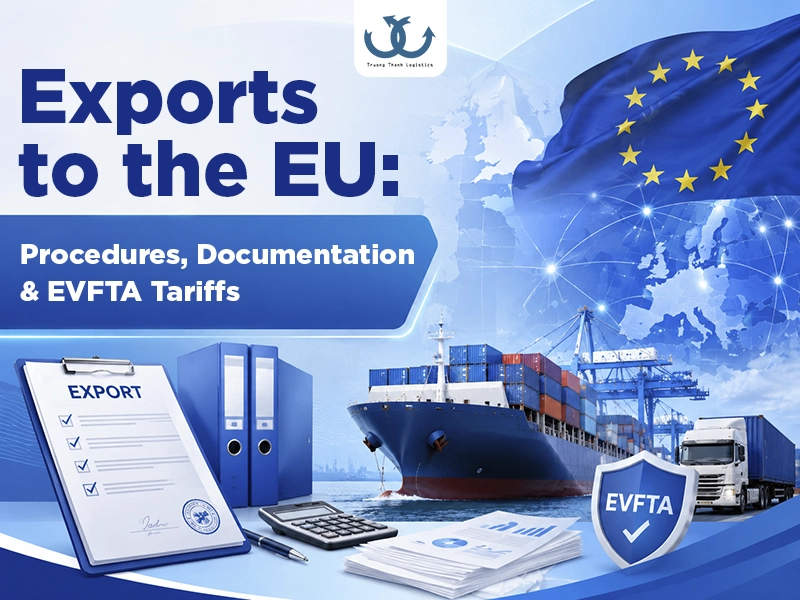
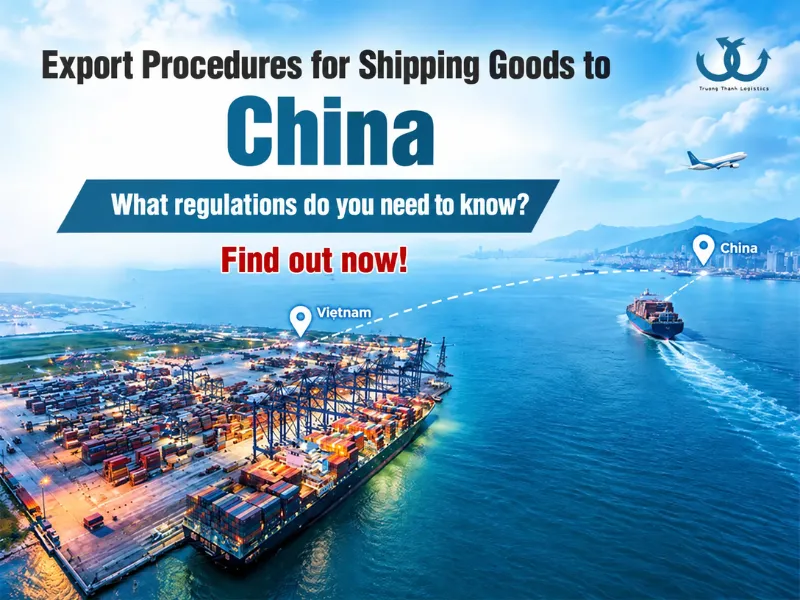
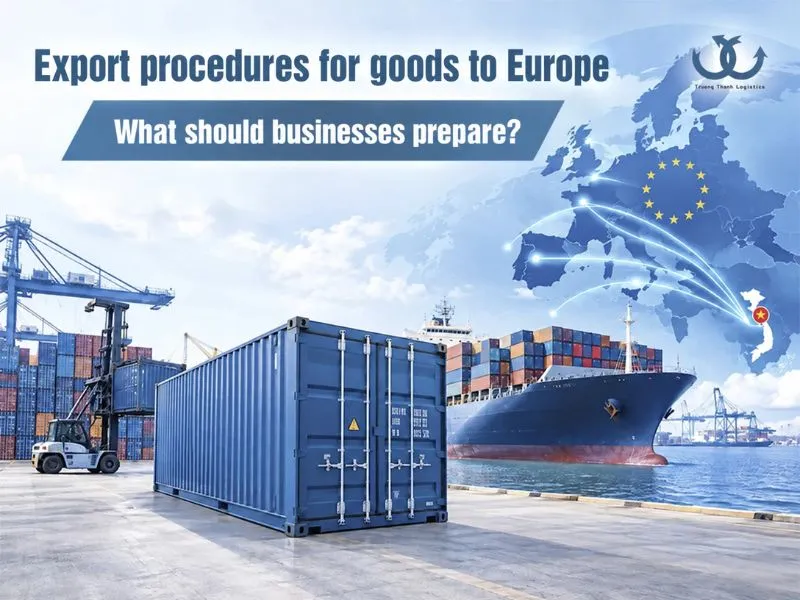
France is one of the largest economies in the European Union (EU), with an extensive network of seaports and airports connecting it to the rest of the continent. For Vietnamese businesses, export procedures for shipping goods to France can be relatively straightforward if they understand three layers of regulations: Vietnamese customs requirements, EU import requirements, and tariff preferences under the EVFTA.
This article provides a comprehensive overview of the entire process, helping businesses prepare proactively, avoid delays, and minimize additional costs.
What Are the Steps Involved in Exporting Goods to France?
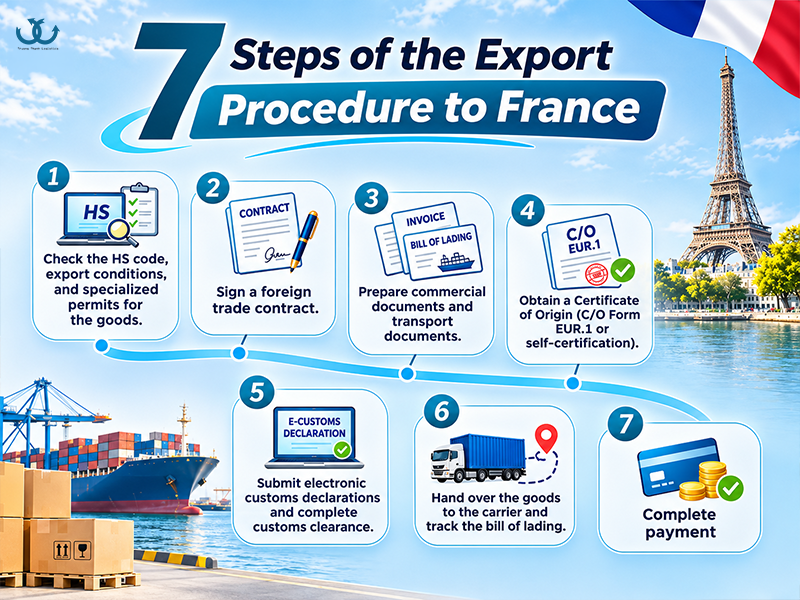
A shipment to France typically involves the following seven steps:
- Check the HS code, export requirements, and any specialized licenses required for the goods.
- Sign an international trade contract and agree on Incoterms with the French partner.
- Prepare commercial documents and transportation documents.
- Obtain a certificate of origin (C/O Form EUR.1 or an applicable origin declaration) to qualify for preferential tariffs.
- Submit an electronic customs declaration and complete customs clearance.
- Hand over the goods to the shipping line or airline and track the transport document.
- Complete payment, retain records, and apply for VAT refunds if eligible.
What Requirements Must Be Prepared Before Exporting Goods to France?
Requirements in Vietnam
Businesses need a tax identification number, a digital signature, an account on the VNACCS/VCIS electronic customs system, and appropriate business activities.
Goods subject to specialized management, such as food, seafood, timber, and pharmaceuticals, may require relevant licenses, quarantine procedures, or certificates.
Check the HS code from the beginning, as it determines applicable tariff rates, product-specific policies, and rules of origin.
Requirements in the EU and France
The importer needs an EORI number. Industrial products may require CE marking and technical documentation. Food products must comply with food safety standards, and product labels may need to be provided in French.
Carriers must also submit cargo security data before goods arrive in the EU through the Import Control System 2 (ICS2). Therefore, booking information and transport documents must be accurate, with specific and detailed cargo descriptions.
What Documents Are Required to Export Goods to France?
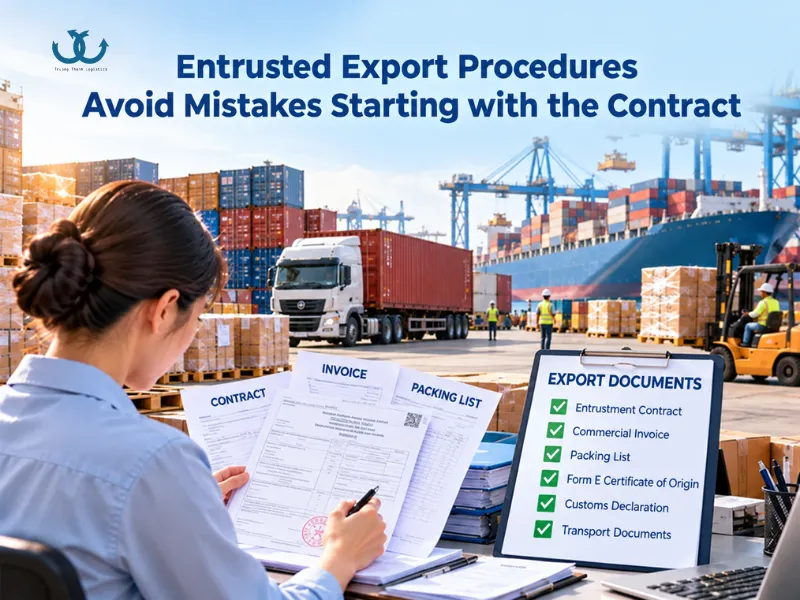
A standard export documentation package typically includes:
- Commercial Contract (Sales Contract)
- Commercial Invoice
- Packing List
- Ocean Bill of Lading (B/L) or Air Waybill (AWB)
- C/O Form EUR.1 or an applicable origin declaration
- Licenses, quarantine documents, and specialized certificates, depending on the goods
- Insurance Certificate, if shipping under CIF or CIP terms
The product description, quantity, weight, value, and delivery terms must be consistent across all documents.
Even a minor discrepancy may result in a customs declaration amendment request or the goods being held at the port.
How Is Customs Clearance for Exports to France Carried Out?
The process includes preparing and transmitting the customs declaration; receiving a green, yellow, or red channel classification; submitting documents or undergoing physical inspection if required; paying export duties if applicable; and finally completing customs clearance before the goods are loaded onto the means of transport.
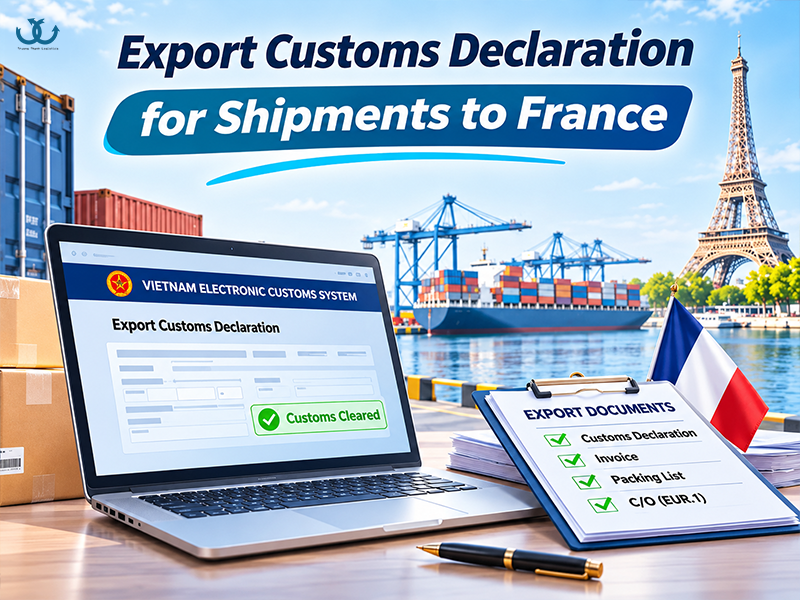
Vietnam’s customs legal framework is continuously being updated, including the 2026 amendments to the Customs Law. Businesses should therefore check the regulations in force at the time of shipment.
How Can Businesses Benefit from EVFTA Tariff Preferences When Exporting to France?
France is an EU member state, so Vietnamese goods are subject to the EU’s common customs tariff framework.
To benefit from preferential tariff rates under the EVFTA, goods must satisfy the applicable rules of origin and have valid proof of origin.
Circular No. 14/2026/TT-BCT, effective May 10, 2026, specifies the relevant forms of origin documentation, including C/O Form EUR.1 and origin declarations issued by eligible exporters.
For shipments valued at more than EUR 6,000, exporters may apply for C/O Form EUR.1 through agencies and organizations authorized by the Ministry of Industry and Trade.
Goods must be transported directly and continuously from Vietnam to the EU. Businesses must also retain complete supporting origin records, such as material lists, production norms, and purchasing documents.
Should You Ship Goods to France by Sea or by Air?
Sea freight is suitable for large-volume shipments, goods of moderate value, and cargo that is not urgently required.
Common destination ports include Le Havre and Marseille-Fos. Transit times typically take several weeks, depending on the route.
Air freight is suitable for high-value goods, samples, and seasonal products. Shipments to Paris Charles de Gaulle Airport typically take only a few days.
For smaller shipments, Less than Container Load (LCL) shipping can help reduce costs, although additional time is required for cargo consolidation.
Choose the appropriate shipping method based on Incoterms, delivery deadlines, and budget.
Common Mistakes When Exporting Goods to France
- Incorrect HS code classification, resulting in inaccurate duty calculations and incorrect rules-of-origin determination.
- Applying for a C/O too late or failing to provide sufficient supporting documents, resulting in the loss of tariff preferences.
- Using vague cargo descriptions such as “general merchandise,” which may trigger additional questions during security data submission.
- Missing required licenses or specialized quarantine procedures.
Why Choose Truong Thanh Logistics for Exporting Goods to France?
Truong Thanh Logistics is a logistics and international freight forwarding provider supporting businesses shipping to European destinations, including France.
When using our services, you benefit from:
Comprehensive procedural support: Guidance on preparing documentation, determining HS codes, obtaining C/O Form EUR.1, optaining for import and export licenses, and handling specialized permits.
A wide range of services: Ocean freight (FCL and LCL), air freight, customs declaration services, and domestic transportation to ports and airports.
Transparent quotations: Clear cost breakdowns for each service, helping minimize unexpected expenses.
Continuous shipment tracking: Regular cargo status updates throughout the journey and prompt assistance when issues arise.
Solutions tailored to your needs: Support for both regular exporters and businesses shipping their first consignment.
Contact our hotline at 0915 36 38 39 or email Sales@truongthanhjsc.com for advice on a suitable shipping plan.
Frequently Asked Questions (FAQ)
Question 1: Do I need an export license to ship goods to France?
It depends on the type of goods. Ordinary goods generally do not require an export license, but goods subject to specialized management, such as food, seafood, timber, and pharmaceuticals, may require relevant licenses or quarantine procedures.
Question 2: Are goods exported to France exempt from import duties?
Goods that satisfy the applicable rules of origin and have valid supporting documentation may qualify for preferential tariff rates under the EVFTA.
The specific tariff rate depends on the HS code of each product.
Question 3: Where can I obtain a C/O Form EUR.1?
C/O Form EUR.1 is issued by agencies and organizations authorized by the Ministry of Industry and Trade.
Businesses should submit their applications within the appropriate timeframe to avoid losing tariff preferences.
Question 4: How long does it take to ship goods from Vietnam to France?
Air freight typically takes a few days, while sea freight usually takes several weeks.
Actual transit times depend on the route, carrier, and peak shipping seasons.
Question 5: Can businesses without export experience outsource their export procedures?
Yes. Businesses can authorize a logistics provider to handle documentation, customs clearance, certificates of origin, and transportation to reduce the risk of errors.
TRUONG THANH LOGISTICS – PROFESSIONALISM AND DEDICATION
Hotline: 0915 36 38 39
Head Office: 5th Floor, Tower A, Song Da Building, Pham Hung Street, Tu Liem Ward, Hanoi, Vietnam.
Email: sale@truongthanhjsc.com / info@truongthanhlogistics.com
HAI PHONG BRANCH
Address: Room C103, TTC Building, 630 Le Thanh Tong Street, Hai An District, Hai Phong, Vietnam.
DA NANG BRANCH
Address: 126 Chau Thi Vinh Te Street, Ngu Hanh Son Ward, Da Nang City, Vietnam.
HO CHI MINH CITY BRANCH
Address: Room 41, 4th Floor, Casanova Building, 85 Nguyen Son Street, Phu Thanh Ward, Ho Chi Minh City, Vietnam.
Fanpage: TRUONG THANH LOGISTICS