Exporting goods to China requires careful preparation of documentation, compliance with product standards, and completion of customs clearance procedures. To ensure a smooth process, businesses need to understand the export procedures for goods to China based on each product category, particularly import regulations and applicable quarantine requirements.
So, what documents do businesses need to prepare, what steps must they follow, and what should they keep in mind?
1. What Are the Requirements for Exporting Goods to China?
Before signing a contract or starting production, businesses should verify both the export conditions in Vietnam and the import requirements in China. The key considerations include the following:
Legal Requirements and Business Eligibility
- Legal status: Vietnamese businesses must hold a valid business registration certificate that allows them to conduct import-export activities or export through a formal export entrustment arrangement.
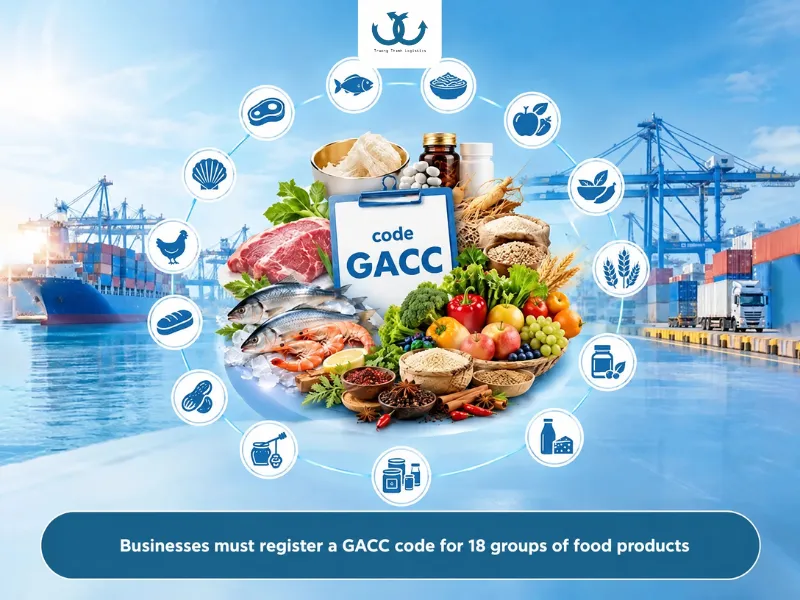
- GACC registration: Under Chinese regulations, businesses subject to the relevant requirements must register with the General Administration of Customs of China (GACC) before exporting food products. For 18 regulated food categories, including meat, seafood, edible bird’s nests, fruits and vegetables, spices, grains, and functional foods, the application must be submitted through the competent Vietnamese authority for recommendation or approval, or processed under the applicable registration procedure.
Product Requirements and Technical Standards
- Product-specific regulations: Businesses should verify the product’s HS code to determine whether it is permitted for import, prohibited, or subject to specialized management requirements.
- Food safety and quarantine standards: Agricultural products, food, and seafood must meet applicable plant or animal quarantine requirements and food safety standards, including limits on pesticide residues.
- Packaging and labeling: Packaging and containers must comply with China’s import requirements. Product labels must provide the required product information and traceability details.
2. What Documents Are Required to Export Goods to China?
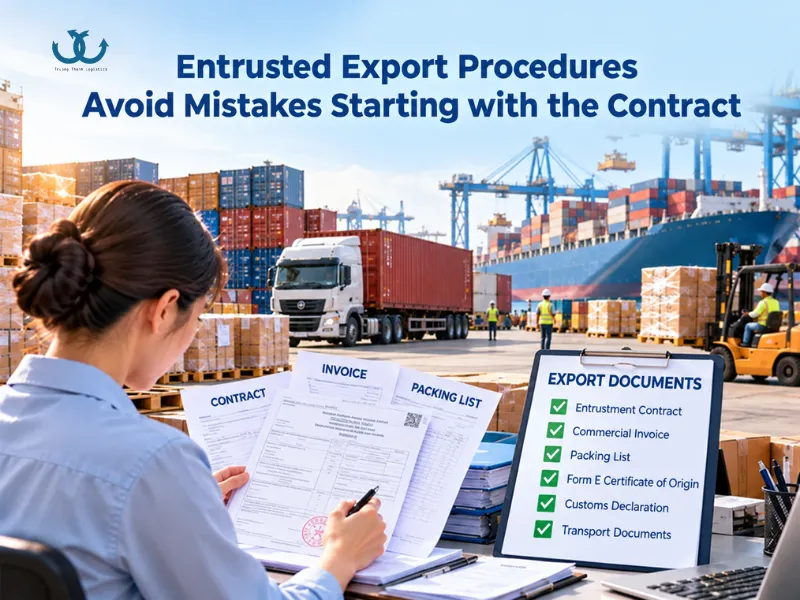
For a standard commercial shipment, businesses generally need to prepare the following documents:
| Document | Purpose |
| Sales Contract | Specifies the goods, quantity, value, delivery terms, and payment conditions. |
| Commercial Invoice | Records the transaction value and buyer and seller information. |
| Packing List | Details the number of packages, weight, dimensions, and packing specifications. |
| Export Customs Declaration | Declares shipment information to Vietnamese customs authorities. |
| Transport Documents | Supports the transportation and delivery of goods under the selected shipping method. |
| Certificate of Origin (C/O) | Certifies the origin of goods and supports preferential tariff claims when applicable conditions are met. |
For wooden packaging materials subject to regulation, exporters should check the applicable treatment requirements and ISPM 15 marking standards.
Before submitting the customs declaration, businesses should cross-check the product description, HS code, quantity, weight, and consignee details across all documents. This helps minimize discrepancies, amendments, and additional costs.
3. Export Procedures for Goods to China: A Step-by-Step Guide
The export process generally involves six main steps, from checking product regulations to completing documentation and payment procedures.
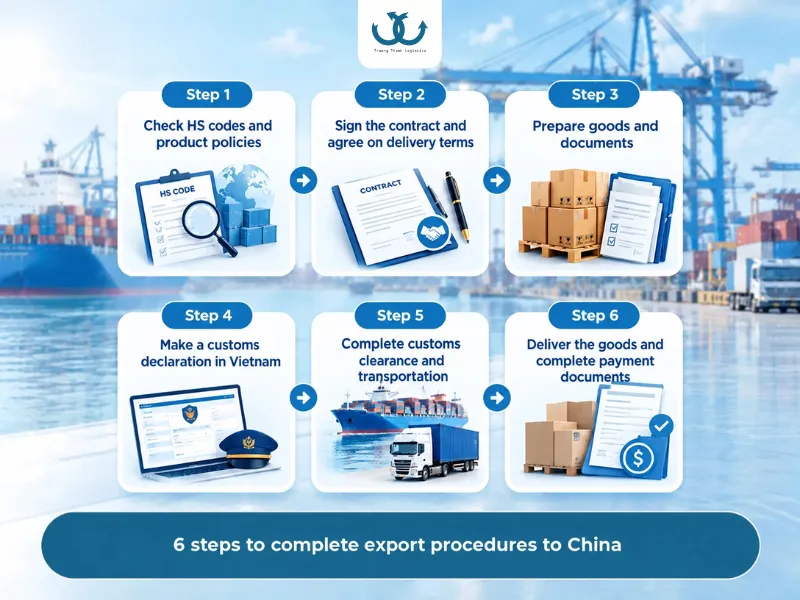
Step 1: Check the HS Code and Product-Specific Regulations
Businesses must determine the appropriate HS code based on the product name, composition, intended use, and characteristics to identify applicable duties, licensing requirements, and specialized management regulations.
Exporters should also verify China’s import requirements, particularly for agricultural products, food, and goods of plant or animal origin.
Step 2: Sign the Contract and Agree on Delivery Terms
The foreign trade contract should clearly specify the quantity, price, quality standards, packaging specifications, delivery schedule, and payment method.
Both parties should also agree on the applicable Incoterms, delivery location, and responsibilities for freight, port charges, and border-related fees.
Step 3: Prepare the Goods and Supporting Documents
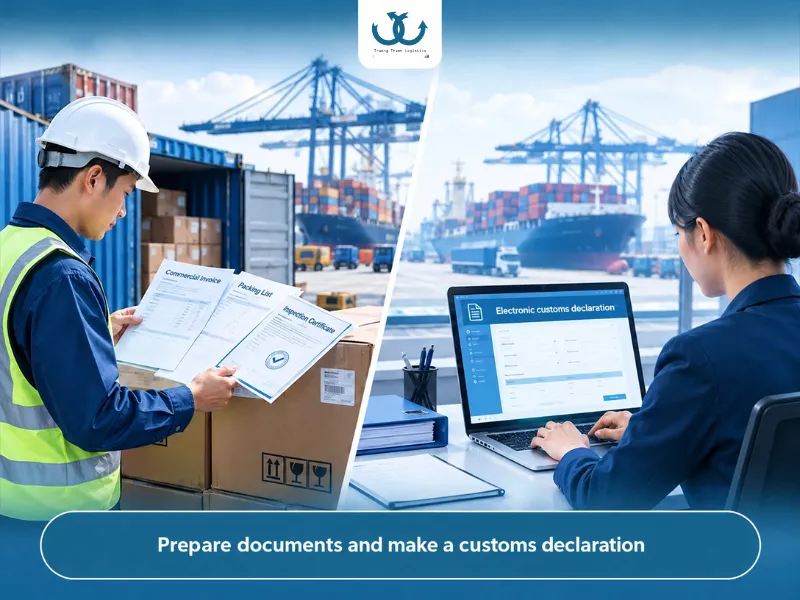
Businesses proceed with procurement or production, quality inspections, packaging, and preparation of the commercial invoice, packing list, and other relevant documents.
For goods subject to quarantine or specialized inspections, the required certificates must be obtained in accordance with applicable regulations.
For food exports to China, exporters should verify whether the production facility must register with the General Administration of Customs of China (GACC) and comply with relevant food safety and traceability requirements.
Step 4: Complete Customs Declarations in Vietnam
The exporter or customs broker submits an electronic customs declaration containing information about the goods, HS code, customs value, quantity, and supporting documents.
Depending on the customs channel assigned, the shipment may be cleared immediately or undergo document checks and physical inspection.
Businesses should keep up with current regulations, including Decree No. 167/2025/ND-CP and Consolidated Document No. 46/VBHN-BTC, to ensure compliance with applicable customs procedures.
Step 5: Complete Customs Clearance and Arrange Transportation
Once customs requirements have been satisfied, the business arranges China Vietnam freight transport by sea, road, or another suitable method based on the shipment’s characteristics, delivery schedule, and budget.
Both parties should ensure that the information on transport documents matches the customs declaration. Exporters should also monitor vessel schedules, trucking schedules, and processing times at ports or border crossings to minimize delays and ensure timely delivery.
Step 6: Deliver the Goods and Finalize Payment Documents
After delivery, the exporter collects the bill of lading or other transport documents, commercial invoice, and delivery records in accordance with the agreement with the buyer.
If a C/O or specialized certificate is required, the exporter should verify that all documentation is complete and issued at the appropriate time.
Finally, the business should retain the relevant records for tax declarations, tax finalization, and international payment reconciliation.
4. Important Considerations When Exporting to China in 2026
When exporting goods to China in 2026, businesses need to stay updated on import regulations and prepare documents according to the requirements for each product category. Four key considerations are particularly important.
GACC Registration Under Order No. 280
From June 1, 2026, China applies new regulations on the registration of overseas food production facilities. Businesses should determine which requirements apply to their products and complete the relevant registration procedures.
Verify Import Requirements for Agricultural Products
Depending on the product, exporters may need to meet quarantine requirements, obtain planting area registration codes, register packing facilities, and maintain traceability records.
Exporters should verify these conditions before purchasing goods or arranging shipment.
Choose Between C/O Form E and RCEP
Both mechanisms, including C/O Form E under the ASEAN–China Free Trade Area (ACFTA) and the RCEP Certificate of Origin, may allow businesses to benefit from preferential tariffs when the relevant rules of origin are satisfied.
Businesses should compare HS codes, applicable tariff rates, and documentary requirements to determine which option is more suitable for their shipments.
Estimate Logistics Costs in Advance
Businesses should clearly establish responsibility for freight, customs clearance fees, warehousing, and storage charges under the agreed delivery terms.
For perishable goods, additional time should be allowed for inspections, along with contingency plans in case transportation schedules change.
5. Truong Thanh Logistics Supports Export Procedures for Goods to China
Trường Thành Logistics assists businesses with export procedures for goods to China, from reviewing product-specific regulations and preparing documents to customs declarations and international transportation.
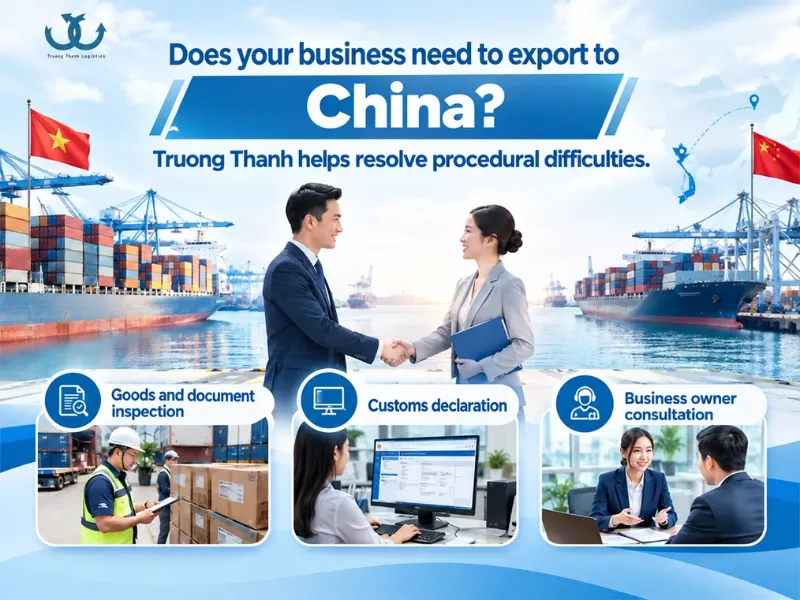
Depending on the characteristics of the shipment and the business’s actual needs, the company provides advice and support in the following areas:
- Reviewing product information, the proposed HS code, and requirements that need to be verified before export.
- Coordinating document preparation, customs declarations, and the handling of issues arising during customs clearance within the agreed service scope.
- Identifying the certificates and supporting documents that may be required based on the product characteristics and destination market requirements.
- Recommending suitable shipping routes and transportation methods based on delivery schedules, cargo characteristics, and the estimated budget.
To receive advice tailored to their requirements, businesses should provide the product name, HS code if available, quantity, weight, cargo collection location, and information about the importer in China.
These details help the logistics team review the documentation, identify requirements that need to be addressed, and develop an appropriate logistics plan.
6. Frequently Asked Questions About Export Procedures for Goods to China
Is C/O Form E Mandatory When Exporting Goods to China?
No. C/O Form E is not mandatory for every shipment. It is used to claim preferential tariffs under the ASEAN–China Free Trade Area (ACFTA) when the goods meet the applicable rules of origin and other relevant conditions.
Businesses should check the buyer’s requirements and compare Form E with the RCEP certificate of origin option where applicable.
What Is the Difference Between Formal and Informal Exports to China?
Formal exports are conducted under a foreign trade contract with complete customs declarations and supporting documentation. This method supports documented commercial transactions and may allow preferential tariff treatment through a C/O when the relevant conditions are met.
Informal or border trade may involve simpler procedures but is more heavily influenced by cross-border trade policies and restrictions.
Which Products Require GACC Registration?
Under Order No. 280 of the General Administration of Customs of China (GACC), effective June 1, 2026, overseas facilities involved in the production, processing, or storage of food must register under the applicable procedure for their product category.
Among these, 18 food categories require registration through the competent authority of the exporting country.
Can Businesses Use Export Entrustment Services to Ship Goods to China?
Yes. Businesses can use export entrustment services or engage customs brokers and logistics providers to perform appropriate tasks under the service agreement and applicable laws.
Before proceeding, the parties should clearly agree on the entity named as the exporter, document responsibilities, tax obligations, and payment arrangements.
To ensure a smooth export process to China, businesses should prepare the required documentation correctly and select a transportation solution suited to their shipment.
Send your shipment details to Trường Thành Logistics for advice on suitable export procedures and a detailed quotation.
Truong Thanh Logistics – Professional and Dedicated Service
Hotline: 0915 36 38 39
Head Office: 5th Floor, Tower A, Song Da Building, Pham Hung Street, Tu Liem Ward, Hanoi, Vietnam.
Email: sale@truongthanhjsc.com / info@truongthanhlogistics.com
Website: https://truongthanhlogistics.com/en/
HAI PHONG BRANCH
Address: Room C103, TTC Building, 630 Le Thanh Tong Street, Hai An, Hai Phong, Vietnam.
DA NANG BRANCH
Address: 126 Chau Thi Vinh Te Street, Ngu Hanh Son Ward, Da Nang, Vietnam.
HO CHI MINH CITY BRANCH
Address: Room 41, 4th Floor, Casanova Building, 85 Nguyen Son Street, Phu Thanh Ward, Ho Chi Minh City, Vietnam.
Fanpage: TRƯỜNG THÀNH LOGISTICS