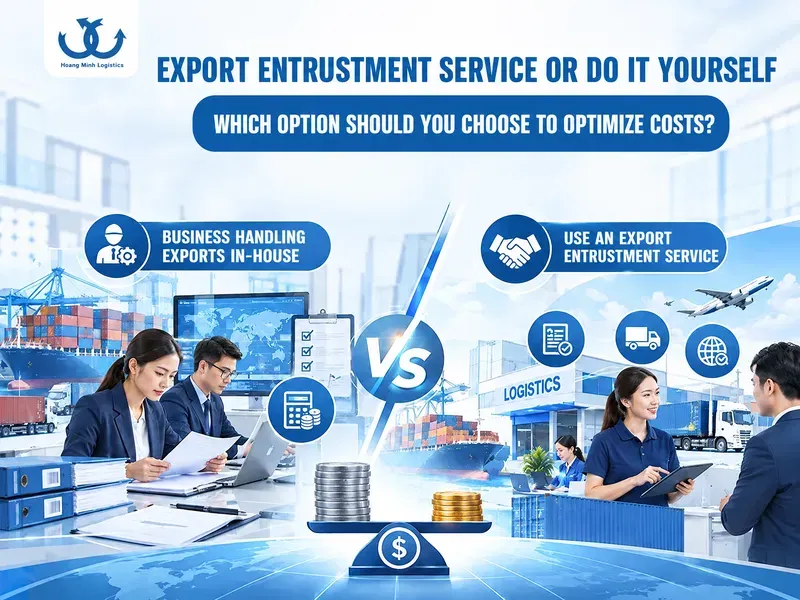
To ensure smooth access to the EU market, export procedures for goods to Europe must be carefully prepared, starting with product classification and import requirements. In addition to completing customs formalities in Vietnam, businesses must comply with applicable product standards, rules of origin, and specific requirements imposed by the destination market.
Key Requirements Before Exporting Goods to Europe
To enter the EU market, businesses should review all applicable requirements during the initial preparation stage rather than focusing solely on customs clearance.
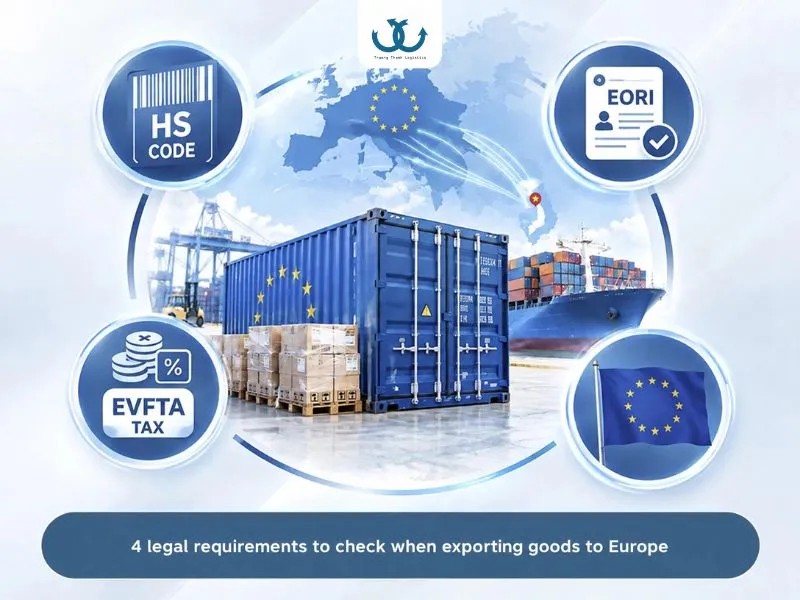
Comply with Legal Requirements and Identify the Correct HS Code
Before exporting, businesses must determine the appropriate product classification and identify the import requirements applicable to their goods.
Key considerations include:
- EORI number: Importers in the EU generally need an Economic Operators Registration and Identification (EORI) number to conduct customs procedures. This identifier is used for customs-related activities within the EU.
- HS code classification: Businesses must identify the correct Harmonized System (HS) code and verify the EU regulations applicable to each product.
- Import duties and EVFTA preferences: The HS code serves as the basis for determining applicable import duties and assessing eligibility for preferential tariffs under the EU-Vietnam Free Trade Agreement (EVFTA), provided the goods satisfy the relevant rules of origin.
- Country-specific requirements: Individual EU member states may impose additional national requirements. Businesses should confirm these details with their importers before shipping.
Meet Product Standards and Traceability Requirements
Goods exported to the EU must comply with the technical, safety, and environmental requirements applicable to their product categories. Businesses should identify the relevant standards in advance and prepare the necessary certifications, technical documentation, and traceability records.
Common requirements include:
- Safety and technical standards: Products such as machinery, electrical and electronic equipment, toys, and medical devices may need to comply with applicable EU legislation and bear the CE marking before being placed on the market.
- Chemical and environmental regulations: Goods containing chemicals and certain electrical or electronic products may be subject to the Registration, Evaluation, Authorisation and Restriction of Chemicals (REACH) and Restriction of Hazardous Substances (RoHS) requirements.
- Food, agricultural, and forestry products: Depending on the product, exporters may need to meet food safety, residue, quality, raw material origin, or certification requirements, such as HACCP, GlobalG.A.P., EU Organic, and FSC.
- Traceability: For commodities covered by the EU Deforestation Regulation (EUDR), including coffee, rubber, cocoa, timber, soy, and palm oil, businesses may need to prepare data demonstrating product origin and production locations in accordance with the EU’s deforestation-related requirements.
What Documents Are Required for Exporting Goods to Europe?
Export Procedures for Goods to Europe depends on the type of goods, transportation method, and import requirements of the destination country. In general, businesses should prepare the following three groups of documents.
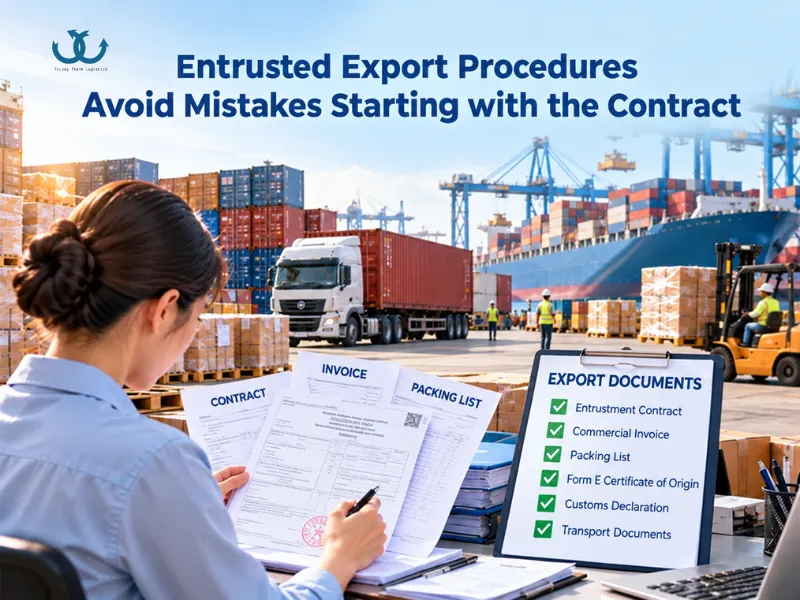
1. Commercial and Transportation Documents
These documents support commercial transactions, customs declarations, and the transportation of goods.
- Sales Contract or Purchase Order (PO): Specifies product details, quantities, prices, Incoterms, and payment terms.
- Commercial Invoice: States the value of the shipment and serves as a reference for payment and customs declarations.
- Packing List: Provides details of the number of packages, packaging specifications, gross and net weight, and cargo volume.
- Bill of Lading (B/L) or Air Waybill (AWB): Transportation documents issued by the shipping line or airline, respectively.
- Export Customs Declaration: Submitted by the exporter to declare the shipment to Vietnamese customs authorities.
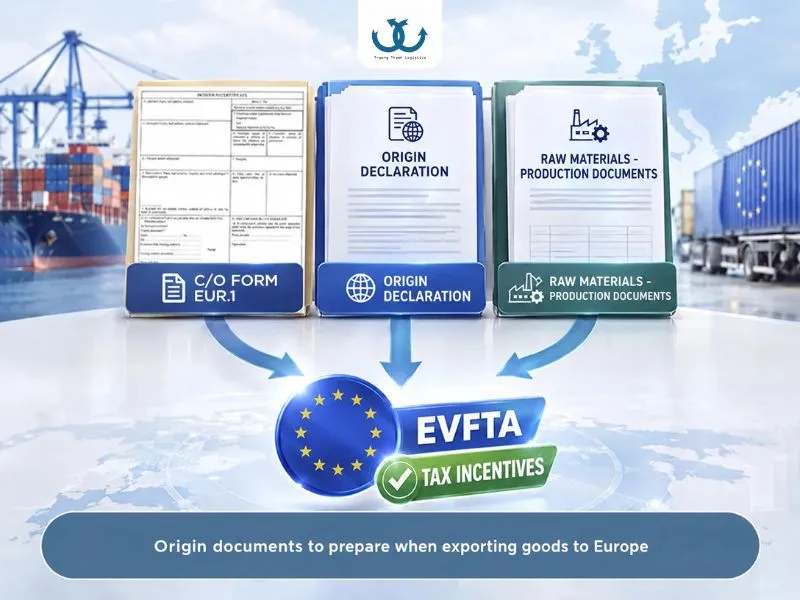
2. Certificate of Origin Documents
Businesses seeking preferential tariffs under EVFTA must prepare documents demonstrating that their goods meet the applicable rules of origin.
- Certificate of Origin (C/O): Depending on the shipment and applicable EVFTA provisions, exporters may use a Certificate of Origin Form EUR.1 or another permitted origin certification method.
- Alternative proof of origin: Depending on the shipment value, product category, and applicable certification mechanism, an origin declaration or another permitted form of proof may be used.
- Supporting origin records: Businesses should retain documentation concerning raw materials, manufacturing processes, and product origin in case verification is required.
3. Specialized Documents and Inspection Certificates
These documents are required only when the product category, applicable regulations, or delivery terms call for them.
- Cargo insurance certificate: Required when the applicable Incoterms make the exporter responsible for arranging insurance.
- Phytosanitary certificate: Commonly required for agricultural products, plants, and certain plant-derived goods.
- Fumigation certificate: May be required when wooden pallets, crates, or other wooden packaging materials are used.
- Quality certificates and inspection reports: Prepared according to product regulations or buyer requirements, including technical documents, Certificates of Quality (CQ), and laboratory test results.
- Industry-specific documentation: Certain goods may require CE-related documentation, Material Safety Data Sheets (MSDS), or other relevant technical records.
Updated Export Procedures for Goods to Europe in 2026
Export procedures for goods to Europe vary according to the product category, HS code, transportation method, and agreement between the seller and buyer. Businesses should review both Vietnamese regulations and the import requirements of the relevant EU destination before preparing a shipment.
Step 1: Identify the Goods, HS Code, and Commercial Terms
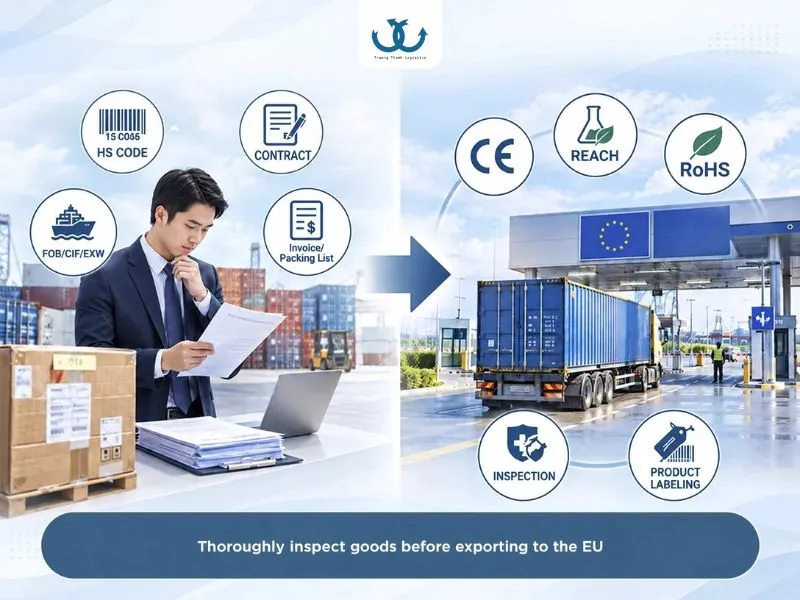
The exporter and buyer should agree on the product description, quantity, selling price, payment terms, and delivery conditions, such as FOB, CIF, or EXW.
The exporter then determines the appropriate HS code to check import and export duties, licensing requirements, and applicable product management policies. Initial documents generally include the sales contract, Commercial Invoice, and Packing List.
Step 2: Verify Product Standards and Labeling Requirements
Businesses must identify the standards applicable to each product because the EU does not impose a single set of requirements on all imported goods.
Depending on the product, the relevant documentation may include CE-related records, REACH or RoHS compliance documents, phytosanitary certificates, or organic certification.
Exporters should also check labeling requirements, the languages required on product labels, and information identifying the responsible economic operator in the EU, where applicable.
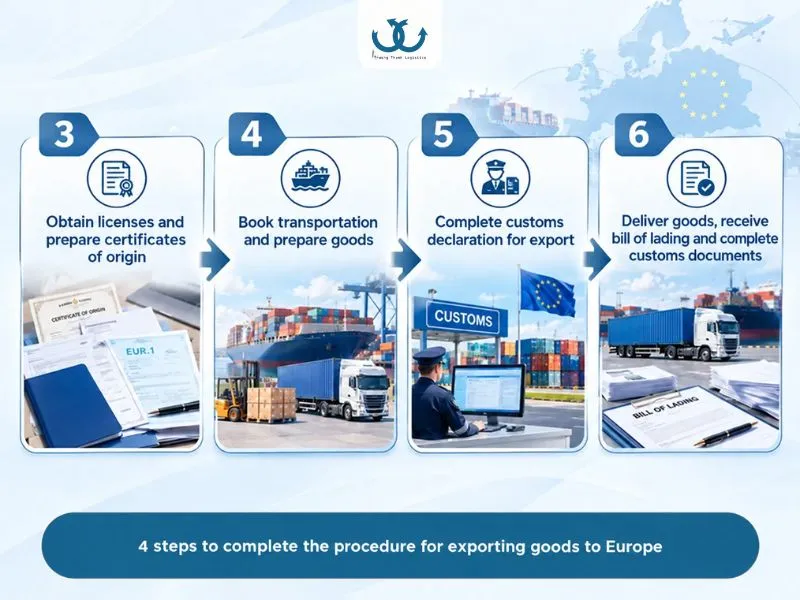
Step 3: Obtain Licenses and Prepare Proof of Origin
If the goods are subject to specialized management, the exporter must obtain the necessary licenses or complete the required inspections before export.
For goods that satisfy EVFTA rules of origin, businesses may use a Certificate of Origin Form EUR.1 or another applicable origin certification mechanism, depending on the shipment and the relevant eligibility conditions.
Important 2026 update for distance sales to the EU: Businesses should distinguish distance sales shipments from ordinary commercial export consignments. From July 1, 2026, imported goods valued at no more than EUR 150 and covered by the applicable distance sales arrangements are subject to a temporary customs duty of EUR 3. From November 1, 2026, these consignments will also be required to declare a PID code.
Step 4: Arrange Transportation and Prepare the Goods
The exporter books cargo space with a shipping line, airline, or freight forwarder according to the delivery schedule.
Goods must be packaged appropriately for the selected transportation method and labeled in accordance with applicable regulations. If required under the agreed delivery terms, the exporter must also arrange cargo insurance.
Step 5: Submit the Export Customs Declaration
The exporter or its customs broker submits the export declaration through Vietnam’s VNACCS/VCIS customs system and provides the supporting documents requested by the authorities.
The declaration may be assigned to a customs processing channel requiring document review or physical cargo inspection. Clearance times vary depending on the shipment and the outcome of the inspection process.
Step 6: Hand Over the Goods, Obtain the Transport Document, and Finalize the Paperwork
After customs clearance, the exporter hands the goods over to the transportation provider and checks the details stated on the Bill of Lading or Air Waybill.
The exporter then sends the buyer the documents agreed upon, typically including the Commercial Invoice, Packing List, B/L or AWB, proof of origin, and any applicable specialized certificates.
Truong Thanh Logistics: Professional Support for Export Procedures to Europe
With more than 13 years of experience in international logistics, Truong Thanh Logistics supports businesses throughout the process of shipping goods to European markets. Its team of more than 100 professionals specializing in import and export operations can assist with:
- HS code classification and regulatory checks: Reviewing HS codes, product management policies, and specialized requirements.
- Export documentation and EVFTA consultation: Advising on export documents, Certificates of Origin, and EVFTA rules of origin.
- Customs services: Handling customs declarations, processing documentation, and monitoring clearance progress.
- International freight forwarding: Coordinating international transportation and arranging deliveries to EU markets.
Frequently Asked Questions About Export Procedures to Europe
Can Shipments Worth Less Than EUR 6,000 Use Self-Certification of Origin?
Under applicable trade agreement provisions, eligible exporters may be permitted to self-certify the origin of goods. However, the EUR 6,000 threshold does not automatically grant every exporter the right to use self-certification under EVFTA or UKVFTA.
Eligibility depends on the specific agreement, the applicable origin certification mechanism, and the exporter’s status or authorization. Businesses should verify the relevant requirements before making an origin declaration.
Do Goods Exported to Europe Require an ICS2 Declaration?
Yes. Goods entering or transiting through the EU may be subject to Import Control System 2 (ICS2) requirements, including the submission of an Entry Summary Declaration (ENS) before arrival.
The party responsible for submitting the declaration depends on the transport mode, contractual arrangements, and applicable regulations. Carriers, freight forwarders, or other designated parties commonly handle this filing.
What Services Does Truong Thanh Logistics Provide for Exports to Europe?
Truong Thanh Logistics provides customs declaration services, assistance with Certificate of Origin applications, export entrustment services, import and export licensing support, and international freight transportation.
Businesses can contact the hotline at 0915 36 38 39 to discuss the specific requirements of their shipments.
Export procedures for goods to Europe involve multiple stages, from identifying the correct HS code and checking regulatory requirements to preparing documentation, proving origin, completing customs declarations, and arranging transportation.
Businesses should carefully review the requirements applicable to each product and destination market to minimize errors, delays, and unexpected costs.
Send your shipment details to Truong Thanh Logistics, and our team will help review the applicable requirements and develop a suitable export plan before your goods are shipped.
Truong Thanh Logistics – Professional and Dedicated Service
Hotline: 0915 36 38 39
Head Office: 5th Floor, Tower A, Song Da Building, Pham Hung Street, Tu Liem Ward, Hanoi, Vietnam.
Email: sale@truongthanhjsc.com / info@truongthanhlogistics.com
Website: https://truongthanhlogistics.com/en/
HAI PHONG BRANCH
Address: Room C103, TTC Building, 630 Le Thanh Tong Street, Hai An District, Hai Phong, Vietnam.
DA NANG BRANCH
Address: 126 Chau Thi Vinh Te Street, Ngu Hanh Son Ward, Da Nang City, Vietnam.
HO CHI MINH CITY BRANCH
Address: Room 41, 4th Floor, Casanova Building, 85 Nguyen Son Street, Phu Thanh Ward, Ho Chi Minh City, Vietnam.
Fanpage: TRUONG THANH LOGISTICS