Exporting processed food products is a high-potential sector, but it also comes with stringent requirements from international markets. Even a minor error in documentation, labeling, or transportation procedures can result in shipments being held, returned, or even destroyed.
Therefore, identifying and preventing common mistakes is a critical factor in helping businesses optimize costs, reduce risks, and enhance their reputation in export markets.
Processed Food Exports – A Strategic Sector of the Economy
In the context of deep economic integration, processed food exports are becoming one of the key strategic industries, playing an important role in economic growth and structural transformation in many countries, especially Vietnam. While raw agricultural exports are often heavily dependent on seasonality and market prices, processed foods offer higher added value through the application of technology, extended shelf life, and product diversification.
Beyond enhancing the value of domestic agricultural products, the processed food industry also drives the development of the entire supply chain—from raw material sourcing and production to packaging, logistics, and international distribution. At the same time, it creates employment opportunities, attracts investment, and strengthens national competitiveness in the global market.
In the long term, promoting processed food exports not only helps Vietnamese enterprises expand their markets but also represents a strategic shift from “exporting raw materials” to “exporting value,” contributing to sustainable development and elevating the national brand.
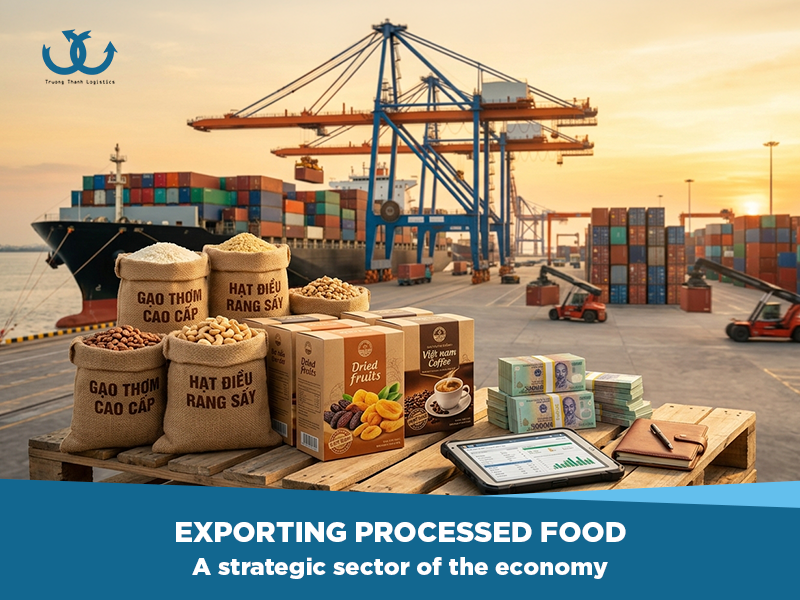
Common Mistakes in Exporting Processed Food Products
Processed food exports present significant opportunities for Vietnamese businesses due to increasing global demand. However, these opportunities come with strict requirements regarding quality, technical standards, labeling, and logistics processes. Even a small mistake at any stage—from documentation preparation and production to packaging and transportation—can lead to shipment delays, additional costs, or even import rejection.
In reality, many businesses, especially new exporters, still encounter basic errors that can severely impact operational efficiency. Early identification of these common mistakes and understanding their causes will enable businesses to proactively prevent issues, optimize processes, and enhance competitiveness in international markets.
Below are the most common mistakes that businesses should pay close attention to:
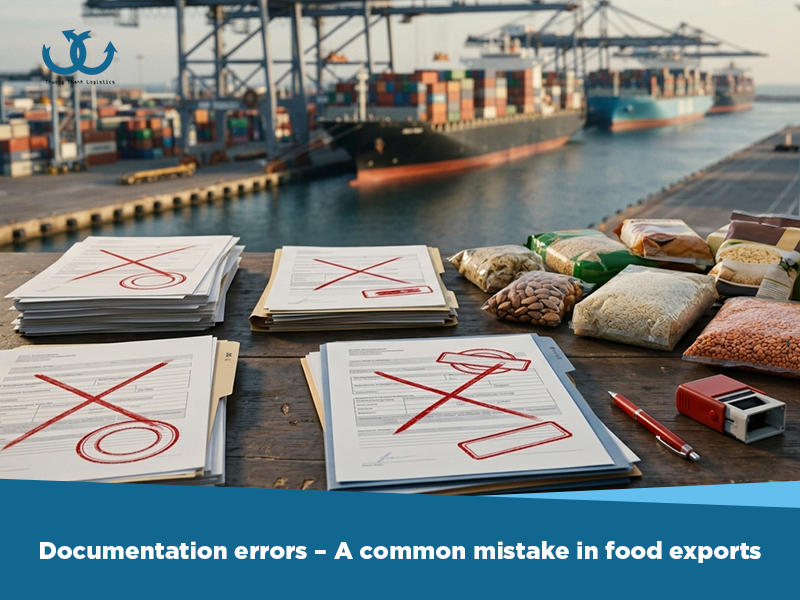
1. Errors in Export Documentation
One of the most common issues is incomplete or inconsistent documentation.
Common mistakes:
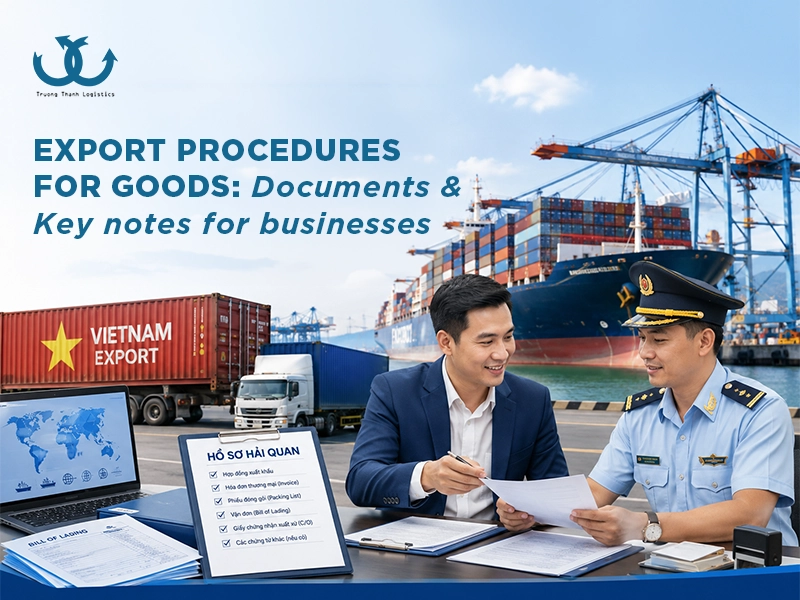
- Inconsistent information between Invoice, Packing List, and Bill of Lading
- Missing phytosanitary or food safety certificates
- Failure to prepare a complete Certificate of Origin (C/O)
- Incorrect HS codes leading to inaccurate customs declarations
Consequences:
- Delayed customs clearance or prolonged inspections
- Additional storage and container detention charges
- Missed delivery deadlines
2. Non-Compliant Labeling with Import Market Requirements
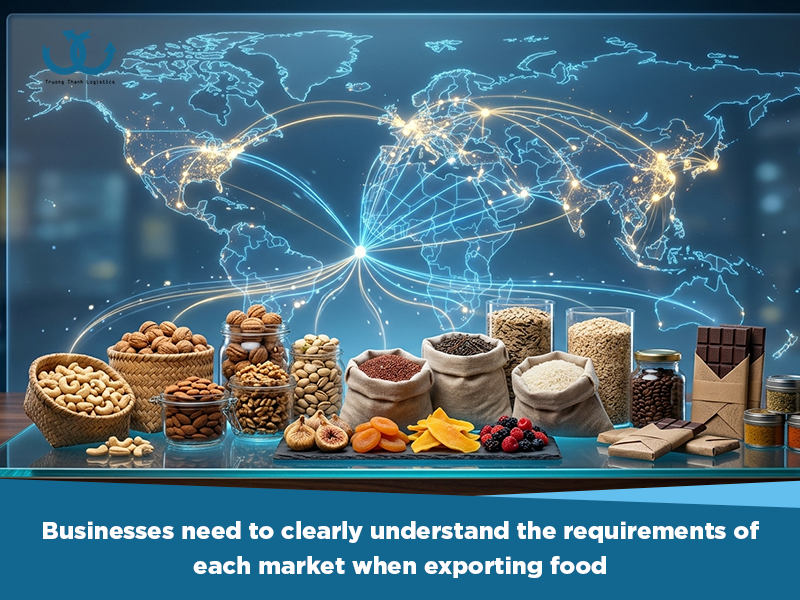
Each country has its own regulations regarding food labeling. Non-compliance may result in products not being allowed to circulate.
Common mistakes:
- Missing mandatory information (ingredients, expiry date, origin, etc.)
- Incorrect language usage as required by the target market
- Incorrect date format (e.g., MM/DD/YYYY vs. DD/MM/YYYY)
- Failure to declare allergen information
Consequences:
- Import rejection or requirement for relabeling
- Increased handling costs at ports
- Negative impact on brand reputation
3. Failure to Meet International Food Safety Standards
Processed food products must comply with strict standards such as HACCP, FDA, ISO, depending on the target market.
Common mistakes:
- Lack of or incomplete food safety certifications
- Non-compliant production processes
- Failure to meet microbiological or chemical standards
Consequences:
- 100% shipment inspection
- Being placed on warning lists (blacklists)
- Risk of import bans
4. Improper Packaging and Storage
For processed foods, packaging and storage play a decisive role in maintaining product quality upon delivery.
Common mistakes:
- Using non-food-grade packaging materials
- Failure to ensure airtight and moisture-resistant conditions
- Packaging unsuitable for long-distance transportation
- Lack of temperature control (especially for refrigerated cargo)
Consequences:
- Product spoilage or deterioration
- Reduced product value
- Rejection by buyers
5. Inappropriate Transportation Methods
Not all processed food products can be transported using the same method.
Common mistakes:
- Using dry containers instead of refrigerated containers when required
- Failure to align transit time with product shelf life
- Lack of monitoring of temperature and transport conditions
Consequences:
- Product quality degradation upon arrival
- Complaints from partners
- Unnecessary increase in logistics costs
6. Lack of Understanding of Import Regulations
Each country has its own regulations on quarantine, technical standards, and import procedures.
Common mistakes:
- Not updating new regulations from importing countries
- Failure to register products prior to export (for certain markets)
- Not checking restricted or prohibited goods lists
Consequences:
- Shipments held at ports
- Forced re-export or destruction
- Significant financial and time losses
7. Poor Supply Chain Management
Food supply chains require high synchronization from production to transportation.
Common mistakes:
- Lack of coordination among manufacturers, logistics providers, and customs brokers
- No real-time shipment tracking
- No contingency plans for unexpected issues
Consequences:
- Supply chain disruptions
- Delivery delays
- Loss of trust from international partners
8. Solutions to Minimize Risks in Processed Food Exports
To reduce risks and ensure smooth export operations, businesses must not only comply with regulations but also build a comprehensive management system with strict control from production to delivery.
Practical solutions include:
- Standardizing export documentation and procedures
- Thoroughly researching regulations of target markets
- Investing in product quality control systems
- Selecting experienced logistics providers in the food industry
- Applying technology for supply chain monitoring and management
9. Truong Thanh Logistics – Your Trusted Partner in Processed Food Exports
As processed food exports increasingly demand high standards in quality, legal compliance, and supply chain control, choosing a professional logistics partner is not only about transportation—it is about having a strategic support system throughout the entire export process.
With practical experience in logistics and import-export operations, Truong Thanh Logistics provides comprehensive solutions to help businesses minimize risks, optimize costs, and improve operational efficiency.
9.1. Export Process Consulting by Product Type
Each category of processed food (canned goods, dried foods, frozen products, beverages, etc.) has specific requirements in terms of storage, transportation, and legal compliance.
Support includes:
- Product and market analysis
- Tailored export process consultation
- Guidance on documentation and licensing
- Early-stage logistics planning
9.2. Documentation Review and Completion
Documentation errors are a leading cause of shipment delays and additional costs.
Services include:
- Verifying accuracy and consistency of documents
- Supporting completion of Invoice, Packing List, Bill of Lading, C/O
- Guidance on proper customs declaration
- Updates on regulatory changes
9.3. Labeling Consultation and Standardization
Labeling directly affects the ability to import and distribute products in foreign markets.
Services include:
- Advising on label content per country regulations
- Reviewing language, format, and mandatory information
- Recommending corrective actions for non-compliant labels
- Supporting adjustments prior to export
9.4. Optimal and Safe Transportation Solutions
Choosing the right transportation method is critical to maintaining product quality.
Solutions include:
- Multimodal transport: sea transport, air, and road
- Consultation on appropriate container types (dry, refrigerated, frozen)
- Optimized transport planning for time and cost efficiency
- End-to-end shipment tracking
9.5. Handling Unexpected Issues
Unexpected issues such as customs delays, inspections, or schedule changes are inevitable.
Support includes:
- Working directly with shipping lines, customs authorities, and related parties
- Proposing fast and effective solutions
- Providing continuous shipment updates
- Assisting with claims and post-delivery issues
9.6. Long-Term Partnership for Sustainable Growth
Beyond individual shipments, Truong Thanh Logistics aims to become a long-term partner in businesses’ international expansion journey.
- Developing long-term logistics strategies
- Optimizing operational costs across growth stages
- Updating market trends and regulatory changes
- Enhancing export capabilities
Exporting processed food products is a promising yet risk-prone sector. Partnering with a professional logistics provider like Truong Thanh Logistics enables businesses not only to “move goods” but also to effectively manage the entire export process—thereby optimizing performance and achieving sustainable growth in international markets.
Trường Thành Logistics – Professional & Dedicated
Hotline: +84 915 36 38 39
Head Office: 5th Floor, Tower A, Song Da Building, Pham Hung Street, Tu Liem Ward, Hanoi, Vietnam.
Email: sale@truongthanhjsc.com
info@truongthanhlogistics.com
Website: https://truongthanhlogistics.com
HAI PHONG BRANCH
Address: Room C103, TTC Building, 630 Le Thanh Tong Street, Hai An Ward, Hai Phong City, Vietnam.
DA NANG BRANCH
Address: 126 Chau Thi Vinh Te Street, Ngu Hanh Son Ward, Da Nang City, Vietnam.
HO CHI MINH CITY BRANCH
Address: Room 41, 4th Floor, Casanova Building, 85 Nguyen Son Street, Phu Thanh Ward, Ho Chi Minh City, Vietnam