Bamboo boards are popular in markets such as the EU, Japan, South Korea, and North America thanks to their rapidly renewable raw materials and high aesthetic value. However, for a shipment of bamboo boards to clear customs smoothly, businesses must complete several steps, including proving the legal origin of forest products, phytosanitary inspection, fumigation, customs declaration, and applying for a preferential Certificate of Origin (C/O) if required by the buyer. This article provides a step-by-step guide to bamboo board export procedures and highlights common mistakes that may cause containers to be held at the port.
What do bamboo board export procedures involve?
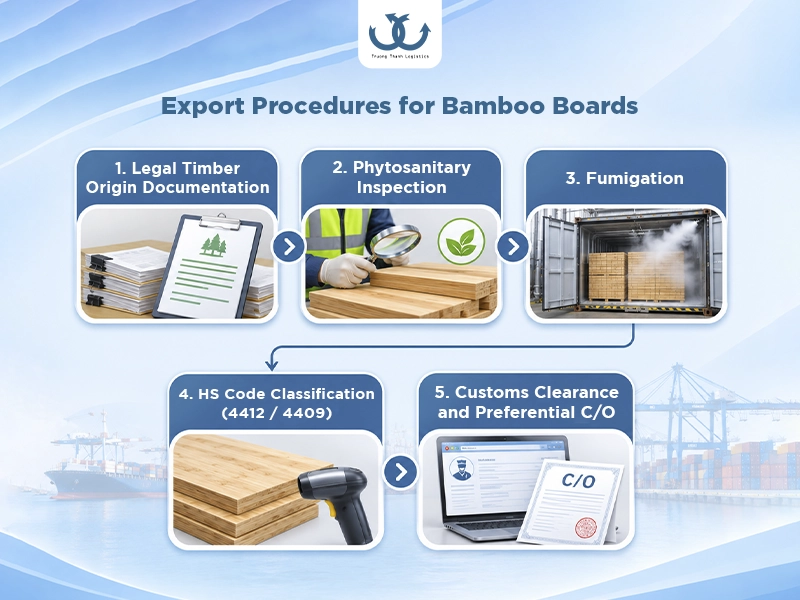
In general, bamboo board export procedures involve the following key steps:
- Checking the origin of raw materials: Prepare documentation proving the legal origin of the bamboo and the processed products.
- Checking phytosanitary requirements: Determine whether the goods are subject to phytosanitary inspection or require a Phytosanitary Certificate from the importing country.
- Fumigation: Carry out treatment as required by the buyer or the regulations of the importing market.
- HS code classification: Classify the goods based on their actual structure, manufacturing method, and characteristics.
- Customs clearance and preferential C/O application: Prepare the necessary documents, submit the export customs declaration, and complete customs clearance. An application for a preferential C/O may then be made if the importer wishes to benefit from preferential tariff rates under free trade agreements (FTAs) and the shipment meets the applicable rules of origin.
Not every shipment needs to go through all of these steps. For example, phytosanitary inspection and fumigation depend on phytosanitary regulations, importing-country requirements, and the characteristics of the goods. Businesses should confirm these requirements before loading the container to avoid additional costs and shipping delays.
Documentation proving the legal origin of forest products when exporting bamboo boards
Are bamboo boards subject to forest product management regulations?
Yes. Under Vietnam’s forestry regulations, bamboo and rattan are classified as non-timber forest plants. Therefore, bamboo boards and products processed from bamboo must be accompanied by documentation proving their legal origin.
The applicable regulations include Circular No. 26/2025/TT-BNNMT, effective from July 1, 2025, which replaces Circular No. 26/2022/TT-BNNPTNT, and Circular No. 84/2025/TT-BNNMT amending and supplementing relevant provisions.
What documents should be prepared?
The specific documentation depends on the source of the bamboo: plantation-grown bamboo, naturally harvested bamboo, or imported bamboo. In general, businesses should prepare:
- Forest product inventory lists: Prepared using the prescribed form, specifying product names, quantities, specifications, and origins.
- Raw material purchase documents: Contracts, invoices, and payment records with plantation owners or bamboo suppliers.
- Initial origin records: Harvesting records and documents from forest owners or growers. For imported bamboo, import customs declarations and accompanying documents are required.
- Forest product tracking records: Applicable to organizations and business households.
- Local Forest Protection Department confirmation: Required for inventory lists falling within cases subject to confirmation.
Does customs require the submission of a forest product inventory list for export?
According to Official Letter No. 17890 dated June 24, 2026, issued by the General Department of Customs, forest product documentation serves the purpose of inspection and origin traceability by the competent authorities. It is not a mandatory document that must be submitted or presented during export customs procedures. Owners of forest products are responsible for retaining the records and presenting them when requested.
Nevertheless, businesses should prepare complete documentation, as overseas buyers, particularly those in the EU and the United States, may request traceability records.
Phytosanitary procedures for exporting bamboo boards
When is phytosanitary inspection required for bamboo boards?
Not all bamboo board products are automatically subject to phytosanitary inspection. Whether inspection is required depends on Vietnam’s list of regulated articles, the condition and characteristics of the products, and the phytosanitary requirements of the importing country.
For certain processed bamboo products, such as compressed bamboo boards, laminated bamboo boards, or products that have undergone industrial treatment, requirements may differ from those applicable to raw bamboo, fresh bamboo, or minimally processed plant products.
Businesses should check two key issues:
- Whether the products are subject to phytosanitary inspection under Vietnamese regulations.
- Whether the importing country requires a Phytosanitary Certificate or additional phytosanitary measures.
If the products are subject to inspection or the importer requests a phytosanitary certificate, the exporter must register with the competent phytosanitary authority before shipment.
Phytosanitary inspection procedures and inspection at the port
- Register for phytosanitary inspection: Submit an application to the phytosanitary authority, together with the contract, packing list, and shipment details.
- Physical inspection of the shipment: Inspection may take place at the port or at the loading location. Inspectors examine the goods and container and may take samples to test for harmful organisms.
- Issuance of the Phytosanitary Certificate: The certificate is issued if the shipment meets the requirements. If harmful organisms are detected, the goods must undergo treatment as instructed and be inspected again.
Businesses should arrange the inspection schedule with the phytosanitary authority in advance and coordinate it with the shipping line’s cargo cut-off time to avoid missing the scheduled vessel.
Fumigation of exported bamboo boards: when is it required and how is it carried out?
As a plant-based material, bamboo can be susceptible to borers and other insects if it is not stored properly. For this reason, many markets require fumigation before export.
- Qualified service providers: Fumigation must be carried out by service providers qualified to treat articles subject to phytosanitary regulations. The treatment process is generally supervised by the phytosanitary authority.
- Fumigants and dosage: Chemicals and dosage levels must comply with the importing country’s requirements. Businesses should obtain these requirements in writing from the buyer.
- Fumigation Certificate: A Fumigation Certificate is issued upon completion and included in the export documentation.
- ISPM 15 requirements for wooden packaging: Wooden pallets and crates used for packaging generally must comply with ISPM 15, which requires heat treatment or fumigation and an official IPPC mark. Failure to meet this requirement may result in rejection of the shipment, even if the bamboo boards themselves meet all applicable requirements.
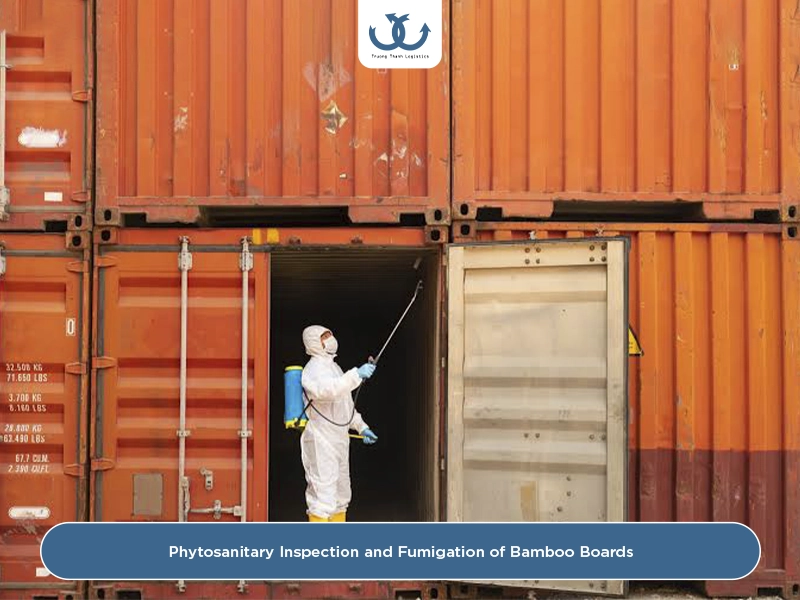
Fumigation and ventilation times can affect container loading schedules, so businesses should factor them into their export plans from the outset.
What is the HS code for bamboo boards?
The HS code determines applicable taxes, product policies, and eligibility for preferential C/O treatment. Two commonly encountered headings are:
- Heading 4412 (plywood, veneered panels, and similar laminated wood products): Generally applicable to certain bamboo board panels made of multiple bonded layers, such as bamboo plywood (subheading 4412.10).
- Heading 4409 (wood continuously shaped along any of its edges, ends, or faces): Generally applicable to certain bamboo flooring products and bamboo strips that have been continuously shaped, grooved, or jointed (subheading 4409.21).
The product’s structure, specifications, and intended use affect its classification. If the correct classification is unclear, businesses should consult the customs authority or apply for an advance ruling on the HS code. Incorrect HS code declarations are a common cause of customs clearance delays.
How to complete export customs procedures for bamboo boards
Businesses must submit an electronic customs declaration and prepare the following documents:
- Sales contract, Commercial Invoice, and Packing List.
- Bill of Lading or shipping booking confirmation.
- Phytosanitary Certificate, Fumigation Certificate, and other relevant documents, where applicable.
After the customs declaration is assigned to a green, yellow, or red channel, the goods will either be cleared or undergo the corresponding inspection procedures. Consistent and accurate documentation increases the likelihood of smooth customs clearance.
When is a preferential c/o required and which form should be used?
A preferential Certificate of Origin (C/O) allows the importer to benefit from reduced or zero import duties under a free trade agreement (FTA). Common forms include:
- EU: EUR.1 under the EVFTA; United Kingdom: EUR.1 UK under the UKVFTA.
- China: Form E; ASEAN: Form D.
- Japan, Canada, Australia, New Zealand, and other markets: CPTPP, RCEP, or AJ and VJ forms, depending on the destination market.
The application dossier generally includes a C/O application, the completed C/O form, export customs declaration, invoice, bill of lading, raw material documents, and production process records to prove origin.
For bamboo boards made from domestically grown bamboo, proving origin may be more straightforward if businesses maintain complete raw material origin documentation.
From August 1, 2026, C/O procedures are governed by Circular No. 26/2026/TT-BCT, which introduces updated form lists and changes to the decentralization of issuing authorities. Businesses should check their C/O issuing office registration on the eCoSys system. Some forms, such as EUR.1, may still need to be printed in their original form and sent to the importer even when the issuance process is conducted electronically.
Common mistakes in bamboo board export procedures
- Incomplete or inconsistent origin documentation, with discrepancies between the volume of purchased bamboo and the volume of exported boards.
- Failing to arrange fumigation or using wooden pallets and crates that do not comply with ISPM 15.
- Failing to confirm the buyer’s phytosanitary requirements before production.
- Incorrect HS code classification between headings 4412 and 4409.
- Late C/O submission or selecting the wrong form, causing the importer to lose preferential tariff benefits.
Truong Thanh Logistics: Comprehensive support for your bamboo board shipments
Exporting bamboo boards requires coordination with multiple authorities and across various operational stages. A single discrepancy in the documentation can delay an entire shipment, resulting in container detention and storage charges.
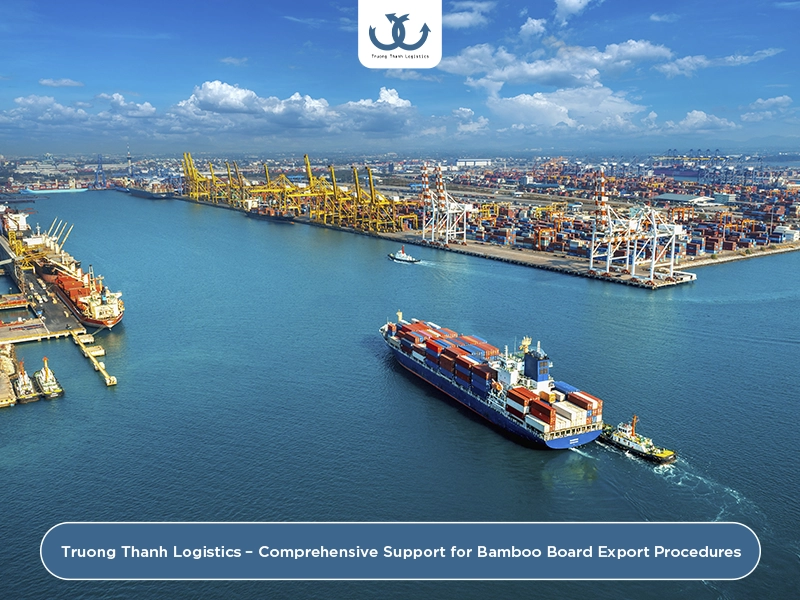
Truong Thanh Logistics helps businesses follow the right export process from the beginning through its comprehensive entrusted export services:
- Documentation and HS code consultation: Review forest product origin documents and assist in classifying products under HS codes 4412 or 4409, as appropriate.
- Phytosanitary inspection and fumigation coordination: Arrange inspection schedules with the relevant authorities, connect businesses with qualified fumigation providers, and monitor progress at the port.
- Export customs clearance services: Ensure accurate declarations and consistent documentation to minimize the risk of customs inspection delays.
- Preferential C/O application support: Advise on the appropriate C/O form for each market, such as EUR.1, Form E, CPTPP, and RCEP, and help complete origin documentation.
- International transportation: Arrange bookings, coordinate cargo loading, and track shipments to the destination port.
Frequently Asked Questions About Bamboo Board Export Procedures (FAQ)
Question 1: Do bamboo boards require a separate export license?
Generally, bamboo boards are not subject to export bans or a separate export licensing requirement. However, businesses must maintain documentation proving the legal origin of forest products and check phytosanitary requirements and regulations in the importing country.
Question 2: Is fumigation mandatory for exported bamboo boards?
Not every market requires fumigation, but many countries and sales contracts do. Businesses should obtain written confirmation from the buyer. Wooden pallets, in particular, generally need to comply with ISPM 15.
Question 3: Can phytosanitary inspection of bamboo boards be conducted at the port?
Yes, it may be possible. Phytosanitary authorities generally conduct inspections at the port or at the loading location. Businesses should register and schedule the inspection in advance.
Question 4: Should bamboo boards be classified under HS code 4412 or 4409?
Bamboo panels made of multiple bonded layers generally fall under heading 4412, while certain bamboo flooring products and continuously shaped bamboo strips generally fall under heading 4409. Businesses should check the actual product structure or apply for an advance ruling on classification.
Question 5: Does customs require the submission of a forest product inventory list?
According to guidance issued by the General Department of Customs in June 2026, a forest product inventory list is not a mandatory document for export customs procedures. However, businesses must retain it for traceability purposes.
Question 6: When should businesses apply for a preferential C/O?
Businesses should apply when the buyer needs the certificate to benefit from preferential tariffs under an FTA. The correct form must be selected for the destination market, and supporting raw material origin documents should be prepared in advance.
Having a single service provider handle the entire process helps businesses save time, control costs, and focus on production and developing new customers.
Contact Truong Thanh Logistics today for free consultation and a quotation for your bamboo board shipment.