International freight transportation plays a vital role as the backbone of today’s global economy. Trade activities between countries continue to expand and develop rapidly. As a result, the demand for cross-border cargo transportation is constantly increasing.
However, international trade processes always involve a high level of complexity. Businesses must comply with numerous legal regulations across different countries. Understanding transportation methods can help optimize operational costs effectively.
This article provides a comprehensive overview of the international logistics chain.
Common Types of International Freight Transportation Today
Each transportation method has its own technical characteristics. Choosing the right method depends on the nature of the cargo.
International Freight Transportation by Sea
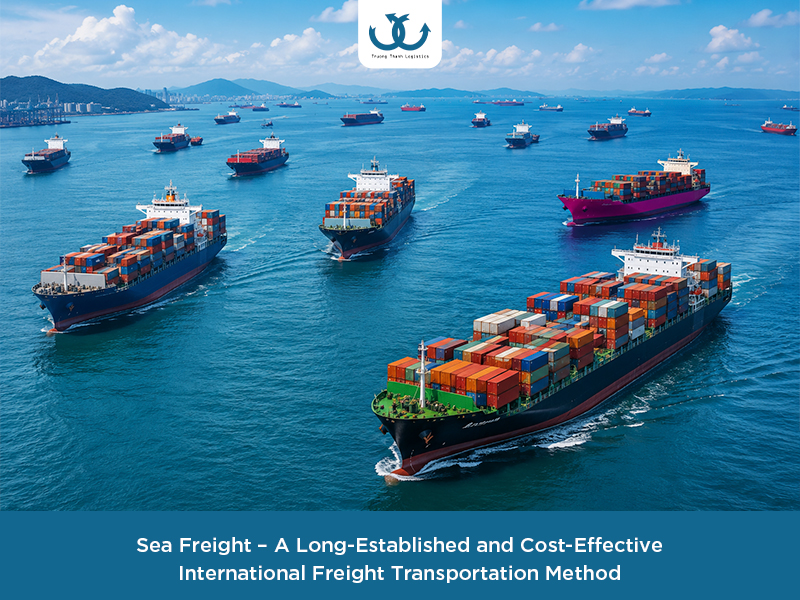
This is the oldest transportation method in the world. It accounts for the largest share of global trade volume. Sea transport is highly suitable for oversized and heavy cargo. Transportation costs per unit are generally very low.
However, shipping by sea usually requires a long transit time. Therefore, businesses need to prepare import and export plans well in advance.
International Freight Transportation by Air
Air freight offers outstanding advantages in terms of speed. It is the ideal choice for high-value goods. Products with short shelf life are also commonly transported by air. The safety level of air transportation is considered extremely high.
The main limitation of this method is its relatively high cost. Cargo capacity is also restricted by aircraft design specifications.
International Freight Transportation by Road and Rail
This transportation method is commonly applied between neighboring countries sharing borders. It provides high flexibility during cargo delivery and collection. Transit times are stable and less affected by weather conditions. Costs are moderate and relatively affordable.
Basic Processes in International Freight Transportation
A cross-border shipping process must go through several strict stages. Smooth coordination between all stages ensures cargo safety.
Cargo Preparation and Packaging Stage
Businesses carefully inspect the quantity and quality of products. Packaging procedures must strictly comply with international export standards. Proper labeling helps prevent loss during warehousing and transportation.
Customs Clearance and Import-Export Procedures
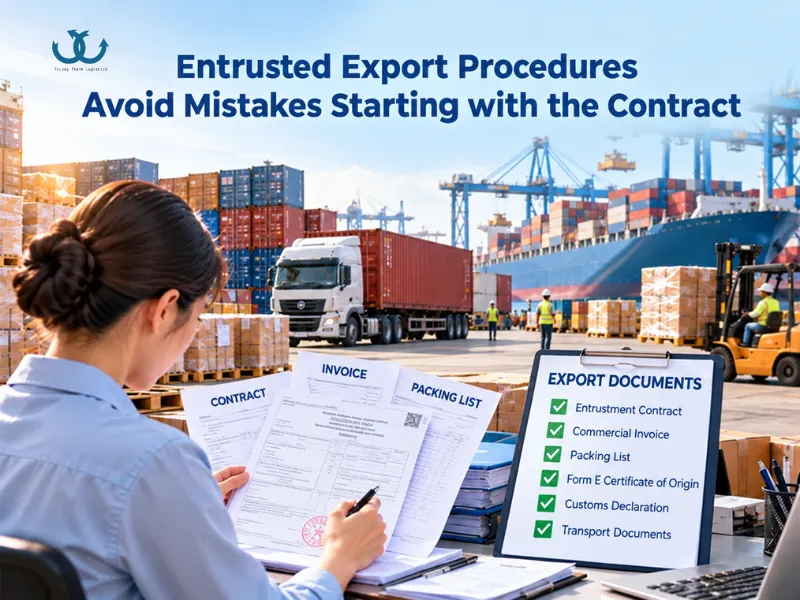
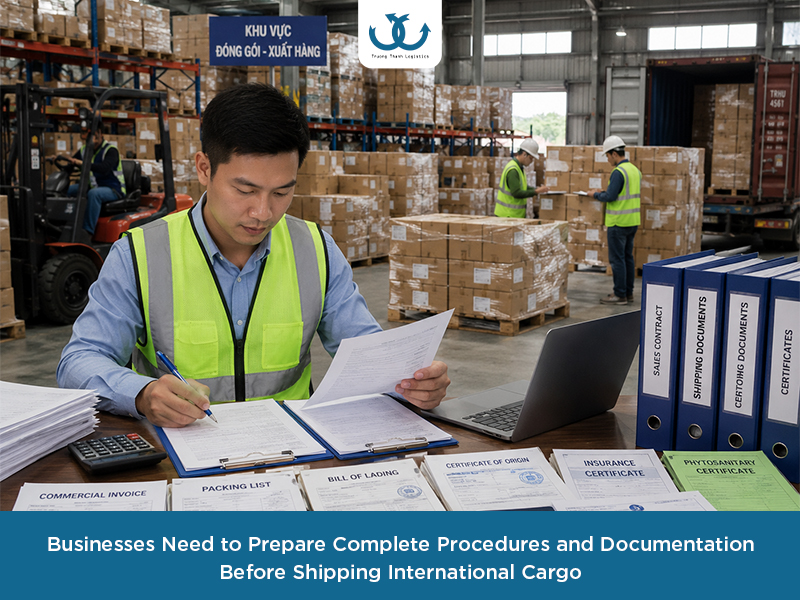
This is the most important and complex stage of the entire process. Businesses must prepare complete documentation in accordance with legal regulations.
Basic documents include commercial invoices, packing lists, and related shipping documents. Incorrect HS code declarations may result in significant financial penalties.
Main Transportation and Final Delivery Stage
Cargo is loaded onto suitable transportation vehicles for shipment. The transportation process is closely monitored through tracking systems. After arriving at the destination port, the cargo is delivered to the buyer’s warehouse.
Major Challenges in International Freight Transportation
The global logistics market is constantly changing under various external influences. Businesses must clearly identify challenges to build effective contingency plans.
Constant Changes in International Regulations
Each country has its own import-export management policies. Regulations regarding tariffs and technical standards may change unexpectedly.
This creates significant difficulties for inexperienced businesses. It may also prolong customs clearance procedures at border checkpoints.
Weather and Geopolitical Risks
Natural disasters and storms remain major threats to the transportation industry. In addition, geopolitical conflicts can alter transportation routes.
These issues can rapidly increase fuel costs. Businesses may easily face financial pressure and operational disruptions.
Criteria for Choosing a Reliable International Freight Transportation Company
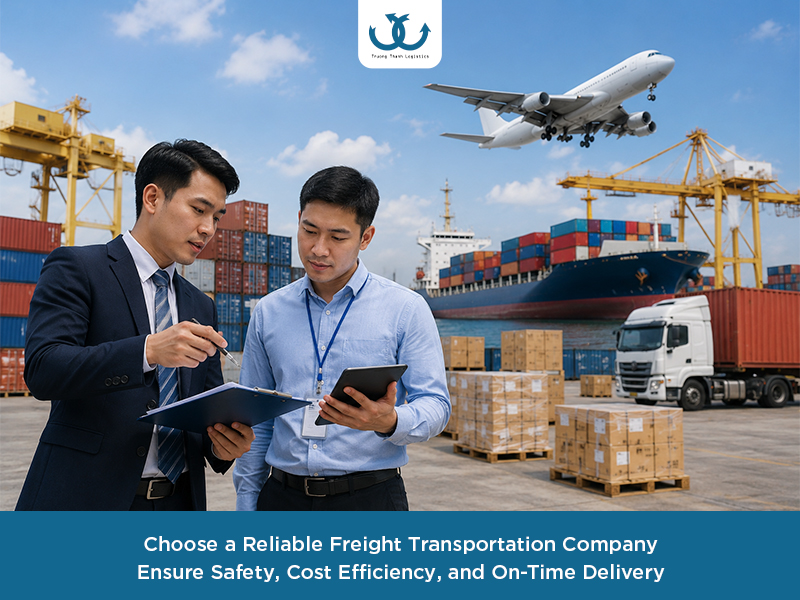
Finding a capable logistics partner can determine the success or failure of a business. Companies should evaluate logistics providers based on the following core criteria.
Experience in the Logistics Industry
Companies with extensive experience often possess broad global agency networks. They can handle unexpected issues quickly and efficiently. They also understand the trade practices of different countries.
Transparent Cargo Insurance Policies
Risks during international transportation are unavoidable. Therefore, a clear insurance policy is essential. Transportation companies must commit to fair compensation in the event of cargo loss or damage.
The Importance of Optimizing Logistics Costs
Transportation costs directly affect the competitiveness of products. Cost optimization is a strategic goal for every business.
Consolidating Cargo into Larger Shipments
Businesses should combine smaller orders into larger shipments. This helps maximize container space utilization. Freight costs per product unit can therefore be reduced.
Selecting the Most Efficient Transportation Routes
Smart route planning helps save fuel and reduce unnecessary toll expenses.
Applying Digital Documentation Systems
Switching to electronic invoices helps reduce printing costs. Document circulation between departments also becomes faster and more efficient.
Managing Risks During Transportation
Businesses should proactively prepare response plans for potential incidents. This helps minimize financial losses.
Risks of Cargo Damage and Breakage
These issues mainly result from improper cargo handling during loading and unloading. Businesses should closely supervise cargo handling operations at ports. Shockproof packaging materials should be used for fragile goods.
Risks of Delivery Delays
Port closures and airport congestion occur quite frequently. Businesses should include buffer time in transportation schedules. Early communication with partners also helps identify alternative solutions quickly.
Truong Thanh Logistics – Your Professional International Freight Transportation Partner
If your business is looking for reliable international freight transportation solutions, Truong Thanh Logistics is a leading choice. We are proud to provide comprehensive and professional logistics services.
Core Strengths of Truong Thanh Logistics
Truong Thanh Logistics possesses a team of highly experienced logistics specialists. We have established an extensive agency network across more than one hundred countries.
Our customs clearance capacity reaches thousands of containers per month. We are confident in handling even the most challenging cargo shipments.
Key Services at Truong Thanh Logistics
Multimodal Transportation Services
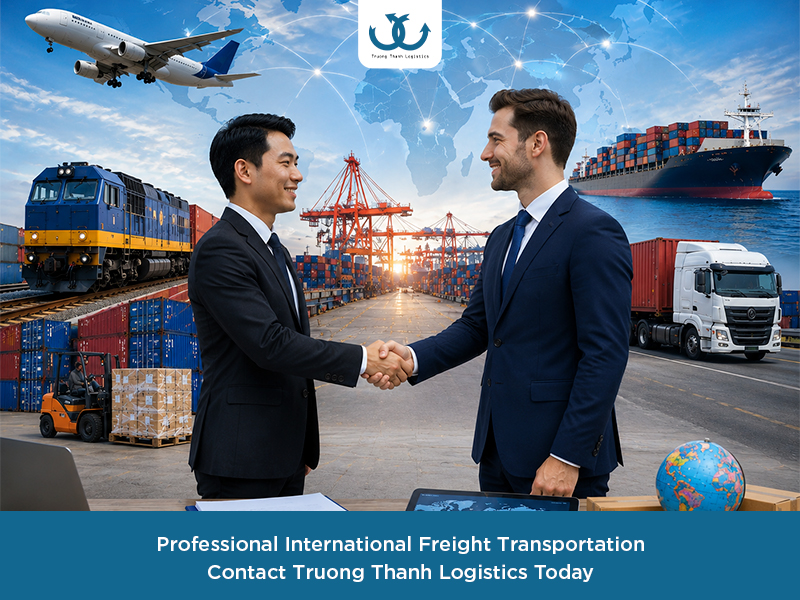
We flexibly combine sea freight, road transportation, and air freight solutions. This approach creates the perfect balance between cost efficiency and delivery speed.
Full-Service Customs Brokerage
Our team handles all customs procedures on behalf of customers. The declaration process is completed accurately and efficiently.
Strong Commitments from Truong Thanh Logistics
We always prioritize the interests and cargo safety of our customers. Every transportation route is optimized in detail. Service pricing at Truong Thanh Logistics remains highly competitive.
We are committed to maintaining absolute confidentiality of all customer commercial information.
The sustainable growth of your business is our greatest success. Contact Truong Thanh Logistics today to receive the most optimized international freight transportation solutions.
Trường Thành Logistics – Professional & Dedicated
Hotline: +84 915 36 38 39
Head Office: 5th Floor, Tower A, Song Da Building, Pham Hung Street, Tu Liem Ward, Hanoi, Vietnam.
Email: sale@truongthanhjsc.com
info@truongthanhlogistics.com
Website: https://truongthanhlogistics.com
HAI PHONG BRANCH
Address: Room C103, TTC Building, 630 Le Thanh Tong Street, Hai An Ward, Hai Phong City, Vietnam.
DA NANG BRANCH
Address: 126 Chau Thi Vinh Te Street, Ngu Hanh Son Ward, Da Nang City, Vietnam.
HO CHI MINH CITY BRANCH
Address: Room 41, 4th Floor, Casanova Building, 85 Nguyen Son Street, Phu Thanh Ward, Ho Chi Minh City, Vietnam
Fanpage: TRƯỜNG THÀNH LOGISTICS