Business activities and commercial transactions between enterprises always require a clear legal foundation to ensure the rights and obligations of all parties involved. When buying and selling goods, providing services, or entering into business cooperation, a formal legal document helps define essential terms such as transaction value, payment methods, delivery conditions, and responsibilities in case of risks.
For this reason, a commercial contract is considered a fundamental element that enables businesses to establish transparent transactions, minimize disputes, and ensure smooth commercial operations. This is especially important for companies engaged in import–export, logistics, and international trade, where understanding commercial contracts is essential for risk control and operational efficiency.
So, what is a commercial contract, what are its characteristics, and what should be considered before signing one? The following article provides a comprehensive overview.
What is a Commercial Contract?
A commercial contract is an agreement between parties engaged in commercial activities to establish, modify, or terminate rights and obligations related to the sale of goods, provision of services, or other business activities.
Through the contract, the parties agree on all terms of the transaction, including pricing, quantity, payment methods, delivery time, and location.
In simple terms, a commercial contract is a legal instrument that records business commitments and ensures that all agreements are executed in accordance with applicable regulations. It helps protect the rights of each party clearly and transparently while minimizing potential risks and disputes during cooperation.
In practice, commercial contracts are widely used in various business activities such as:
- Sale and purchase of goods between enterprises
- Provision of commercial services
- Distribution and agency agreements
- Manufacturing and processing contracts
- Transportation and freight forwarding service
- International import–export transactions
Particularly in international trade, commercial contracts play a crucial role as they serve as the basis for:
- International payments
- Cargo transportation
- Customs declarations
- Dispute resolution
The terms of the contract clearly define each party’s responsibilities throughout the transaction process.
Therefore, a commercial contract is not merely a standard agreement but a critical legal foundation ensuring safety, transparency, and efficiency in all business activities.
Characteristics of Commercial Contracts
Compared to civil contracts, commercial contracts have distinct features closely tied to business activities and trade transactions. Understanding these characteristics helps businesses comply with legal requirements when entering into contracts.
Parties are traders or business entities
Commercial contracts are typically concluded between parties engaged in business activities, including:
- Manufacturing enterprises
- Trading companies
- Import–export businesses
- Logistics service providers
- Individuals or organizations with business registration
In international transactions, the contracting parties are usually companies from different countries.
Profit-oriented purpose
Unlike civil contracts that serve personal needs, commercial contracts are established primarily for business purposes and profit generation.
Common types include:
- Sales contracts
- Service agreement
- Transportation contracts
- Agency and distribution agreement
- Manufacturing/processing contracts
Content is closely linked to commercial transactions
Contract terms focus on aspects directly related to the transaction, such as:
- Delivery conditions
- Payment methods
- Contract performance timeline
- Liability and compensation clauses
These terms help parties clearly understand their obligations throughout the contract execution.
Key Contents of a Commercial Contract
A comprehensive commercial contract must clearly define essential terms related to the transaction to minimize disputes and protect the interests of all parties.
Information of the contracting parties
The contract should clearly state:
- Company or organization name
- Registered address
- Tax code or business registration number
- Legal representative
- Signatory’s position
Clear information strengthens the legal validity of the contract.
Description of goods or services
This section defines the subject of the contract, including:
- Product or service name
- Specifications and classification
- Quality and technical standards
- Origin of goods
- Packaging
For export contracts, businesses often include HS codes and quality inspection standards.
Quantity and contract value
The contract must specify:
- Quantity of goods
- Unit price
- Total contract value
- Currency (USD, EUR, VND, etc.)
It may also include provisions for price adjustments based on market fluctuations.
Delivery terms
In international trade, delivery terms are typically governed by Incoterms, which define the responsibilities of each party in the transportation process.
Common terms include:
- FOB (Free On Board)
- CIF (Cost, Insurance and Freight)
- EXW (Ex Works)
- DDP (Delivered Duty Paid)
These terms clarify:
- Responsibility for transport costs
- Responsibility for insurance
- Transfer of risk between parties
Payment methods
Payment terms are crucial to ensuring financial security. Common methods include:
- T/T (Telegraphic Transfer)
- L/C (Letter of Credit)
- D/P (Documents against Payment)
- D/A (Documents against Acceptance)
Choosing the appropriate method helps minimize financial risks in international transactions.
Delivery time and place
The contract should specify:
- Delivery schedule
- Delivery location
- Mode of transportation
This is particularly important in international trade, where timing and location significantly impact the entire logistics chain.
Penalties and dispute resolution
To ensure compliance, contracts often include:
- Penalty clauses
- Compensation for damages
- Dispute resolution mechanisms
Disputes may be resolved through:
- Negotiation
- Commercial arbitration
- Competent courts

Important Considerations When Signing a Commercial Contract
Even a well-drafted contract can pose risks if not carefully reviewed. Businesses should consider the following:
Verify the legal status of partners
Before signing, businesses should:
- Verify legal status
- Check business licenses
- Review reputation and transaction history
Clearly define delivery terms
To avoid disputes regarding:
- Transport costs
- Insurance
- Liability for damage or loss
Choose secure payment methods
For high-value contracts, safer methods such as L/C or bank-guaranteed payments are recommended.
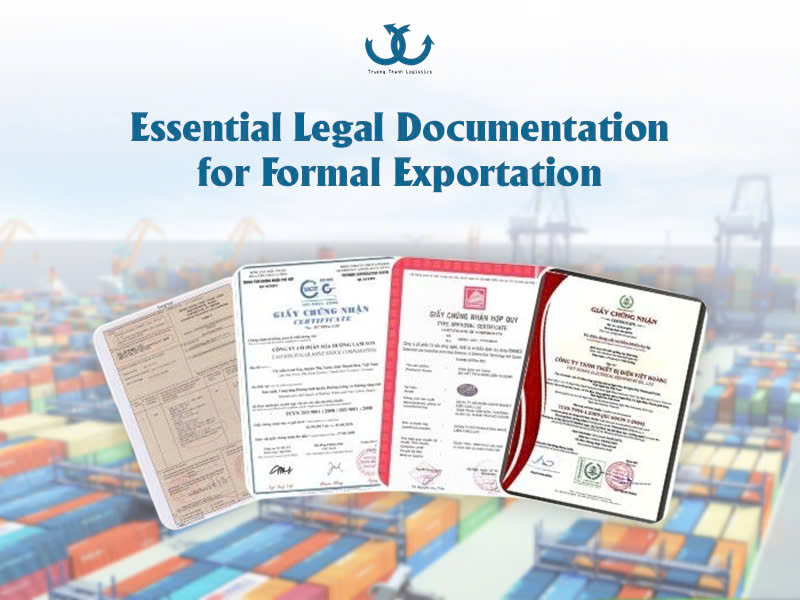
Prepare complete commercial documentation
Key documents include:
- Commercial contract
- Commercial invoice
- Packing list
- Bill of Lading
- Certificate of Origin (C/O)
These are essential for customs clearance and international payments.
Logistics and Import–Export Solutions with Truong Thanh Logistics
Import–export operations go beyond signing commercial contracts; they involve documentation preparation, transportation planning, customs clearance, and international delivery. Without proper experience, businesses may face delays, additional costs, or procedural errors.
Partnering with a professional logistics provider helps optimize operations, ensure compliance, and maintain delivery schedules. With extensive experience in international logistics, Truong Thanh Logistics offers comprehensive solutions to support businesses in import–export activities.
Professional import–export consulting
Truong Thanh Logistics assists businesses with:
- Export and import procedures
- Selecting appropriate transport methods
- Understanding Incoterms
- Preparing commercial documentation
This enables businesses to confidently negotiate and execute contracts with international partners.
Flexible international transportation services
Services include:
- Sea transport for large shipments with cost efficiency
- Air freight for urgent deliveries
- Multimodal transportation solutions
A strong global partner network ensures safe and timely delivery.
Fast and efficient customs clearance support
Customs procedures are critical in international trade. Errors may lead to delays and additional costs.
Services include:
- Customs declaration
- HS code consultation and classification
- Documentation preparation and verification
- Assistance with permits and regulatory requirements
This ensures compliance and faster clearance.
Cost optimization and risk reduction
Truong Thanh Logistics helps businesses:
- Select optimal shipping routes
- Control logistics costs
- Ensure cargo safety
- Minimize procedural risks
Long-term partnership in international trade
Beyond transportation, Truong Thanh Logistics acts as a strategic partner, supporting businesses throughout the entire import–export process—from consultation and documentation to transportation and customs clearance.
With an experienced team, professional processes, and a strong international network, Truong Thanh Logistics is committed to delivering fast, safe, and cost-effective logistics solutions, enabling businesses to expand globally and operate sustainably in international markets.
Trường Thành Logistics – Professional & Dedicated
Hotline: +84 915 36 38 39
Head Office: 5th Floor, Tower A, Song Da Building, Pham Hung Street, Tu Liem Ward, Hanoi, Vietnam.
Email: sale@truongthanhjsc.com
info@truongthanhlogistics.com
Website: https://truongthanhlogistics.com
HAI PHONG BRANCH
Address: Room C103, TTC Building, 630 Le Thanh Tong Street, Hai An Ward, Hai Phong City, Vietnam.
DA NANG BRANCH
Address: 126 Chau Thi Vinh Te Street, Ngu Hanh Son Ward, Da Nang City, Vietnam.
HO CHI MINH CITY BRANCH
Address: Room 41, 4th Floor, Casanova Building, 85 Nguyen Son Street, Phu Thanh Ward, Ho Chi Minh City, Vietnam