In international import–export activities, not every business has sufficient cargo volume to load a full container. For this reason, international Less than Container Load (LCL) shipping has become a popular solution, helping businesses optimize costs while still ensuring cargo is transported on the correct route and within the expected timeframe.
However, LCL shipping also involves potential risks if businesses do not fully understand the procedures, cost structure, and important considerations. The following article provides a comprehensive overview of what you need to know about international LCL shipping, enabling you to proactively choose a suitable and safe logistics solution.
1. What Is International LCL Shipping?
International Less than Container Load (LCL) shipping is a transportation method in which a single container is used to carry cargo belonging to multiple shippers. Each shipper only utilizes a portion of the container’s capacity and pays freight charges based on the actual cargo volume or weight, rather than renting an entire container.
In LCL shipments, cargo from different shippers is consolidated at a Container Freight Station (CFS). At the CFS warehouse, the logistics provider inspects, classifies, arranges, and consolidates compatible shipments into one container according to the predetermined shipping route. Once the container is sealed, it is transported to the destination port, where it is deconsolidated and each shipment is delivered to its respective consignee.
This shipping method is particularly suitable for:
- Small and medium-sized import–export enterprises
- Shipments that do not have sufficient volume to fill a full container
- Non-regular or occasional export shipments
2. When Should You Choose International LCL Shipping?
International LCL shipping is not always the optimal option. Choosing the right circumstances to apply this method can help businesses reduce costs, optimize cash flow, and minimize risks during import–export operations. Below are common scenarios in which LCL shipping should be considered.
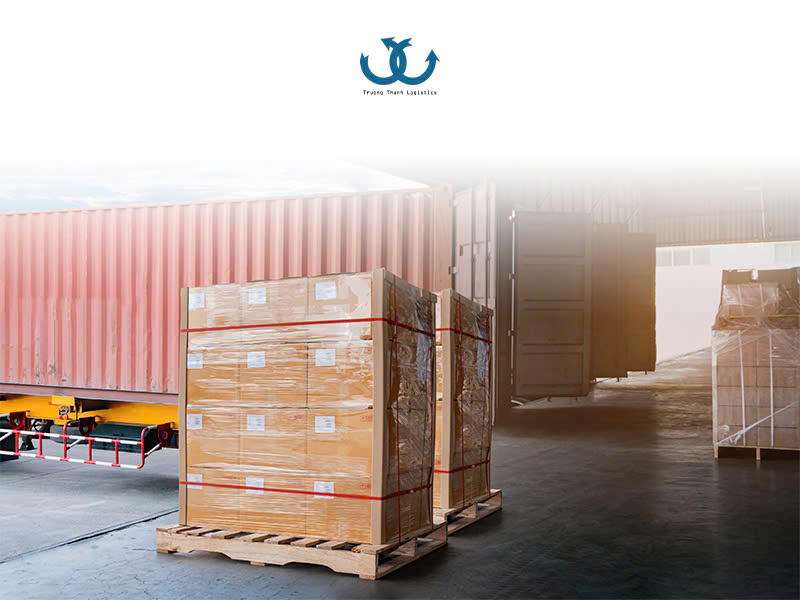
Cargo Volume Is Insufficient for a Full Container
The most common reason to use LCL shipping is when the cargo volume is too small to fill a 20-foot or 40-foot container. If a business still chooses Full Container Load (FCL) shipping in this case, it must bear higher costs while much of the container space remains unused, resulting in unnecessary waste.
With LCL, businesses pay freight charges based on actual cargo volume (CBM) or weight, helping optimize transportation budgets. This is especially suitable for small shipments, trial shipments, or fragmented orders.
New Import–Export Businesses or Market Testing
For companies entering international trade for the first time or expanding into new markets, shipment volumes are often unstable and relatively small. During this stage, international LCL shipping allows businesses to:
- Reduce initial logistics cost pressure
- Adjust shipment plans flexibly based on actual demand
- Minimize inventory and cash flow risks
LCL enables businesses to ship in smaller batches, making market control easier and allowing quicker responses to demand fluctuations.
Cargo Is Not Time-Critical
Compared to FCL shipping, international LCL shipments generally take longer due to consolidation, sorting, and deconsolidation processes at both the origin and destination ports. Therefore, LCL is suitable for shipments that do not require urgent delivery or strict transit times.
Typical cargo types include consumer goods, samples, components, spare parts, production materials without urgent deadlines, and small-to-medium-volume e-commerce goods.
Businesses Seeking to Optimize Cash Flow and Logistics Costs
Instead of waiting until there is enough cargo to fill a full container, LCL shipping allows businesses to ship according to production schedules or order cycles, thereby:
- Accelerating capital recovery
- Reducing warehousing and storage costs
- Avoiding long-term inventory accumulation
This is a significant advantage for small and medium-sized enterprises or businesses with short production and sales cycles.
Shipments with Diverse and Non-Uniform Product Types
When a business exports multiple product categories in small quantities, consolidating a full container for each product type can be impractical. International LCL shipping allows different types of goods to be consolidated in one shipment, provided that classification, packaging, and safety requirements are met.
In such cases, businesses should work with experienced logistics providers to ensure proper handling and avoid risks such as cargo mix-ups or customs clearance delays.
3. International LCL Shipping Process
The international LCL shipping process involves more steps than FCL shipping due to cargo consolidation from multiple shippers, handling at CFS warehouses, and deconsolidation at the destination port. Understanding this process helps businesses prepare documentation, manage timelines, and avoid unexpected costs.
Receiving Shipment Information and Transportation Consultation
The process begins when the shipper provides the logistics provider with basic shipment details, including cargo type, dimensions, weight, number of packages, Incoterms, port of loading, port of discharge, and desired shipping time.
Based on this information, the logistics provider advises on a suitable LCL solution, provides a detailed quotation based on CBM or weight, and proposes vessel schedules, estimated transit times, and cargo-related considerations.
Cargo Collection and Delivery to the CFS Warehouse
After confirming the shipping plan, cargo is transported from the shipper’s warehouse to the designated CFS warehouse near the port or consolidation area.
At the CFS, cargo packaging condition, quantity, and labeling are inspected to ensure compliance with international shipping requirements. Proper packaging is critical to prevent damage during consolidation with other shipments.
Cargo Consolidation and LCL Container Stuffing
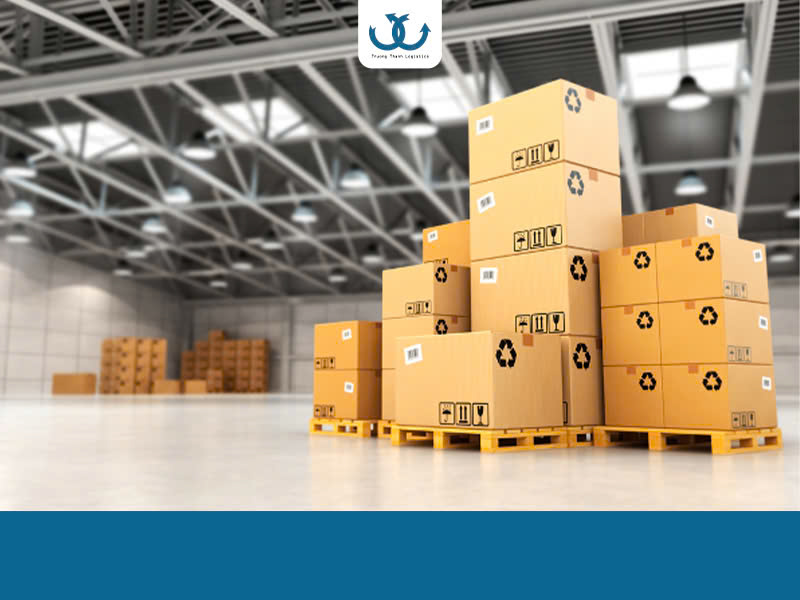
Once sufficient cargo from multiple shippers is gathered, the logistics provider consolidates and loads the shipments into a container. Cargo is arranged according to classification principles to ensure safety and prevent odor contamination, physical damage, or mutual interference between different cargo types.
After stuffing, the container is sealed, and all necessary export documentation is completed.
Export Customs Clearance
The logistics provider either represents the shipper or coordinates with the business to complete export customs procedures, including customs declaration, document inspection, physical inspection (if required), and customs clearance.
For international LCL shipments, accurate and consistent declarations among all shippers in the same container are crucial to avoid clearance delays affecting the entire container.
International Transportation to the Destination Port
Once export procedures are completed, the LCL container is loaded onto the vessel and shipped to the destination port according to the registered schedule. Throughout the journey, the logistics provider monitors shipment status, provides updates, and handles any arising issues promptly.
Transit time for LCL shipments is generally longer than FCL due to consolidation schedules and processing at the destination port.
Container Deconsolidation at the Destination Port
Upon arrival at the destination port, the container is transferred to a CFS warehouse in the importing country for deconsolidation. Each shipment is separated according to the consignee.
Cargo is inspected, documents are verified, and preparations are made for individual import customs clearance, subject to the regulations of each country and cargo type.
Import Customs Clearance and Final Delivery
Finally, the logistics provider or overseas agent completes import customs clearance, tax payments, documentation, and arranges delivery to the consignee’s warehouse as agreed.
At this stage, businesses should pay attention to destination charges such as CFS fees, LCL handling charges, and storage fees if customs clearance is delayed.
4. Advantages and Limitations of International LCL Shipping
International LCL shipping is a common solution for small-volume shipments. However, alongside its cost-saving and flexible benefits, it also has certain limitations that businesses must consider. Understanding both advantages and disadvantages helps businesses make informed decisions aligned with cargo characteristics and import–export plans.
4.1. Advantages
International LCL shipping helps businesses:
- Save costs compared to booking a full container
- Maintain flexibility for small shipments
- Suit businesses with unstable or limited shipment volumes
This solution enables many small and medium-sized enterprises to access international markets more efficiently.
4.2. Limitations
Despite its benefits, LCL shipping has some drawbacks:
- Longer transit times due to consolidation schedules
- Risk of delays caused by issues with other shipments in the same container
- Higher requirements for document accuracy and proper packaging
Therefore, selecting an experienced logistics provider is essential.
5. What Costs Are Included in International LCL Shipping?
International LCL shipping costs are not fixed and depend on various factors such as shipping routes, cargo volume, cargo type, ports of origin and destination, and the pricing policies of each logistics provider.
Understanding the cost structure helps businesses budget proactively and avoid unexpected expenses.
Typical international LCL shipping costs include:
- Ocean freight charges
- CFS consolidation fees
- Documentation handling fees
- THC and local port charges
- Other incidental charges, if applicable
A reputable logistics provider will offer clear, transparent quotations and advise in advance on potential additional costs.
6. Important Notes for International LCL Shipping
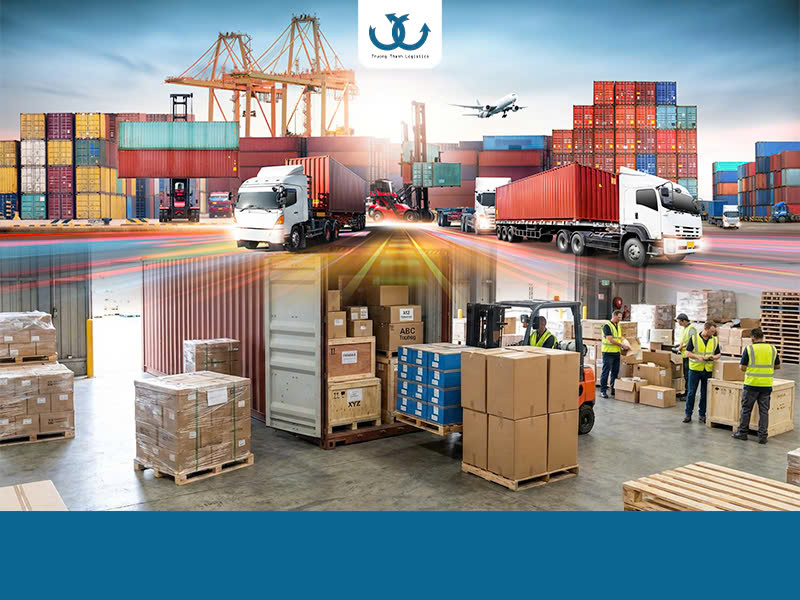
International LCL shipping offers cost efficiency and flexibility but also involves risks if businesses lack experience or choose inappropriate solutions. To ensure smooth import–export operations, businesses should pay close attention to the following points.
6.1. Proper Cargo Packaging
Since cargo is consolidated with multiple shipments, packaging must:
- Be sturdy and load-bearing
- Have clear labeling
- Minimize risks of impact and moisture
6.2. Complete and Accurate Documentation
Documentation errors are a common cause of:
- Cargo being held at ports
- Additional storage and demurrage costs
- Delivery delays
Businesses should work with logistics providers capable of controlling import–export documentation from the outset.
6.3. Choosing a Reliable Consolidation Provider
The consolidator plays a crucial role in LCL shipping. An inexperienced provider may cause:
- Cargo mix-ups
- Vessel schedule delays
- Difficulties in handling unexpected issues
7. Truong Thanh Logistics – A Trusted International LCL Shipping Provider
As import–export demand continues to grow, choosing a reliable international LCL shipping provider is essential for optimizing costs, ensuring schedules, and minimizing risks. Truong Thanh Logistics is proud to be a trusted logistics partner, supporting numerous Vietnamese enterprises in LCL shipments to and from global markets.
Extensive Practical Experience in International LCL Shipping
Truong Thanh Logistics has many years of experience providing international LCL shipping services on key routes such as Asia, Europe, North America, and Australia. The company thoroughly understands the characteristics of each market, shipping route, documentation requirements, customs procedures, and import regulations of different countries.
This expertise enables Truong Thanh Logistics to provide accurate transportation solutions tailored to each cargo type, helping businesses minimize risks and optimize overall logistics efficiency.
Comprehensive LCL Services with Transparent Pricing
Truong Thanh Logistics offers end-to-end international LCL shipping services, including cargo consolidation, CFS handling, international transportation, export–import customs clearance, and final delivery to the designated address.
Pricing is clearly structured with transparent cost breakdowns, allowing businesses to control budgets and avoid unexpected expenses. The consulting team proactively explains all charges, especially origin and destination port fees—often a major concern for businesses using LCL shipping.
Extensive Global Partner and Agent Network
One of Truong Thanh Logistics’ key strengths is its stable international partner and agent network, ensuring efficient consolidation, deconsolidation, and delivery at destination countries.
Close coordination among partners helps reduce waiting time at CFS warehouses, minimize customs clearance delays, and ensure cargo safety throughout the transportation process.
Highly Skilled Team with End-to-End Support
Truong Thanh Logistics is supported by a team with deep expertise in logistics operations, customs procedures, and international transportation. Businesses receive support from initial consultation and documentation preparation to shipment tracking and final delivery completion.
In case of unforeseen issues, the Truong Thanh Logistics team proactively coordinates with relevant parties to resolve matters quickly, minimizing impacts on schedules and costs.
Commitment to Long-Term Partnership
Beyond providing international LCL shipping services, Truong Thanh Logistics aims to be a long-term logistics partner for businesses. Each solution is tailored to the client’s actual needs, scale, and development strategy.
Truong Thanh Logistics is committed to delivering safe, on-time, and cost-effective sea, road, and air freight services, accompanying businesses throughout the import–export process and supporting confident expansion into international markets.
Contact Truong Thanh Logistics today for detailed consultation on cost-optimized, on-schedule international LCL shipping solutions tailored to your business needs.