Goods Classification: Essential Rules You Must Understand
In import–export operations, goods classification and accurate HS code determination are critical steps that directly affect import/export duties, specialized regulatory policies, and customs clearance speed. Incorrect classification not only causes delays but may also result in tax reassessment and administrative penalties.
Therefore, mastering goods classification rules is essential for businesses to minimize risks and optimize costs in international trade.
1. What is goods classification and why is it important?
In international trade, before determining tax rates, applying for permits, or completing customs procedures, businesses must perform a fundamental step: goods classification. This is not merely a technical declaration task but a legal basis that determines all applicable policies for a product.
1.1 What is goods classification?
Goods classification is the process of determining the appropriate HS code (Harmonized System Code) for a specific product based on:
- Nature and technical characteristics
- Composition
- Primary function
- Degree of completion
- Operating principle
The HS system is developed and issued by the World Customs Organization (WCO) and is widely adopted globally.
In Vietnam, classification is conducted in accordance with regulations issued by the General Department of Customs and serves as the legal basis for determining tax obligations and regulatory policies for each shipment.
In other words, the HS code acts as the “legal identity” of goods in international trade.
1.2 Why is goods classification important?
Determines applicable tax rates
Each HS code corresponds to specific taxes:
- Import duty
- Export duty
- Value-added tax (VAT)
- Special consumption tax (if applicable)
Even a minor error in the HS code can result in completely different tax rates, directly affecting:
- Cost of goods
- Business profitability
- Market competitiveness
Defines specialized regulatory requirements
HS codes determine whether goods are subject to:
- Import licensing
- Quality inspection
- Plant/animal quarantine
- Food safety inspection
- Conditional import regulations
Incorrect classification may lead to missing required documents, causing delays or penalties.
Impacts customs clearance time
Customs risk management systems rely on HS codes. When declared codes:
- Match the actual nature of goods
- Align with historical declarations
- Comply with current regulations
the likelihood of green channel clearance increases, reducing processing time.
Incorrect codes may result in physical inspection or high-risk classification.
Minimizes risks of reassessment and penalties
Post-clearance audits frequently identify HS misclassification as a common issue, leading to:
- Retrospective tax collection
- Late payment penalties
- Administrative fines
- Tax reassessment
For high-value or frequent shipments, financial exposure can be significant.
Supports sustainable trade operations
Accurate classification enables businesses to:
- Calculate costs proactively
- Maintain stable pricing strategies
- Plan long-term imports
- Avoid disputes with customs authorities
In the long run, compliance enhances credibility and regulatory standing.
>>View More: Entrusted Import-Export
2. HS system structure – Understanding it to apply it correctly
After recognizing its importance, businesses must understand the structure of the HS system to avoid errors.
The Harmonized System (HS) is a globally standardized classification system structured logically and hierarchically
2.1 Four main levels of the HS system
The system is divided into:
- 21 Sections
- 97 Chapters
- Hundreds of Headings (4 digits)
- Thousands of Subheadings (6 digits)
Each level narrows down classification and defines product characteristics more precisely.
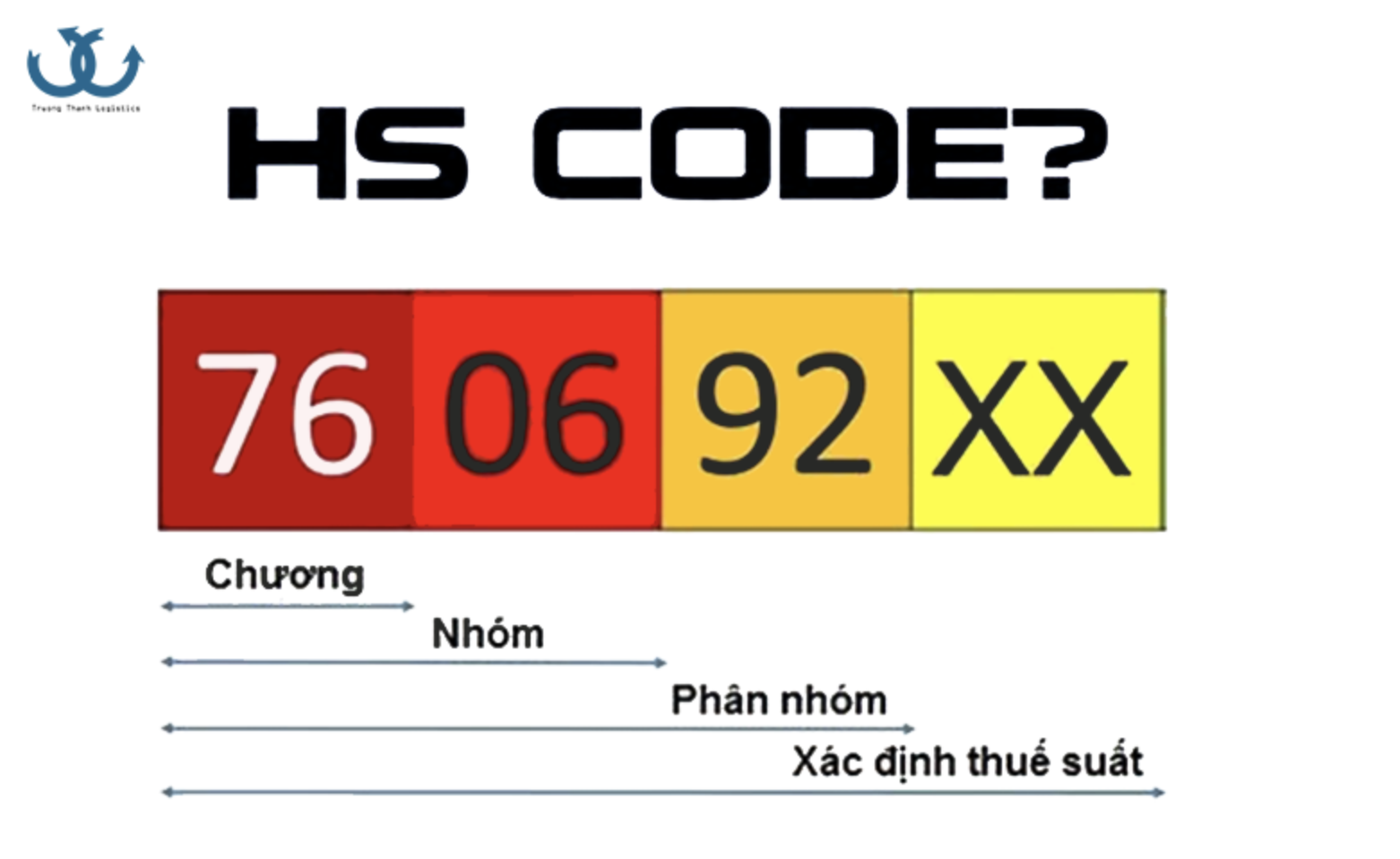
2.2 HS code structure
A standard HS code consists of 6 digits internationally, extended to 8 digits in Vietnam for detailed tariff purposes:
- First 2 digits: Chapter
- First 4 digits: Heading
- First 6 digits: International subheading
- 8 digits: National subheading (Vietnam-specific)
Example:
- Chapter 84: Machinery
- Heading 8471: Automatic data processing machines
- Subheading 8471.30: Laptops
2.3 Role of Sections and Chapters
Each Section and Chapter includes Legal Notes, which are crucial but often overlooked. These notes may:
- Exclude certain goods
- Provide classification guidance
- Define technical terms
Businesses must review these notes carefully rather than relying only on chapter titles.
2.4 Global consistency and flexibility
The first 6 digits are standardized worldwide, ensuring:
- Harmonized global trade
- Consistent trade statistics
- Support for trade agreements
From the 7th digit onward, countries can customize codes for national tax and policy purposes.
2.5 Why understanding structure matters
Without understanding HS structure, businesses may:
- Select incorrect chapters
- Confuse general and specific headings
- Rely on commercial names instead of legal definitions
Understanding structure helps:
- Narrow down classification logically
- Compare similar categories
- Interpret legal notes correctly
- Achieve accurate classification from the outset
3. General Rules for Interpretation (GRI) – The mandatory foundation
Goods classification follows the six General Rules for Interpretation (GRI), which are internationally recognized legal principles.
Rule 1: Legal descriptions take precedence
Classification is based on:
- Heading descriptions
- Chapter notes
- Section notes
If clearly defined, no further rules are needed.
Rule 2: Incomplete or mixed goods
- Incomplete goods with essential characteristics are classified as complete goods
- Mixed materials are classified based on their essential character
Rule 3: Multiple possible classifications
Priority order:
- Most specific description
- Essential character
- Last applicable heading
Rule 4: Similar goods
If classification is unclear, goods are classified based on the most similar items.
Rule 5: Special packaging
Packaging designed specifically for goods is classified together with the goods.
Rule 6: Subheading classification
After determining the 4–6 digit level, similar logic applies to determine the full code.
4. Key factors in determining HS codes
Accurate classification requires more than relying on product names. Businesses must consider:
- Composition: metal, plastic, wood, or mixed
- Function: industrial vs. household use
- Operating principle: mechanical vs. electronic
- Level of completion: components vs. finished products
A common mistake is relying solely on supplier invoices, which may not align with Vietnam’s tariff system.
5. Serious risks of incorrect classification
Misclassification can lead to:
- Retrospective tax collection
- Late payment penalties
- Administrative fines
- Tax reassessment
- Loss of business credibility
It may also trigger unexpected regulatory inspections, causing delays and additional costs such as demurrage.
6. How businesses can minimize classification risks
Businesses should adopt a systematic approach rather than handling classification on a case-by-case basis:
- Carefully review chapter notes
- Analyze product composition and function
- Consult experts
- Apply for Advance Ruling on HS classification
Advance ruling is especially important for:
- High-value machinery
- High-tech products
- New or previously undeclared goods
- Multi-material products
It provides legal certainty and prevents future disputes.
7. The role of customs and logistics consultants
In an increasingly complex regulatory environment, customs and logistics consultants act as both legal and technical advisors, ensuring compliance and cost optimization.
7.1 Accurate HS classification from the start
Professional consultants:
- Analyze technical documentation
- Compare product characteristics
- Review legal notes
- Assess tax risks
7.2 Representation before customs authorities
Consultants assist with:
- HS code explanations
- Valuation consultations
- Physical inspections
- Technical documentation
7.3 Risk warning and cost optimization
They:
- Identify high-risk classifications
- Analyze tax differences
- Recommend compliant optimization strategies
7.4 Support for advance rulings
Consultants:
- Prepare technical dossiers
- Draft official submissions
- Monitor processing
- Provide explanations when required
7.5 Integrated logistics management
Combining customs expertise and logistics management helps:
- Optimize transport routes
- Reduce clearance time
- Minimize storage costs
- Avoid unexpected issues
7.6 Long-term compliance support
Consultants also help businesses:
- Standardize internal HS databases
- Conduct periodic reviews
- Update regulatory changes
- Train import–export staff

Conclusion
In the context of stricter customs control and increasing post-clearance audits, investing in proper goods classification is a strategic move to protect businesses in the long term.
Accurate classification helps businesses:
- Avoid tax reassessment risks
- Speed up customs clearance
- Optimize costs
- Ensure full legal compliance
Partnering with an experienced logistics and customs consultant is the key to achieving sustainable and stable growth in international trade.
Trường Thành Logistics – Professional & Dedicated
Hotline: +84 915 36 38 39
Head Office: 5th Floor, Tower A, Song Da Building, Pham Hung Street, Tu Liem Ward, Hanoi, Vietnam.
Email: sale@truongthanhjsc.com
info@truongthanhlogistics.com
Website: https://truongthanhlogistics.com
HAI PHONG BRANCH
Address: Room C103, TTC Building, 630 Le Thanh Tong Street, Hai An Ward, Hai Phong City, Vietnam.
DA NANG BRANCH
Address: 126 Chau Thi Vinh Te Street, Ngu Hanh Son Ward, Da Nang City, Vietnam.
HO CHI MINH CITY BRANCH
Address: Room 41, 4th Floor, Casanova Building, 85 Nguyen Son Street, Phu Thanh Ward, Ho Chi Minh City, Vietnam