Europe is one of the most demanding markets in the world, characterized by a stringent legal framework, strict control standards, and high requirements for import–export documentation. In practice, many shipments to Europe are delayed at customs, incur unexpected costs, or are even returned—not because of product quality, but due to the selection of an unsuitable shipping provider.
So, which shipping provider should you choose when sending goods to Europe to ensure timely delivery, cost control, and risk minimization? The article below offers a comprehensive and practical perspective to help you make an informed decision.
1. Why Is Choosing a Shipping Provider for Europe Particularly Important?
Europe is not only a large market but also a region with one of the most stringent trade and customs management systems globally. Therefore, selecting a shipping provider for Europe is not simply about choosing a carrier—it is about choosing a partner capable of controlling risks, costs, and timelines for the entire shipment.
In reality, many businesses and individuals encounter issues when shipping to Europe not because of product quality, but due to inexperienced logistics providers or incorrect handling of procedures. These risks typically manifest in the following aspects:
First, Europe’s import regulations and control systems are extremely strict
The European Union (EU) applies unified regulations on customs procedures, rules of origin, safety standards, and import duties. Even minor errors in documentation can result in shipments being held at ports, subjected to additional inspections, or facing extended customs clearance times.
Common mistakes include:
- Incorrect HS code declaration
- Missing documents proving the origin of goods
- Unclear or inconsistent cargo descriptions
Experienced Europe-route logistics providers know how to standardize documentation from the outset, significantly reducing the risk of delays.

Second, the risk of additional costs is very high if the wrong provider is chosen
When shipping goods to Europe, costs are not limited to initial freight charges. If the shipping provider lacks control capabilities, businesses may face:
- Storage and demurrage charges due to delayed customs clearance
- Fees for supplementary documentation processing
- Additional costs arising from physical inspections
- Costs for returning or redirecting shipments
A reputable logistics provider will clearly advise on potential additional costs and design an appropriate transport solution to optimize the budget from the beginning.
Third, delivery timelines directly impact reputation and business plans
In the European market, delivery time is a critical factor, especially for:
- Contract-based export shipments
- Goods serving supply chains
- Seasonal products or goods tied to sales schedules
If a logistics provider fails to control schedules or proactively handle issues during transit, delays can directly damage a company’s reputation with European partners.
Fourth, Europe is divided into individual countries with different practical requirements
Although EU member states share common regulations, each country still has its own specifics regarding:
- Tax rates and tax calculation methods
- Inspection procedures
- Additional documentation requirements
A logistics provider with in-depth knowledge of European routes can advise suitable solutions for each destination country, helping businesses avoid incorrect procedures and minimize risks.
Fifth, a logistics provider is a long-term partner, not just a carrier
A professional logistics provider does more than handle transportation. They also:
- Accompany clients from the cargo preparation stage
- Advise on suitable transport modes
- Control documentation and shipment progress
- Support issue resolution throughout the journey
Therefore, choosing a shipping provider for Europe essentially means selecting a strategic logistics partner that directly affects export efficiency and market expansion potential.
2. Key Criteria for Choosing a Shipping Provider to Europe
After understanding the importance of selecting the right provider, the next step is identifying core criteria to evaluate and compare logistics companies for Europe-bound shipments. This is not merely about comparing freight rates, but about choosing a partner capable of long-term cooperation.
2.1. Experience in European Shipping Routes
A reputable provider should have:
- Experience handling various types of EU-bound cargo
- In-depth knowledge of import regulations in countries such as Germany, France, the Netherlands, Italy, Spain, etc.
- The ability to anticipate and advise on potential risks
Practical experience enables proactive risk prevention rather than reactive problem-solving.
2.2. Capability in Documentation and Customs Procedures
This is a critical factor when shipping to Europe. A logistics provider should support:
- Preparation and verification of export documentation
- Accurate customs declaration
- Advice on HS codes and Certificates of Origin (C/O), if required
- Coordination in case of inspections or requests for additional documents
A provider that merely “moves goods” without controlling documentation poses significant risks.
2.3. Transparency in Costs and Transport Terms
A professional logistics provider should:
- Provide clear, detailed quotations for each transport mode
- Clearly explain potential additional charges
- Offer cost-optimized solutions from the outset, rather than quoting low initially and adding costs later
Cost transparency helps businesses plan finances proactively and avoid disputes.
2.4. Tracking and Support Throughout the Transport Process
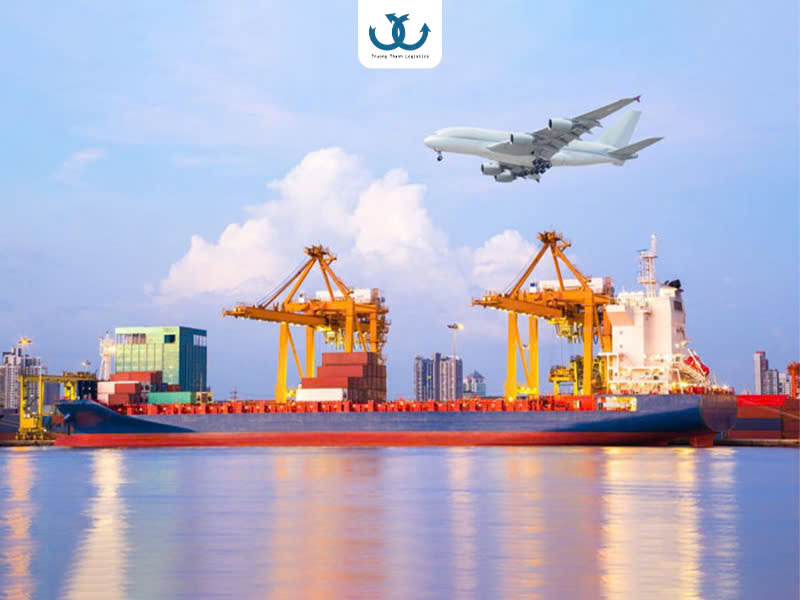
Europe-bound shipments usually have long transit times, therefore:
- A shipment tracking system is essential
- There must be a clear point of contact for issue resolution
- Proactive progress updates should be provided
This is a clear distinction between professional logistics companies and small-scale intermediaries.
3. Common Modes of Shipping Goods to Europe Today
Choosing the right transport mode directly affects costs, delivery time, and shipment safety. Depending on cargo characteristics, budget, and timeline requirements, businesses and individuals may consider the following options.
3.1. Air Freight to Europe
Air freight is suitable for urgent or high-value shipments, commonly used for:
- High-value goods requiring minimized risk
- Time-sensitive contractual deliveries
- Samples, components, equipment, or seasonal products
Its greatest advantage is speed, significantly shortening capital turnover cycles and ensuring business timelines. Cargo is also less affected by environmental factors during transit.
However, air freight costs are higher than sea transport and require logistics providers with expertise in air export procedures and strict documentation control.
3.2. Sea Freight to Europe
Sea freight is the most common option for businesses exporting large volumes to Europe, suitable for:
- Large or heavy cargo
- Regular export shipments
- Goods without urgent delivery requirements
Its main advantage is significantly lower cost compared to air freight. Sea transport also accommodates various cargo types, from full container loads (FCL) to less-than-container loads (LCL).
The drawback is longer transit times, often ranging from several weeks to over a month, depending on the route. This requires clear export planning and a logistics provider capable of managing schedules and minimizing delays.
3.3. International Express Delivery
International express services are suitable for small, lightweight shipments with simple documentation needs, such as:
- Samples
- Documents and paperwork
- Personal parcels or gifts
Advantages include very fast delivery, simple procedures, and easy tracking. However, costs are high for commercial goods or heavier shipments, and documentation handling is often limited compared to professional logistics providers.
3.4. Multimodal Transport
In practice, many shipments to Europe use combined transport methods, such as:
- Road–sea combinations
- Air freight combined with road transport within Europe
Multimodal transport optimizes costs and routing flexibility but requires strong coordination capabilities and a reliable international partner network.
3.5. Choosing the Right Transport Mode for Each Need
No single transport mode fits all cases. The choice should be based on:
- Cargo characteristics and value
- Desired delivery time
- Transport budget
- Documentation and procedural requirements
A professional logistics provider will analyze these factors and propose suitable solutions instead of applying a fixed method to all shipments.
4. Should You Choose an International Courier or a Vietnam-Based Logistics Provider?
When shipping to Europe, many individuals and businesses hesitate between working directly with international courier companies or cooperating with Vietnam-based logistics providers. Each option has its own advantages and limitations.
4.1. International Couriers: Suitable for Small, Simple Shipments
International couriers are typically chosen for:
- Small, lightweight shipments
- Documents and samples
- Shipments with simple documentation requirements
Their key advantages are fast delivery and relatively simple processes with clear tracking systems.
However, for commercial goods or specialized shipments, limitations include:
- High costs, especially for heavier cargo
- Limited in-depth advice on customs and documentation
- Less flexibility when issues or adjustments arise
Thus, this option is best suited for small, non-recurring shipments.
4.2. Vietnam-Based Logistics Providers: Comprehensive Solutions for Commercial Cargo
Vietnam-based logistics providers, especially those experienced in European routes, are often more suitable for exporters. They can support:
- Transport mode selection based on cargo type
- Export documentation preparation and control
- Coordination of sea, air, or multimodal transport
- Issue resolution throughout the transport process
Their key advantage lies in end-to-end support, enabling better control over costs, timelines, and risks.
4.3. Practical Comparison
In terms of delivery time, international couriers are faster for small shipments. However, for large commercial cargo, local logistics providers can better optimize overall cost and timing.
Regarding costs, Vietnam-based logistics companies usually offer more flexible and competitive pricing, especially for regular or bulk shipments. Courier costs tend to be high and less scalable.
In terms of procedural support, local logistics providers have a clear advantage due to their understanding of Vietnam’s export processes and ability to provide detailed, direct consultation.
4.4. When Should You Prioritize a Vietnam-Based Logistics Provider?
You should prioritize working with a Vietnam-based logistics provider when:
- Shipping commercial goods to Europe
- Exporting on a regular basis
- Handling cargo with complex documentation requirements
- Needing detailed advice on costs, taxes, and procedures
In these cases, a local logistics provider is not just a carrier but a comprehensive export support partner.
5. Truong Thanh Logistics – A Comprehensive Solution for Shipping Goods to Europe
As shipping to Europe increasingly demands accuracy, transparency, and strong risk control, choosing a logistics provider with comprehensive capabilities is essential. Truong Thanh Logistics positions itself as a long-term partner for businesses and individuals throughout the entire shipping process to Europe—from initial consultation to safe delivery.

5.1. Tailored Transport Solutions for Each Shipment
Truong Thanh Logistics does not apply a one-size-fits-all approach. Each shipment is analyzed based on:
- Cargo type and transport characteristics
- Weight, dimensions, and value
- Delivery time requirements
- Customer’s budget
Accordingly, Truong Thanh proposes suitable solutions such as sea freight, air freight, or multimodal transport to balance cost, time, and safety.
5.2. Comprehensive Support for Export Documentation and Procedures
One of the biggest risks in shipping to Europe lies in documentation and customs procedures. Truong Thanh Logistics supports clients with:
- Consultation and verification of export documentation
- Accurate customs declaration and clearance procedures
- HS code consultation for each product
- Support for required related documents
Early control of documentation helps minimize the risk of extended inspections, additional costs, or clearance delays.
5.3. Extensive Experience Across European Routes and Countries
Truong Thanh Logistics has experience handling shipments to multiple European countries with varying procedural requirements, enabling:
- Accurate advice on country-specific import regulations
- Proactive risk prevention
- On-schedule, route-appropriate transportation
Practical experience allows Truong Thanh to optimize processes and minimize unnecessary issues.
5.4. Progress Control and Shipment Tracking
For Europe-bound shipments, tracking and schedule control are critical. Truong Thanh Logistics:
- Closely monitors transport progress
- Provides stage-by-stage updates
- Proactively notifies clients of any changes or issues
Clients can confidently track shipment status and plan business operations accordingly.
5.5. Issue Resolution and Post-Transport Support
International shipping does not always proceed flawlessly. Truong Thanh Logistics is ready to:
- Coordinate responses to inspections or documentation requests
- Work with relevant parties to resolve issues
- Advise suitable handling solutions to minimize client losses
Post-transport support reflects Truong Thanh’s long-term commitment and responsibility for each shipment.
6. Conclusion: Which Shipping Provider Should You Choose for Europe?
Shipping goods to Europe is a process requiring thorough preparation—not only in suggesting cargo but also in selecting the right logistics partner. In reality, most international shipping risks stem not from geographical distance, but from insufficient experience in documentation handling, incorrect transport mode selection, or working with providers lacking full-process control capabilities.
A suitable shipping provider for Europe must simultaneously offer practical route experience, deep understanding of customs and import taxes, cost transparency, and the ability to accompany and resolve issues throughout the process. Such a provider is not merely a carrier, but a logistics partner that directly safeguards timelines, costs, and business reputation.
For small, simple, or personal shipments, international courier services may be convenient. However, for commercial cargo, regular exports, or shipments with complex documentation, cooperating with an experienced Vietnam-based logistics provider offers greater long-term efficiency.
Choosing the right shipping provider from the beginning not only ensures safe and timely delivery, but also establishes a solid foundation for sustainable expansion into the European market.
Contact for Europe Shipping Consultation
If you are planning to ship goods to Europe and need a clear, cost-optimized, and risk-controlled transport solution, Truong Thanh Logistics is ready to provide detailed consultation tailored to each cargo type and destination market.
The Truong Thanh Logistics team will accompany you from transport mode selection and export documentation preparation to tracking and issue resolution throughout the journey.
Contact Truong Thanh Logistics today for a safe, efficient, and suitable Europe-bound shipping solution for your business plan.
Trường Thành Logistics – Professional & Dedicated
Hotline: +84 915 36 38 39
Head Office: 5th Floor, Tower A, Song Da Building, Pham Hung Street, Tu Liem Ward, Hanoi, Vietnam.
Email: sale@truongthanhjsc.com
info@truongthanhlogistics.com
Website: https://truongthanhlogistics.com
HAI PHONG BRANCH
Address: Room C103, TTC Building, 630 Le Thanh Tong Street, Hai An Ward, Hai Phong City, Vietnam.
DA NANG BRANCH
Address: 126 Chau Thi Vinh Te Street, Ngu Hanh Son Ward, Da Nang City, Vietnam.
HO CHI MINH CITY BRANCH
Address: Room 41, 4th Floor, Casanova Building, 85 Nguyen Son Street, Phu Thanh Ward, Ho Chi Minh City, Vietnam